Introduction to Workplace Sexual Harassment
Imagine walking into your office every morning, not with enthusiasm or focus, but with anxiety, dread, and a silent fear of being made to feel small, objectified, or unsafe. This is the harsh reality that millions of working women have faced, and in many cases, continue to face today. Workplace sexual harassment is not a minor inconvenience or a misunderstood joke — it is a deeply rooted violation of human dignity, professional rights, and constitutional freedoms.
For decades in India, there was no clear legal framework to address this issue. Women who experienced harassment at work had no formal channel to raise complaints, no guarantee of confidentiality, and no assurance that justice would follow. Employers were largely unaccountable. The silence around the topic only made things worse.
That is where the Vishaka Guidelines changed everything.
Introduced by the Supreme Court of India in 1997, these guidelines were a watershed moment in the country's legal and social history. They defined what constitutes sexual harassment at the workplace, outlined specific duties for employers, and created a mechanism for redressal — all at a time when legislation on this issue simply did not exist.
Whether you are a law student, an HR professional, a corporate employee, or simply someone who believes in dignity at work, understanding the Vishaka Guidelines is essential. They represent not just a legal directive, but a moral commitment to safer, more equitable workspaces.
What is Sexual Harassment?
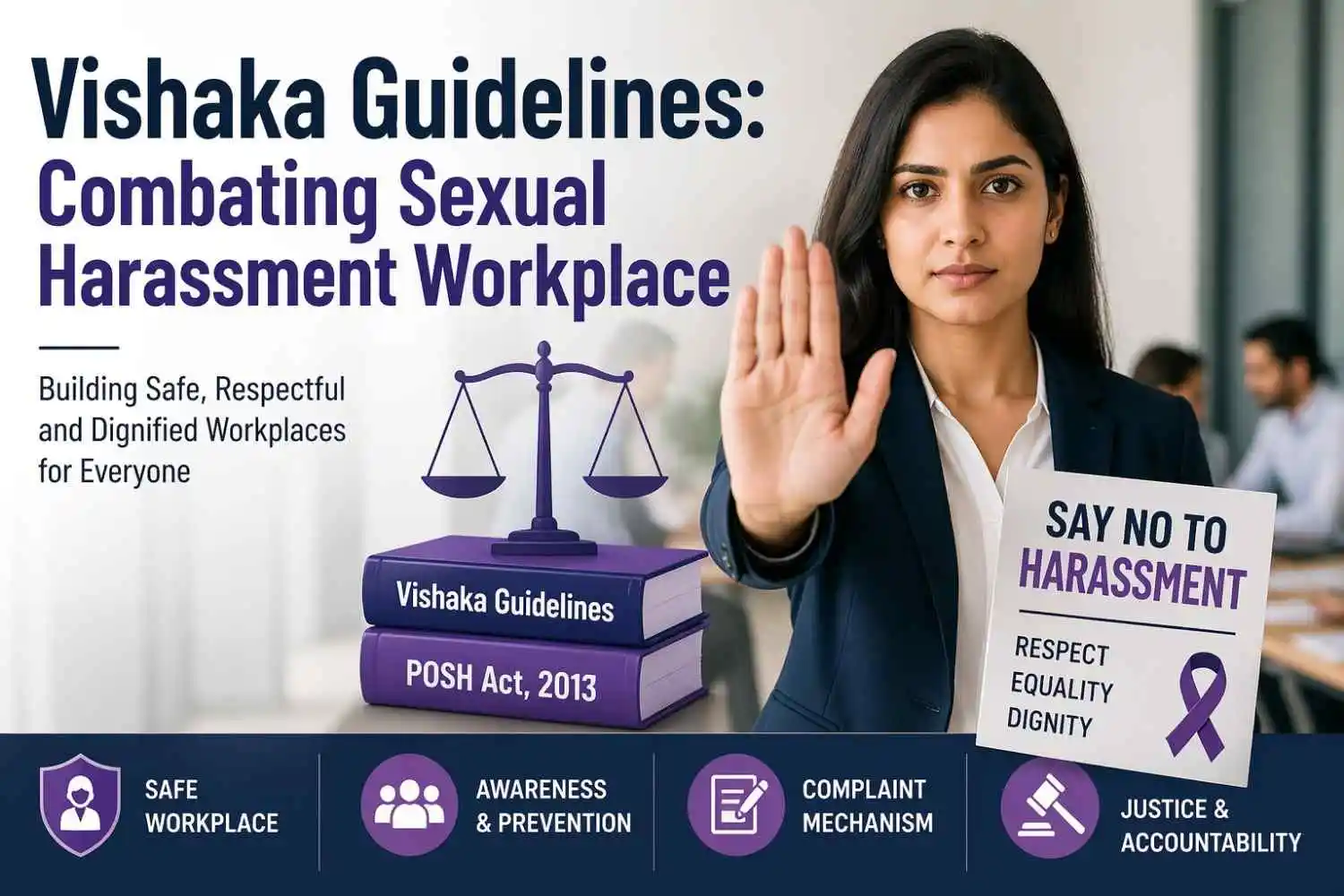
Sexual harassment refers to any unwelcome behavior of a sexual nature that creates a hostile, intimidating, or offensive environment for the recipient. It can be verbal, non-verbal, physical, or even digital in nature. It includes inappropriate comments, unwanted physical contact, displaying offensive material, making sexual advances, or creating conditions where a person's professional progress is tied to sexual favors — a situation commonly called "quid pro quo" harassment.
Key forms of workplace sexual harassment include:
- Unwelcome physical contact or gestures
- Sexually suggestive remarks or jokes
- Displaying pornographic or offensive content
- Demanding sexual favors in exchange for promotions or job security
- Creating a persistently hostile work environment through gendered behavior
Why It Matters in Modern Workspaces
In modern organizations, diversity and inclusion are not optional extras — they are business necessities. When harassment goes unaddressed, it reduces productivity, increases attrition, damages morale, and exposes companies to serious legal liability. Beyond the organizational impact, unchecked harassment inflicts deep psychological trauma on survivors. Depression, anxiety, loss of confidence, and career derailment are just some of the consequences experienced by those who face harassment without support or recourse.
- Harassment affects mental and physical health of employees
- It creates an unequal workplace, disproportionately impacting women
- Organizations without policies face reputational and legal risks
- Safe workplaces directly improve performance, loyalty, and productivity

Origin of Vishaka Guidelines
The Bhanwari Devi Case
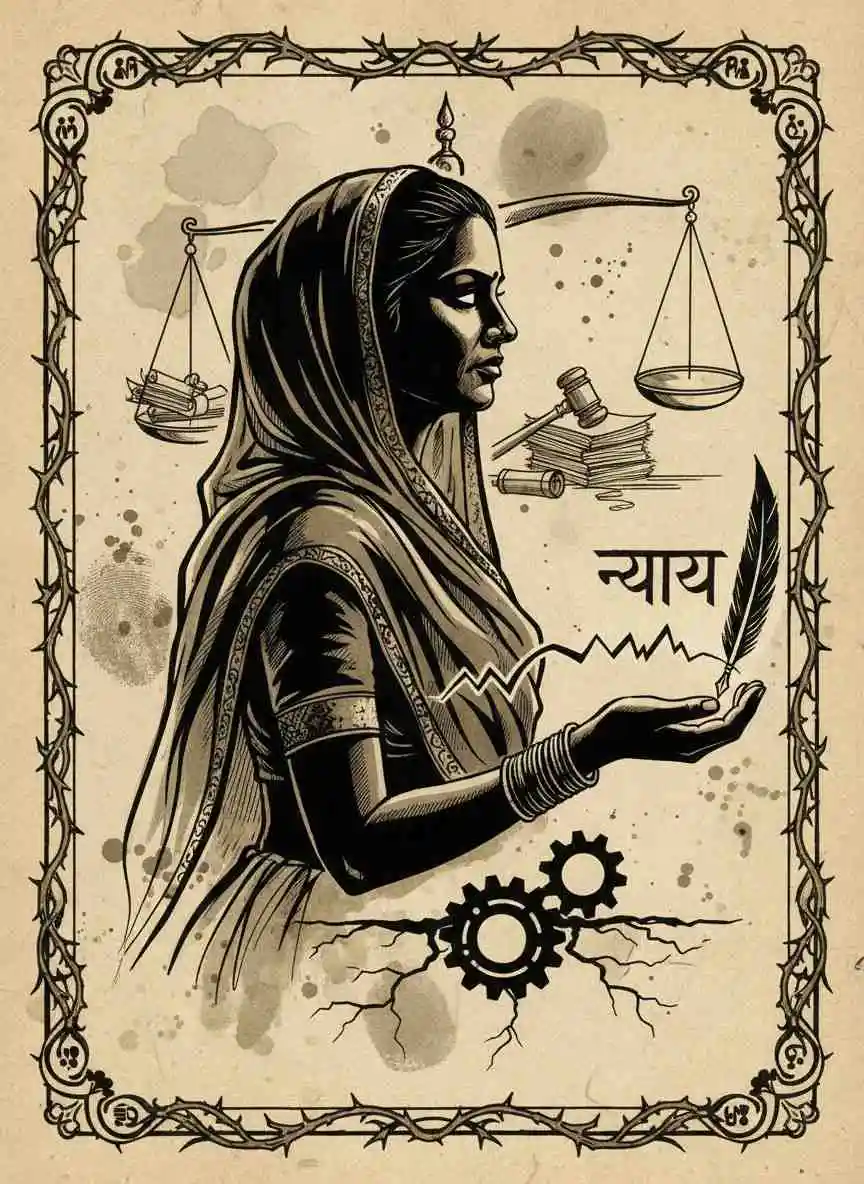
The origin of the Vishaka Guidelines is rooted in a deeply disturbing and courageous story. In 1992, Bhanwari Devi, a social worker from Rajasthan working under the state government's Women Development Programme, attempted to prevent a child marriage in her village. This act of duty made her the target of brutal retaliation. She was gang-raped by men from the community she had tried to serve.
What followed was an institutional failure of devastating proportions. The local court acquitted the accused. The medical examination was delayed. Her complaints were dismissed. Bhanwari Devi's case became a symbol of the systemic failure to protect women who work in the public interest. Women's rights groups and NGOs filed a Public Interest Litigation (PIL) in the Supreme Court, collectively referred to under the name "Vishaka," demanding accountability and legal protection for working women.
- Bhanwari Devi worked as a government-appointed social worker
- She was assaulted for preventing a child marriage
- Acquittal of accused revealed deep gaps in legal protection
- The PIL filed by "Vishaka" and allied groups prompted Supreme Court action
Supreme Court Intervention in 1997
The Supreme Court of India, under Chief Justice J.S. Verma, delivered a landmark judgment in 1997 in the case of Vishaka and Others v. State of Rajasthan. Recognizing that no legislation existed to protect women from workplace sexual harassment, the court exercised its constitutional authority to lay down binding guidelines under Articles 32 and 142.
The court declared that sexual harassment at the workplace violated women's fundamental rights to equality, to practice any profession, and to live with dignity. The Vishaka Guidelines were framed as enforceable law until Parliament enacted specific legislation on the subject.
- The judgment was delivered in August 1997
- Guidelines were made binding on all employers
- They applied to both public and private sector organizations
- Courts were empowered to enforce compliance
Constitutional Foundation
Fundamental Rights Violations
The Vishaka Guidelines are not arbitrary policy recommendations — they are deeply anchored in the Constitution of India. The Supreme Court's judgment drew a direct line between workplace sexual harassment and violations of fundamental rights guaranteed to every Indian citizen.
Articles 14, 19, and 21 Explained
Article 14 guarantees the right to equality before the law. Sexual harassment creates conditions of inequality, singling out women for degrading treatment in professional settings. Article 19(1)(g) protects every citizen's right to practice any profession or occupation. Harassment effectively forces women out of workplaces, denying them this fundamental right. Article 21 — perhaps the most powerful — guarantees the right to life and personal liberty, which the courts have repeatedly interpreted to include the right to live with dignity.
Together, these three articles create a constitutional mandate for safe workplaces:
- Article 14: Equality is violated when women face harassment men do not
- Article 19: Freedom to work is undermined by hostile environments
- Article 21: Dignity and personal liberty cannot coexist with harassment
- The state has a positive obligation to protect these rights

Key Features of Vishaka Guidelines
Definition of Sexual Harassment
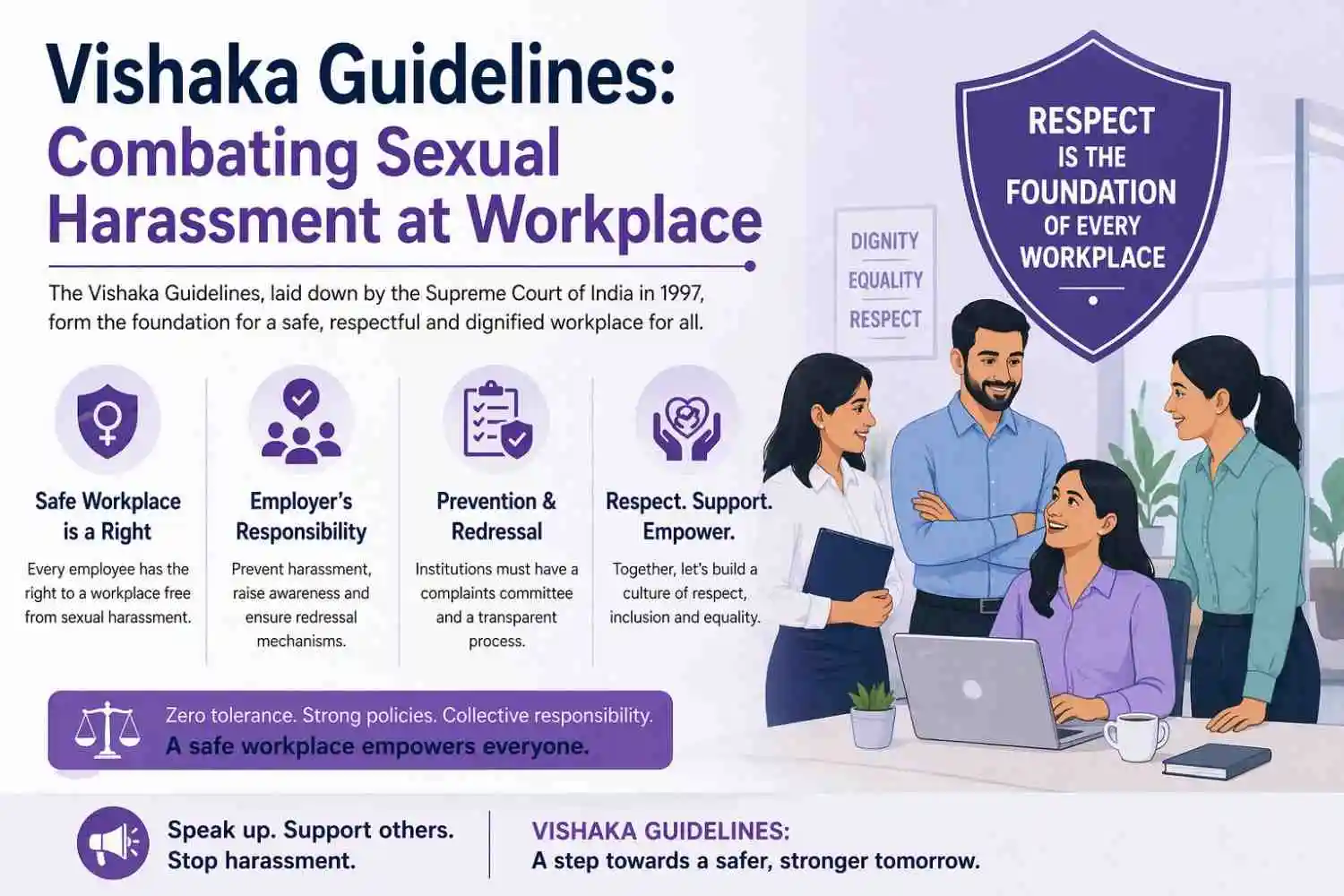
For the first time in Indian legal history, the Vishaka Guidelines provided a clear, formal definition of sexual harassment at the workplace. This was crucial — without a shared definition, complaints could be dismissed, minimized, or misinterpreted. The guidelines defined sexual harassment as any unwelcome sexually tinted behavior, whether direct or implicit, including physical contact, demands for sexual favors, sexually colored remarks, displaying pornography, or any other unwelcome physical, verbal, or non-verbal conduct of a sexual nature.
Employer Responsibilities
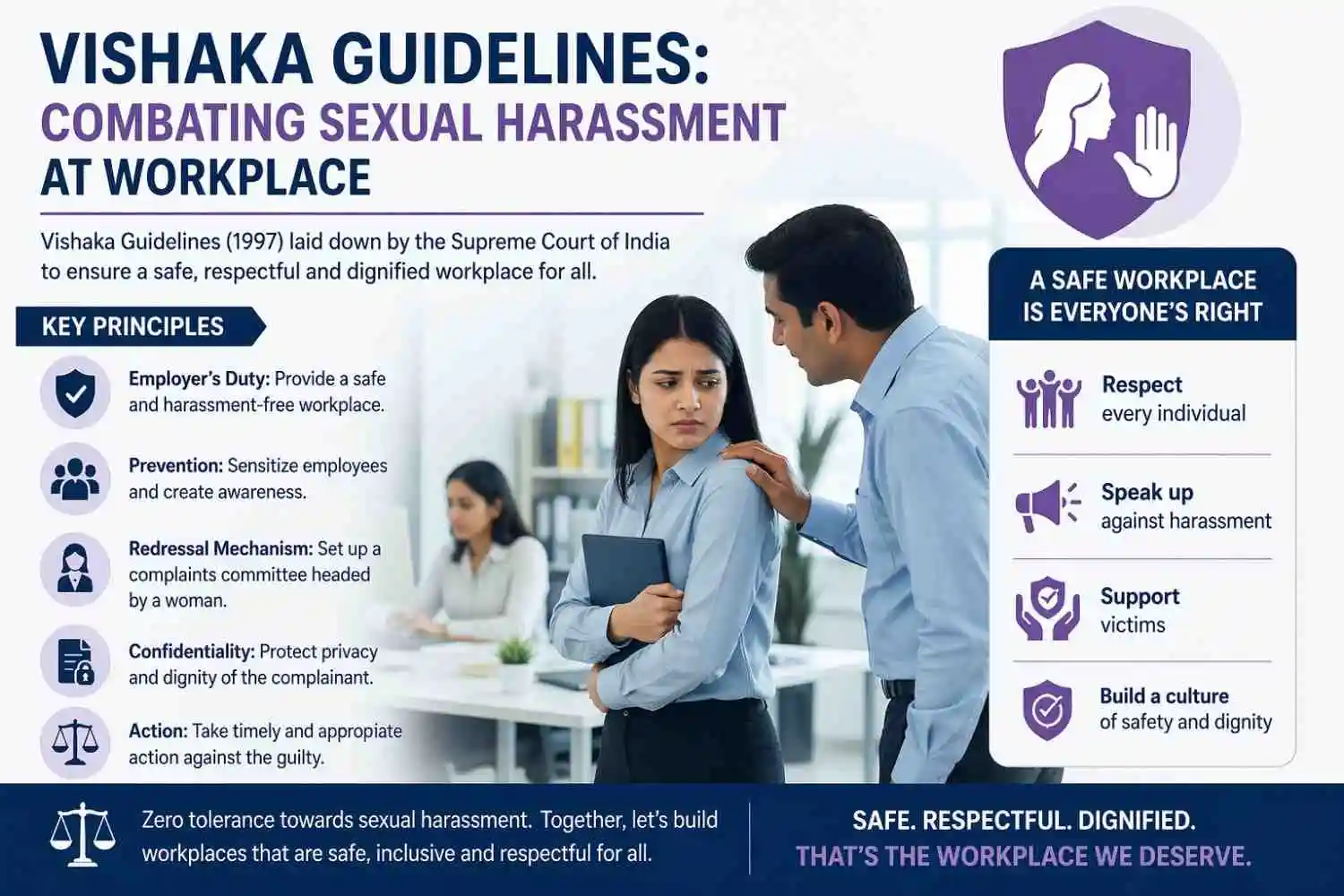
The guidelines placed substantial responsibility squarely on employers. Employers were required to take proactive steps to prevent and address harassment — not just react after incidents occurred.
Employer duties under Vishaka included:
- Expressly prohibiting sexual harassment in organizational policy
- Displaying awareness notices at the workplace
- Notifying employees about their rights and available complaint mechanisms
- Including sexual harassment as a disciplinable offense in service rules
- Treating third-party harassment (by clients, vendors, or visitors) with equal seriousness
Preventive Measures
Prevention, not just response, was at the heart of the Vishaka framework. Employers were expected to create an organizational culture where harassment was never normalized or tolerated.
Preventive measures recommended by the guidelines:
- Regular awareness workshops and training programs
- Circulation of written policies against sexual harassment
- Sensitization of management and supervisory staff
- Creating an open-door culture where complaints are encouraged, not feared
Complaint Mechanisms
The guidelines mandated the formation of a Complaints Committee at every workplace. This committee was to be headed by a woman, with at least half of its members being women. Significantly, the guidelines also required an NGO or third-party involvement to prevent undue influence from within the organization.
- Complaints committee must be chaired by a senior woman employee
- Majority of members must be women
- External NGO involvement ensures impartial inquiry
- Proceedings must maintain confidentiality of both parties
Role of Employers and Institutions
Creating a Safe Work Environment
Beyond legal compliance, the Vishaka Guidelines invited employers to take genuine ownership of workplace culture. A truly safe environment is one where every employee — regardless of gender — feels respected, valued, and confident that complaints will be taken seriously.
Practical steps for employers include:
- Zero-tolerance policies backed by consistent enforcement
- Anonymous complaint channels to lower barriers for reporting
- Leadership-driven initiatives that model respectful behavior
- Regular internal audits of workplace culture and complaints data
Disciplinary Actions and Legal Compliance
When incidents do occur, the guidelines required that they be addressed through formal disciplinary proceedings with transparency and fairness. Non-compliance by employers was treated as a violation of the constitutional rights of employees.
- Employers face legal liability for ignoring or suppressing complaints
- Disciplinary action must be proportional and documented
- Legal proceedings can be initiated if internal mechanisms fail
- Government bodies retain oversight authority for compliance
Transition to POSH Act 2013
Why the Law Was Needed
The Vishaka Guidelines served their purpose admirably for over 15 years, but as judicial guidelines rather than statutory law, they lacked the enforcing power of legislation. Compliance was inconsistent. Many organizations — especially smaller ones — remained unaware of or indifferent to their obligations. Survivors continued to face institutional resistance.
This made the case for a dedicated law undeniable.
Key Differences Between Guidelines and Act
The Sexual Harassment of Women at Workplace (Prevention, Prohibition and Redressal) Act, 2013 — commonly called the POSH Act — built directly on the Vishaka framework while significantly strengthening it.
Differences between the guidelines and the POSH Act:
- The POSH Act is statutory law; Vishaka guidelines were judicial directions
- POSH explicitly covers domestic workers and the unorganized sector
- Internal Committees (ICs) replaced the earlier Complaints Committee
- Local Complaints Committees were introduced for cases involving organizations with fewer than ten employees
- Penalties for non-compliance are formally codified under POSH
- POSH includes a defined timeline for inquiry and resolution
Impact on Indian Workplaces
Awareness and Cultural Shift
Since the introduction of the Vishaka Guidelines and subsequently the POSH Act, there has been a measurable cultural shift in how Indian organizations approach workplace safety. The MeToo movement in 2018 further accelerated this shift, bringing conversations about harassment into boardrooms, newsrooms, and government offices.
Positive changes observed over time:
- Greater awareness among employees about rights and processes
- Increased reporting rates, reflecting greater trust in systems
- HR departments now treat harassment compliance as a priority area
- More organizations investing in training and sensitization programs
Challenges in Implementation
Despite significant progress, challenges remain, particularly in smaller organizations, rural workplaces, and informal sectors where awareness and accountability are limited.
- Many small businesses remain non-compliant with IC formation requirements
- Fear of retaliation still prevents many survivors from coming forward
- Caste and class dynamics complicate reporting in hierarchical workplaces
- Digital harassment in remote work settings remains inadequately addressed
Importance in Today's Context
Relevance in Corporate India
As India's corporate sector continues to grow, the relevance of both Vishaka and POSH cannot be overstated. Global investors, international partners, and top talent increasingly evaluate organizations on their commitment to safe, inclusive cultures. Compliance is no longer merely a legal checkbox — it is a competitive differentiator.
- ESG criteria now include workplace safety metrics
- Top talent actively avoids organizations with poor harassment records
- Strong compliance frameworks improve organizational reputation globally
Role in Gender Equality
Ultimately, the Vishaka Guidelines were never just about preventing individual acts of harassment. They were about dismantling the structural inequalities that allowed harassment to persist in the first place. Gender equality at the workplace requires not just equal pay or equal opportunity — it requires an environment where every person can work without fear, intimidation, or compromise.
- Safe workplaces enable greater women's participation in the workforce
- Harassment-free environments contribute to narrowing gender pay gaps
- Cultural change begins with legal mandates and employer accountability
Conclusion
The Vishaka Guidelines stand as one of the most significant judicial contributions to gender justice in India's history. Born from the tragedy of Bhanwari Devi's case and shaped by the courage of women's rights advocates, they created a framework that protected working women at a time when legislation had completely failed them. Over the years, they laid the groundwork for the POSH Act 2013, which continues to govern workplace safety in India today.
Understanding these guidelines is not just an academic exercise. For employers, it is a legal obligation. For employees, it is a source of empowerment. And for society, it is a reminder that dignity at work is not a privilege — it is a right.
FAQs
1. What are the Vishaka Guidelines?
The Vishaka Guidelines are a set of binding directives issued by the Supreme Court of India in 1997 to prevent and address sexual harassment at the workplace. They were established in the absence of specific legislation and defined sexual harassment, outlined employer duties, and mandated complaints committees. They remained in force until the POSH Act 2013 was enacted by Parliament to replace them with statutory law.
2. Who was Bhanwari Devi and why is her case significant?
Bhanwari Devi was a government social worker in Rajasthan who was gang-raped in 1992 after she tried to prevent a child marriage. The acquittal of her attackers exposed major flaws in India's legal protection for working women. Her case directly inspired the Vishaka PIL, which led the Supreme Court to issue the landmark 1997 guidelines that shaped workplace harassment law in India.
3. What is the difference between Vishaka Guidelines and POSH Act 2013?
The Vishaka Guidelines were judicial directives, not statutory law, which limited their enforcement. The POSH Act 2013 is a formal piece of legislation that covers a broader scope including domestic workers and informal sectors, establishes Internal Committees and Local Complaints Committees, sets strict timelines for inquiry, and specifies penalties for non-compliance — making it far more enforceable than its predecessor.
4. Are Vishaka Guidelines still applicable today?
No, the Vishaka Guidelines were effectively superseded by the POSH Act 2013, which became the governing law for workplace sexual harassment in India. However, the guidelines remain historically and legally significant as the foundation upon which the POSH Act was built. Courts and legal professionals still reference Vishaka judgments when interpreting the principles underlying current law.
5. What should an employee do if they face sexual harassment at work?
An employee facing sexual harassment should document incidents with dates, details, and any available evidence. They can file a formal complaint with the organization's Internal Committee established under the POSH Act. If no IC exists or the process is mishandled, complaints can be escalated to the Local Complaints Committee or filed directly in a court of law. Legal aid organizations and NGOs can also provide support and guidance through the process.
Click below to generate summary