Introduction to the French Revolution
Imagine living in a country where you work tirelessly, pay crushing taxes, and still struggle to put bread on the table — while the king throws extravagant parties at a golden palace. This was the reality for millions of ordinary French citizens in the late 18th century. Frustration had been building for decades, and when it finally erupted in 1789, it didn't just shake France — it shook the entire world.
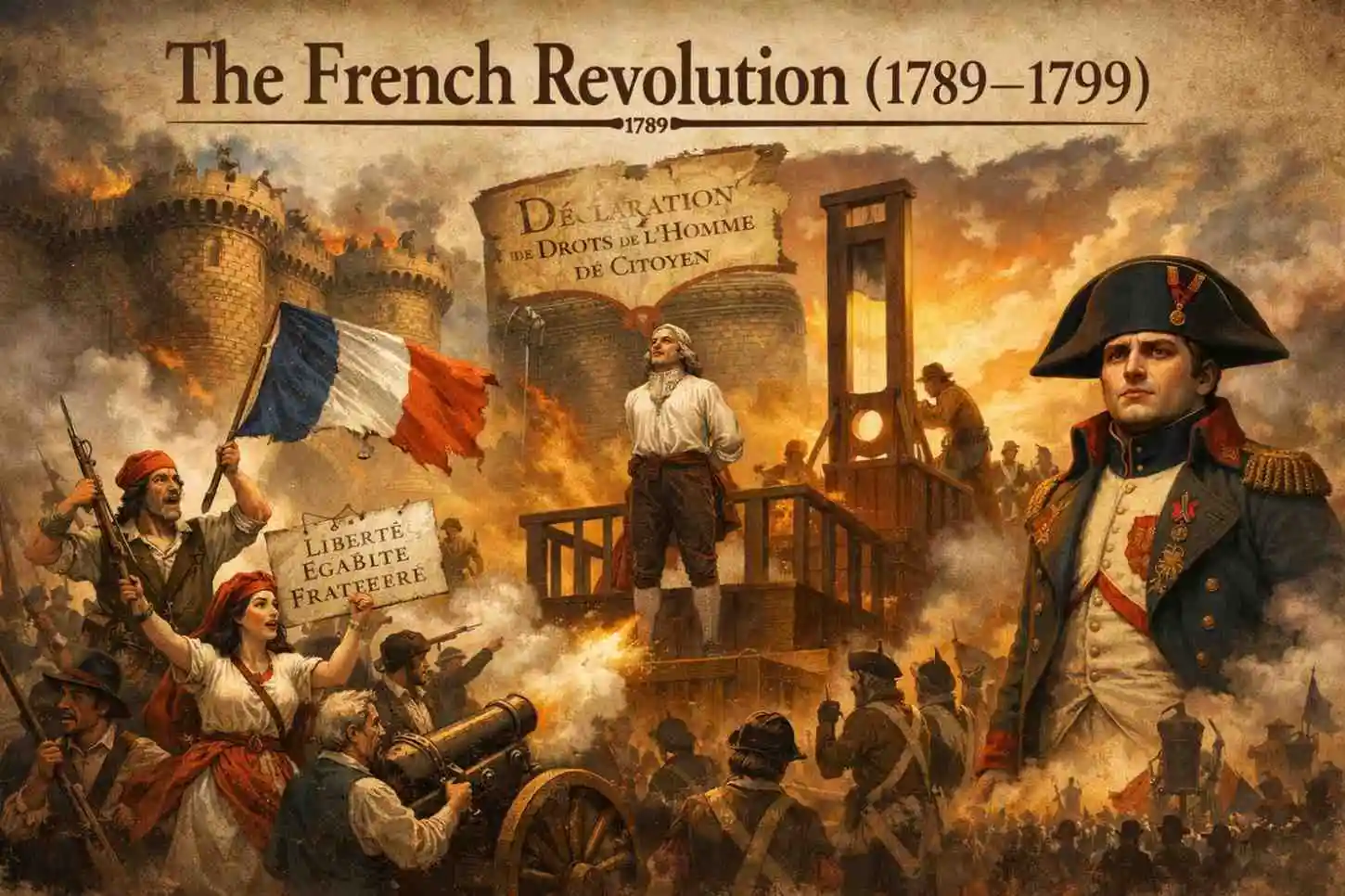
The French Revolution (1789–1799) stands as one of the most dramatic and consequential events in human history. It was not merely a political uprising. It was a fundamental reimagining of how society should be organized, who deserves power, and what rights every human being is born with. In just ten turbulent years, France went from an absolute monarchy to a republic, witnessed mass executions, experienced waves of political terror, and ultimately gave rise to one of history's greatest military leaders — Napoleon Bonaparte.
For students, history enthusiasts, and anyone trying to understand how the modern world came to be, the French Revolution is essential reading. The principles it championed — liberty, equality, and fraternity — continue to echo in constitutions, political movements, and human rights declarations around the globe even today.
Background of 18th-Century France
To truly understand why the French Revolution happened, you need to first understand what France looked like before 1789. On the surface, France was one of the most powerful and culturally rich nations in Europe. King Louis XVI sat on the throne at the magnificent Palace of Versailles, surrounded by art, wealth, and ceremony. But beneath that glittering surface, the country was deeply fractured.
France's population of roughly 28 million people lived under a rigid social structure that had barely changed in centuries. The economy was in ruins, the treasury was empty, and ordinary people were growing increasingly angry at a system that seemed designed to keep them poor and powerless. Understanding these background conditions is key to grasping why revolution became not just possible, but inevitable.
The Three Estates System
French society was legally divided into three groups known as the Three Estates. The First Estate consisted of the clergy — the Catholic Church leaders who owned about 10% of all land in France yet paid almost no taxes. The Second Estate was the nobility, who enjoyed enormous privileges, controlled vast wealth, and were largely exempt from many forms of taxation. The Third Estate, which made up roughly 97% of the French population, included everyone else — merchants, lawyers, artisans, urban workers, and the rural peasantry.
The fundamental injustice of this system was staggering. The Third Estate carried the overwhelming burden of taxation while having the least political power and the fewest legal protections. They could not hold senior government positions, faced harsher punishments under the law, and had virtually no voice in how the country was run. This resentment formed the emotional foundation of the revolution.
Key insights from the Three Estates system:
- The clergy and nobility controlled most wealth and paid little tax
- 97% of the population bore the heaviest financial burden
- Social mobility was extremely limited for commoners
- Political representation was almost nonexistent for the Third Estate
- Structural inequality created a powder keg of social tension
Economic Crisis and Debt
France's financial situation by the 1780s was nothing short of catastrophic. The country had spent enormous sums supporting the American Revolution, fighting expensive wars against Britain, and maintaining the lavish lifestyle of the royal court at Versailles. France was essentially bankrupt. The government owed staggering debts to creditors both inside and outside the country, and interest payments alone were consuming a significant portion of the national budget.
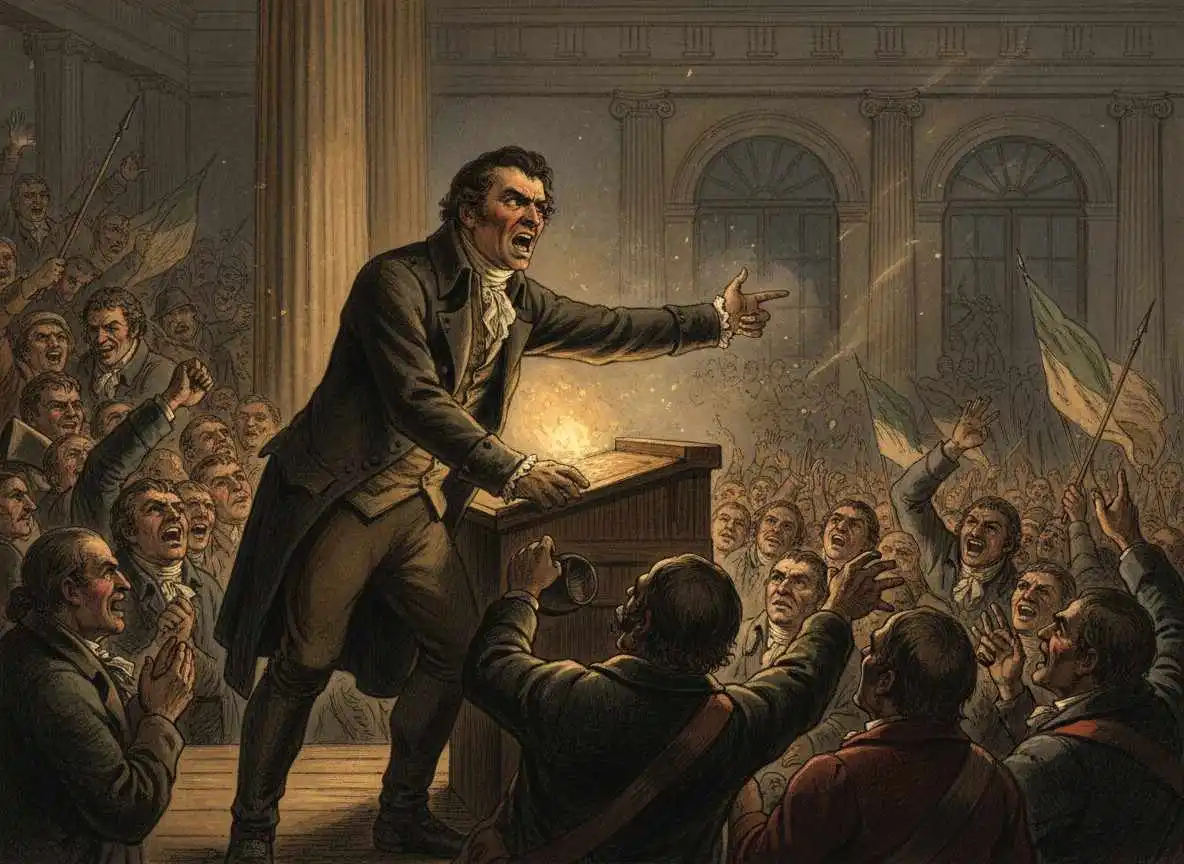
To solve the financial crisis, the king's advisors proposed taxing the nobility. The nobles refused and demanded that the king summon the Estates-General — a representative assembly that had not met since 1614 — to address the crisis. This decision, meant to protect aristocratic privilege, inadvertently opened the door to revolution.
Causes of the French Revolution
No revolution has a single cause. The French Revolution was the result of multiple pressures building simultaneously over many decades, finally reaching a breaking point in 1789.
Social Inequality
The vast gap between the privileged classes and the common people was the most fundamental cause of the revolution. While aristocrats dined lavishly and attended court balls, peasants in rural France sometimes could not afford the grain needed to make bread. This wasn't just poverty — it was visible, institutionalized inequality enforced by law and tradition.
Enlightenment Ideas
The 18th century was an age of intellectual revolution known as the Enlightenment. Philosophers like John Locke, Jean-Jacques Rousseau, and Voltaire challenged traditional authority and promoted radical ideas: that governments derive their power from the consent of the governed, that all men are born equal, and that reason — not royal birthright — should guide political decisions. These ideas spread rapidly through books, pamphlets, and coffeehouses, giving the educated middle class of France a vocabulary and a justification for demanding change.
- Enlightenment thinkers questioned the divine right of kings
- Rousseau's idea of the "social contract" inspired demands for representation
- Voltaire's sharp critiques of church and state reached wide audiences
- American independence in 1776 proved that overthrowing monarchy was possible
- Enlightenment ideas gave the Third Estate a philosophical framework for revolt
Political Weakness of the Monarchy
King Louis XVI was not a cruel tyrant by nature — he was, by most accounts, a well-meaning but deeply indecisive ruler. He struggled to manage his advisors, failed to implement necessary reforms, and was heavily influenced by his wife, Queen Marie Antoinette, who was widely seen as extravagant and out of touch with the suffering of ordinary French people. His inability to lead firmly during the crisis accelerated the collapse of royal authority.
Food Shortages and Rising Prices
A series of poor harvests in the late 1780s triggered a food crisis. Bread prices surged dramatically. For the urban poor, who spent the majority of their income on food, this was devastating. In Paris especially, hunger and desperation pushed the working class to the edge. Starvation is a powerful motivator, and empty stomachs drove many Parisians into the streets when the revolution began.
Key Events of the French Revolution
The Estates-General and National Assembly
In May 1789, King Louis XVI summoned the Estates-General to Versailles to address the fiscal crisis. Each Estate sent representatives, but disagreements immediately arose about voting procedures. The Third Estate demanded that votes be counted by head rather than by Estate — which would have given them effective equality. When the king rejected this, the Third Estate broke away and declared itself the National Assembly, claiming to represent the French people as a whole.
Tennis Court Oath
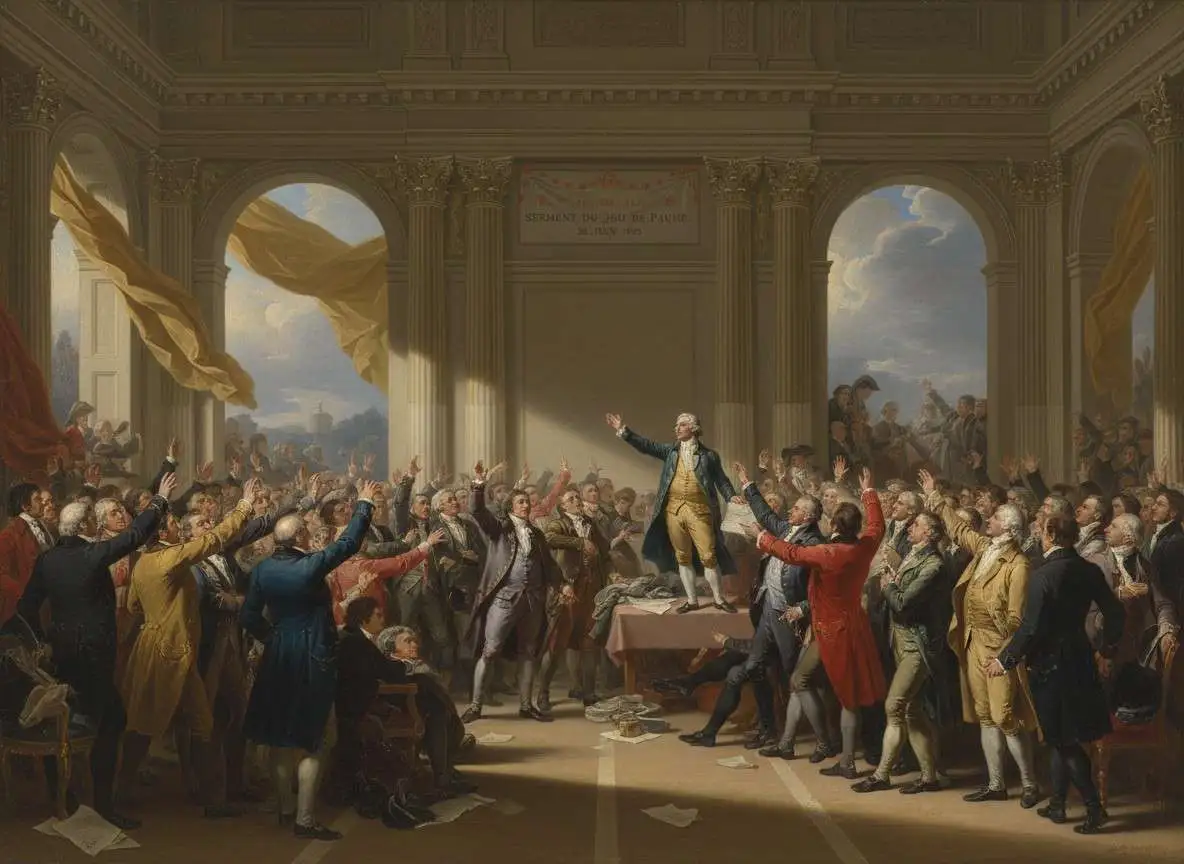
On June 20, 1789, members of the National Assembly arrived at their meeting hall only to find it locked by royal order. Refusing to be dismissed, they moved to a nearby indoor tennis court and took a solemn oath not to disband until they had written a new constitution for France. This Tennis Court Oath was an act of extraordinary defiance that signaled a fundamental shift in where political authority now lay.
Storming of the Bastille
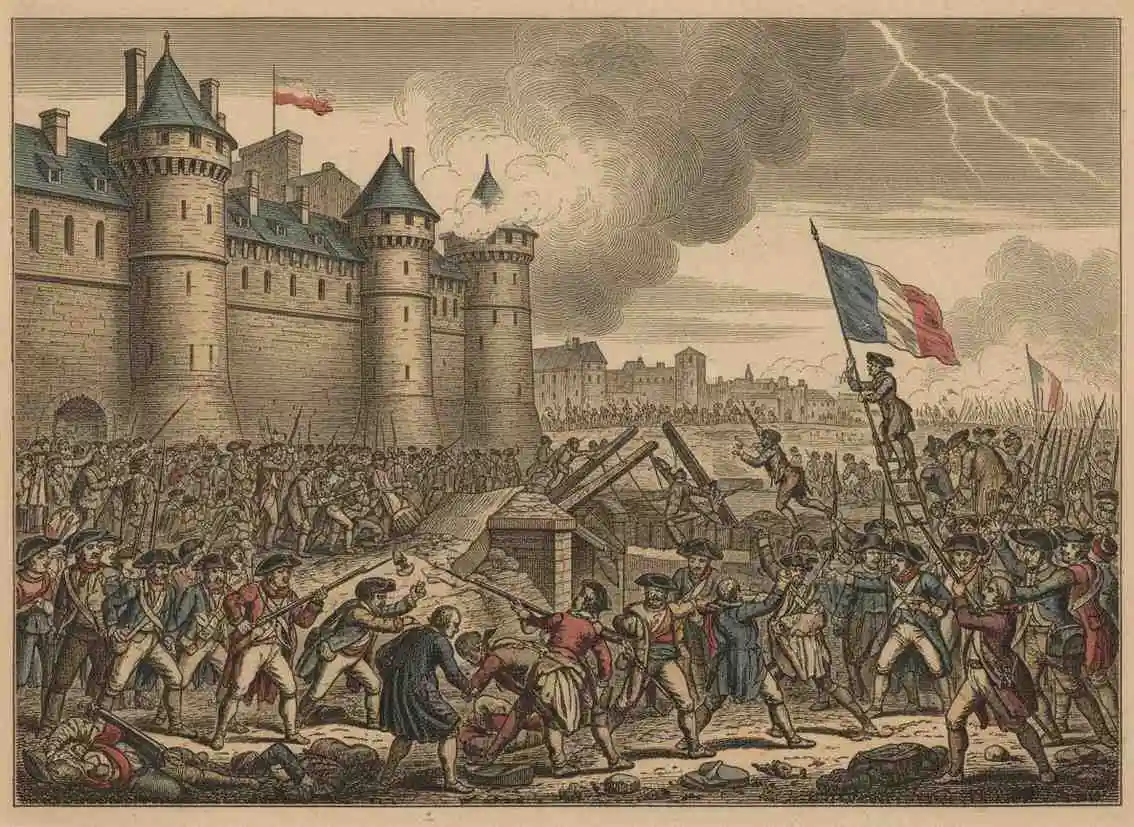
On July 14, 1789, a Parisian crowd stormed the Bastille — a medieval fortress and prison that symbolized royal tyranny. Although only seven prisoners were found inside, the symbolic importance of the event was enormous. It marked the moment ordinary people physically challenged royal power and won. July 14 is still celebrated as Bastille Day, France's national holiday, every year.
Declaration of the Rights of Man
In August 1789, the National Assembly adopted the Declaration of the Rights of Man and of the Citizen — a landmark document that proclaimed individual freedoms including liberty, property rights, equality before the law, and freedom of speech. Inspired heavily by Enlightenment philosophy and the American Declaration of Independence, this document became one of the foundational texts of modern democracy.
Radical Phase of the Revolution
Fall of the Monarchy
By 1792, the revolution had grown far more radical. War with Austria and Prussia created a climate of fear and suspicion. The Legislative Assembly suspended the king and ordered elections for a new body — the National Convention — which would govern France as a republic.
Execution of Louis XVI
In January 1793, King Louis XVI was tried for treason against the French people and found guilty. He was publicly executed by guillotine in Paris, a moment that shocked all of Europe. The execution of a king sent an unmistakable message: no one — not even a monarch — was above the will of the people.
Reign of Terror
From September 1793 to July 1794, France entered one of its darkest periods — the Reign of Terror. Led by the Committee of Public Safety under Maximilien Robespierre, the government executed thousands of people accused of being enemies of the revolution. Estimates suggest that between 16,000 and 40,000 people were killed, many by guillotine in public squares. The Terror ended only when Robespierre himself was arrested and executed in July 1794.
Rise of Napoleon Bonaparte
Directory Government
After the fall of Robespierre, France established a new government called the Directory, made up of five directors. This government was notoriously corrupt, ineffective, and politically unstable. It struggled to manage economic problems, military conflicts, and popular unrest. By 1799, most French people were exhausted and desperate for strong, competent leadership.
Coup of 1799
Napoleon Bonaparte, a brilliant military general who had become enormously popular for his victories in Italy and Egypt, saw his opportunity. On November 9–10, 1799 — known as 18 Brumaire in the French revolutionary calendar — Napoleon staged a coup and overthrew the Directory. He established the Consulate, placing himself as First Consul with near-dictatorial powers. This moment effectively ended the French Revolution and began the Napoleonic era.
Effects and Consequences
Political Changes
The revolution permanently ended absolute monarchy in France and established the principle of popular sovereignty — the idea that governments must serve and be accountable to the people. Constitutional government became the new political standard, and France went through several different governmental structures as it worked to define what representative democracy should look like.
Social Reforms
Feudalism was abolished, the legal privileges of the nobility were stripped away, and the idea that every citizen deserved equal treatment under the law took hold. The metric system was introduced. Education and civic institutions were reformed. Property rights were redistributed. These were profound changes that fundamentally restructured French society.
Global Impact
The ideas unleashed by the French Revolution spread rapidly beyond France's borders. Revolutionary ideals inspired independence movements across Latin America, contributed to the spread of nationalism throughout Europe, and challenged colonial empires around the world. The Declaration of the Rights of Man influenced human rights frameworks that persist to this day, including the Universal Declaration of Human Rights adopted by the United Nations in 1948.
Legacy of the French Revolution
The French Revolution's legacy is complex, layered, and still debated by historians. On one hand, it was a triumph of human dignity — a moment when ordinary people refused to accept unjust conditions and demanded a better world. It gave the world the vocabulary of modern democracy: rights, citizenship, equality, liberty.
On the other hand, it also demonstrated how quickly revolutions can turn violent and how the pursuit of radical ideals can lead to repression. The Reign of Terror remains a sobering reminder that even the most noble-sounding goals can be twisted into instruments of fear.
What is undeniable is that the French Revolution reshaped political thought permanently. Before 1789, it was widely assumed that monarchies and hereditary privilege were simply the natural order of things. After the revolution, that assumption could never fully recover. The world after 1789 was a fundamentally different world — one in which ordinary people knew they had the power to demand change.
Conclusion
The French Revolution was not a single event — it was a decade-long upheaval that rewrote the rules of politics, society, and human rights. Born from inequality, intellectual awakening, financial crisis, and hunger, it swept away the old world and attempted, imperfectly but powerfully, to build a new one. From the Tennis Court Oath to the execution of Louis XVI, from the Reign of Terror to the rise of Napoleon, every chapter of this revolution reveals something important about human nature, political power, and the eternal struggle for justice.
For anyone studying history, understanding the French Revolution is not optional — it is essential. The world we live in today, with its emphasis on human rights, democratic governance, and legal equality, owes a significant debt to the events of those ten extraordinary years between 1789 and 1799.
FAQs
Q1: What were the main causes of the French Revolution?
The French Revolution was caused by a combination of deep social inequality between the Three Estates, a severe economic crisis and government debt, Enlightenment ideas challenging royal authority, political weakness of King Louis XVI, and widespread food shortages that pushed ordinary people to desperation. These pressures built over decades and finally exploded in 1789, triggering one of history's most transformative uprisings.
Q2: What was the significance of the storming of the Bastille?
The storming of the Bastille on July 14, 1789, was symbolically crucial because it represented the first major act of physical defiance against royal authority by ordinary French citizens. Though few prisoners were found inside, the event demonstrated that the king's power could be directly challenged. It became the defining symbol of the revolution and is still celebrated as France's national holiday every year.
Q3: What was the Reign of Terror during the French Revolution?
The Reign of Terror (September 1793 – July 1794) was a period of extreme political violence during the French Revolution. Led by Maximilien Robespierre and the Committee of Public Safety, the government executed thousands of people accused of being enemies of the revolution. Between 16,000 and 40,000 individuals were killed. The Terror ended when Robespierre was overthrown and executed by his own political allies.
Q4: How did Enlightenment ideas influence the French Revolution?
Enlightenment philosophers like Rousseau, Voltaire, and Locke challenged the divine right of kings and argued that governments should serve the people. These ideas spread widely through French intellectual circles and gave the Third Estate a powerful philosophical justification for demanding political equality, legal rights, and representative government — ideas that directly shaped revolutionary demands and the Declaration of the Rights of Man.
Q5: How did the French Revolution impact the rest of the world?
The French Revolution's impact was truly global. Its ideals of liberty, equality, and popular sovereignty inspired independence movements across Latin America, fueled nationalist revolutions across Europe, and challenged colonial rule worldwide. The Declaration of the Rights of Man directly influenced later human rights documents, including the United Nations' Universal Declaration of Human Rights in 1948, making the revolution a cornerstone of modern global political thought.
Click below to generate summary