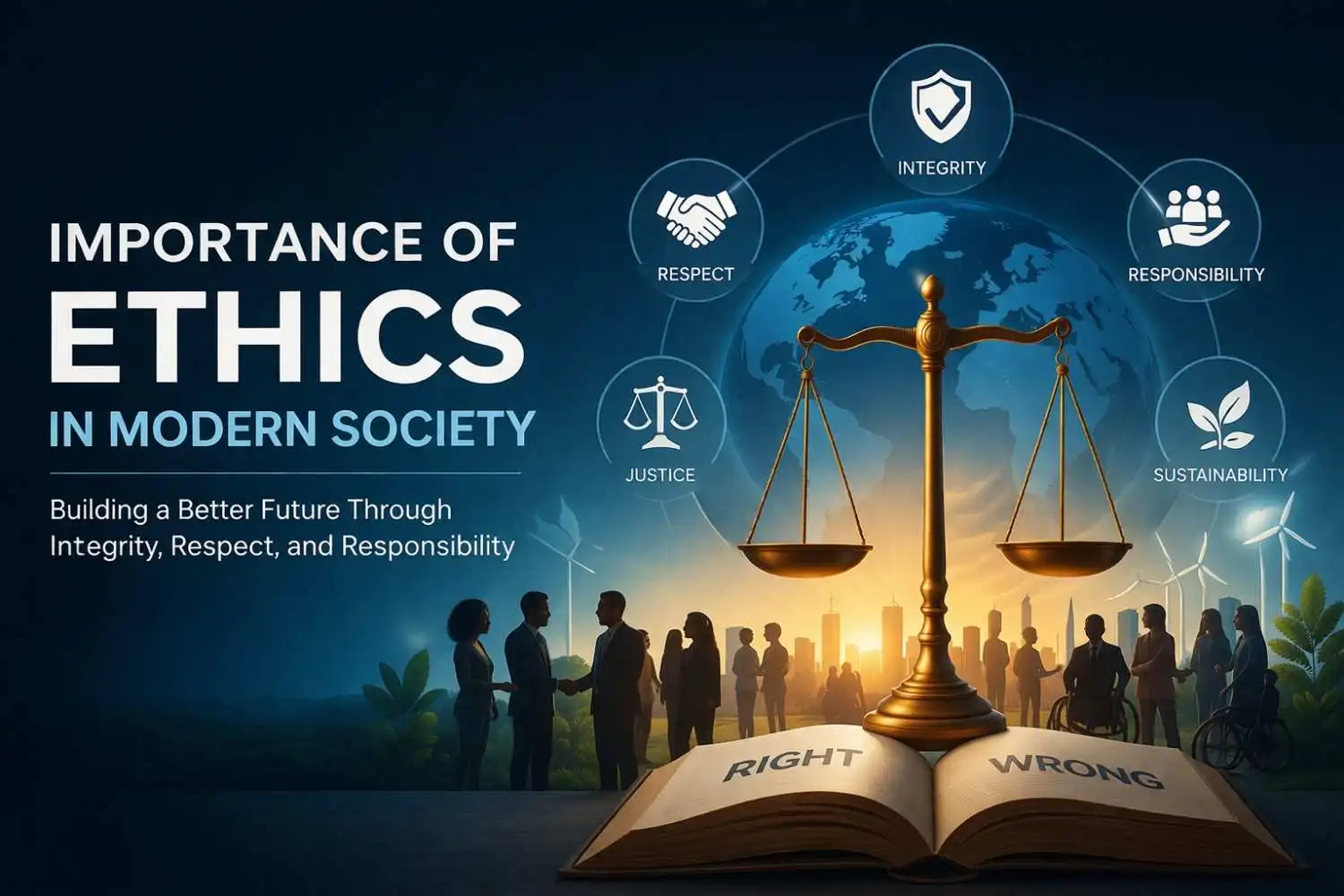
Have you ever paused to wonder what holds society together? Not laws, not governments, not even money — but something far more fundamental. Ethics. The invisible thread that runs through every human interaction, every decision, and every institution that shapes our lives.
We live in an era of unprecedented complexity. Artificial intelligence is making decisions that affect millions. Social media platforms are reshaping how we perceive truth. Corporations are wielding power that rivals that of governments. And in the middle of all this, individuals are left asking: what is the right thing to do?
The problem is not that people have stopped caring about doing the right thing. The problem is that ethical frameworks are struggling to keep up with the pace of change. Old moral codes are being tested in new environments, and the consequences of ignoring ethics — whether in personal relationships, corporate boardrooms, or government offices — are becoming increasingly visible and damaging.
Understanding Ethics
Ethics, at its core, is the branch of philosophy concerned with questions about what is right, what is wrong, and what constitutes a good life. It deals with moral principles — the standards by which human behavior is judged. But ethics is far more than an academic concept. It is the practical compass that guides how we treat each other, how institutions operate, and how societies function.
There are three major ethical frameworks that philosophers and thinkers have developed over centuries. Consequentialism judges actions based on their outcomes — an action is good if it produces the greatest good for the greatest number of people. Deontological ethics, associated with Immanuel Kant, argues that certain actions are inherently right or wrong regardless of consequences. Virtue ethics, rooted in Aristotle's philosophy, focuses on the character of the individual rather than specific rules or outcomes.
Understanding these frameworks is not just an academic exercise. In real life, we draw from all three simultaneously. A doctor weighing whether to share a difficult diagnosis must consider consequences for the patient, professional duties, and personal integrity all at once.
Key insights on understanding ethics:
- Ethics provides a structured way to make moral decisions in complex situations
- Multiple ethical frameworks exist, each offering different but complementary perspectives
- Ethics applies to individuals, institutions, and entire societies
- Moral reasoning is a skill that can be developed and refined over time
- Ethics is not about perfection but about the ongoing commitment to thoughtful, responsible action
Historical Evolution of Ethics
Ethics did not emerge overnight. Its development spans thousands of years, shaped by civilizations, religions, philosophers, and social movements. Ancient Greek thinkers like Socrates, Plato, and Aristotle laid the early groundwork, arguing that the purpose of human life was to achieve eudaimonia — a state of flourishing and well-being achieved through virtuous living.
Religious traditions have also played a massive role in shaping ethical thought. Christianity, Islam, Hinduism, Buddhism, and Judaism each offer moral frameworks rooted in divine command, compassion, duty, and justice. These frameworks influenced legal systems, governance structures, and social norms across centuries and continents.
The Enlightenment of the seventeenth and eighteenth centuries brought a shift toward reason-based ethics. Thinkers like Locke, Hume, and Kant moved away from purely religious justifications and argued that moral principles could be derived through rational thought. This period gave birth to concepts like natural rights, equality, and social contracts — ideas that continue to underpin democratic societies today.
The twentieth century introduced new ethical challenges: colonialism, genocide, nuclear warfare, and systemic inequality forced humanity to confront the consequences of moral failure at a global scale. Organizations like the United Nations emerged with universal declarations on human rights, signaling a collective attempt to establish ethical standards that transcend national borders.
Key insights from the historical evolution of ethics:
- Ethical thinking has evolved alongside human civilization and social complexity
- Both religious and secular traditions have contributed to moral frameworks
- Historical atrocities often became turning points for strengthening ethical standards
- Modern ethics is pluralistic, drawing from multiple traditions and perspectives
- The evolution of ethics reflects humanity's growing capacity for empathy and collective responsibility
Why Ethics Matters Today
In a world driven by rapid technological change, political polarization, and global interconnection, ethics matters more than ever. The decisions made by individuals, corporations, and governments today will shape the lives of billions of people for generations to come. Without a strong ethical foundation, these decisions risk causing enormous harm.
Ethics and Trust
Trust is the currency of functional societies. Without it, institutions collapse, relationships deteriorate, and cooperation becomes impossible. Ethics is the foundation upon which trust is built. When people behave ethically — honestly, fairly, and consistently — they create environments where others feel safe, valued, and respected. Scandals, corruption, and dishonesty, on the other hand, erode this trust rapidly, sometimes permanently.
Research consistently shows that organizations with strong ethical cultures outperform those without them. People are more likely to engage with, invest in, and remain loyal to entities they trust. Trust, built through ethical behavior, is not just morally desirable — it is practically essential.
Ethics in Personal Life
Ethics shapes every aspect of how we live our daily lives. The way we treat our family members, interact with strangers, honor our commitments, and respond to adversity — all of these reflect our ethical values. Personal ethics is not about following a rigid rulebook but about cultivating habits of honesty, compassion, fairness, and responsibility.
Living ethically requires self-awareness. It means asking difficult questions: Am I being honest right now? Am I treating this person the way I would want to be treated? Are my actions consistent with the values I claim to hold? These questions, when taken seriously, lead to more meaningful relationships and a deeper sense of personal integrity.
Ethics in Business
Corporate ethics has become one of the most discussed topics in modern commerce. From supply chain labor practices to environmental impact to executive compensation, businesses are under increasing scrutiny from consumers, investors, and regulators. Ethical businesses do not just avoid harm — they actively contribute to the well-being of their employees, communities, and the planet.
The rise of Environmental, Social, and Governance (ESG) investing reflects a growing recognition that ethical business practices are linked to long-term financial performance. Companies that behave responsibly tend to attract better talent, retain customers, and avoid the costly consequences of scandals and legal violations.
Ethics in Government
Governments hold enormous power over the lives of citizens. Ethical governance means exercising that power with transparency, accountability, and a genuine commitment to the public good. Corruption, nepotism, and abuse of power are not just legal problems — they are profound ethical failures that undermine the social contract and erode public faith in democratic institutions.
Ethical governments invest in fair justice systems, social programs that are equitable, and policies that prioritize human dignity over political convenience. The difference between ethical and unethical governance can mean the difference between a thriving society and a failing state.
Key insights on why ethics matters today:
- Trust, which ethics enables, is the cornerstone of social and institutional stability
- Personal ethics shapes the quality of individual relationships and character
- Ethical business practices are increasingly tied to long-term corporate success
- Ethical governance is essential for maintaining democratic legitimacy and public trust
- The absence of ethics in any of these domains creates ripple effects across all of them
Ethics in Technology
Technology, particularly artificial intelligence, big data, and digital platforms, presents some of the most urgent ethical challenges of our time. Algorithms now influence hiring decisions, loan approvals, criminal sentencing, and medical diagnoses. Data collected by tech companies shapes political campaigns and personal beliefs. The ethical stakes of these developments are extraordinarily high.
Digital Responsibility
Digital responsibility refers to the obligation of both individuals and organizations to use technology in ways that are safe, honest, and respectful of others. For individuals, this means being mindful of what they share online, protecting their own privacy, and treating others with dignity in digital spaces. For organizations, it means building products that prioritize user safety, being transparent about data use, and designing algorithms free from discriminatory bias.
Social Media Ethics
Social media platforms have transformed how information spreads — for better and for worse. Misinformation, cyberbullying, privacy violations, and manipulative algorithms are all ethical crises born of the social media age. Ethical social media use means verifying information before sharing, respecting others' privacy, avoiding hate speech, and being aware of the ways that digital engagement can be manipulated. Platforms themselves bear an ethical responsibility to moderate harmful content and protect vulnerable users.
Key insights on ethics in technology:
- AI and algorithms can perpetuate bias and discrimination if not developed ethically
- Data privacy is a fundamental ethical issue in the digital age
- Digital responsibility applies equally to individuals and technology companies
- Social media ethics involves both personal conduct and platform-level accountability
- Technology ethics requires ongoing regulation, transparency, and public dialogue
Ethics in Education
Education is where ethical values are first formally introduced and developed. Schools are not just places of academic learning — they are moral communities where young people learn what it means to be responsible, honest, fair, and compassionate members of society. Ethical education goes beyond teaching rules; it involves cultivating the capacity for moral reasoning and empathy.
Teachers, parents, and institutions all play critical roles in shaping the ethical development of the next generation. Curricula that include discussions of moral dilemmas, historical injustices, and civic responsibility help students develop the tools they need to navigate complex ethical situations throughout their lives.
Key insights on ethics in education:
- Schools are foundational spaces for ethical development
- Moral education should be integrated across all subjects, not isolated to philosophy classes
- Teaching ethics involves modeling ethical behavior, not just stating rules
- Critical thinking and empathy are core components of ethical education
- Ethical education prepares students for responsible citizenship and professional life
Ethics and Global Society
Environmental Ethics
Environmental ethics examines the moral relationship between human beings and the natural world. As climate change, deforestation, pollution, and biodiversity loss accelerate, the ethical imperative to protect the planet becomes impossible to ignore. Future generations have no voice in the decisions we make today, yet they will bear the full consequences of our choices. Environmental ethics calls us to act as stewards rather than owners of the earth.
Workplace Ethics
Professional environments are arenas where ethical behavior is tested daily. Honesty with clients, fairness in performance evaluations, respect for colleagues, and integrity in financial reporting are all expressions of workplace ethics. Organizations that cultivate ethical cultures benefit from higher employee morale, lower turnover, and stronger reputations.
Key insights on ethics and global society:
- Environmental ethics demands that we consider the moral claims of future generations
- Sustainability is not just a policy issue — it is a profound ethical obligation
- Workplace ethics fosters trust, productivity, and organizational integrity
- Global ethics requires transcending cultural differences to uphold universal human values
- Ethical global citizenship means acting responsibly at both local and international levels
FAQs
What is the importance of ethics in modern society?
Ethics provides the moral foundation that allows individuals, institutions, and societies to function with fairness, trust, and accountability. In modern society, where technology, globalization, and social complexity create new dilemmas daily, ethics offers the guiding principles needed to make decisions that respect human dignity, promote justice, and ensure long-term well-being for everyone.
How does ethics affect everyday life?
Ethics shapes everyday choices in profound ways — from how we communicate with others and honor our promises to how we respond to injustice and treat strangers. Living ethically means making decisions guided by honesty, fairness, and respect. These small daily choices accumulate over time and define both personal character and the broader culture of the communities we belong to.
Why is business ethics important for companies?
Business ethics ensures that companies operate with integrity, transparency, and accountability toward all stakeholders — employees, customers, communities, and the environment. Ethical companies build stronger trust, attract loyal customers, and reduce legal risks. Long-term success in business is increasingly tied to ethical performance, as consumers and investors alike prioritize companies that demonstrate genuine social and moral responsibility.
What role does ethics play in government and public policy?
Ethics in government ensures that public officials exercise power with honesty, fairness, and a commitment to the common good. Ethical governance reduces corruption, strengthens democratic institutions, and promotes policies that serve all citizens rather than privileged few. When governments operate ethically, citizens are more engaged, institutions are more effective, and societies are more stable and equitable.
How can individuals develop stronger personal ethics?
Developing personal ethics requires self-reflection, education, and practice. Start by identifying your core values and examining whether your daily actions align with them. Seek out ethical role models, engage with diverse perspectives, and practice empathy regularly. Reading philosophy, engaging in community service, and having honest conversations about moral dilemmas all help strengthen ethical thinking and build integrity over time.
Conclusion
The importance of ethics in modern society cannot be overstated. At a time when humanity faces challenges of extraordinary scale and complexity — from artificial intelligence and climate change to political division and economic inequality — ethics serves as the compass that points us toward a more just, compassionate, and sustainable world.
Ethics is not a relic of philosophy textbooks or a luxury reserved for idealists. It is a daily practice, a social necessity, and an urgent imperative. It lives in the choices of individuals who choose honesty over convenience, in the decisions of companies that prioritize people over profit, in the policies of governments that protect the vulnerable, and in the design of technologies that respect human dignity.
Every domain of modern life — education, business, governance, technology, and global society — is shaped by ethical decisions. When those decisions are made thoughtfully and responsibly, they build trust, strengthen institutions, and create conditions where human beings can genuinely flourish. When they are ignored or corrupted, the consequences are felt broadly and often irreversibly.
The good news is that ethics is not fixed or finite. It is a living, evolving conversation that each generation has the opportunity to deepen and advance. By committing to ethical awareness — in our personal lives, our professional roles, and our civic participation — we each become part of the solution.
The world does not need perfect people. It needs conscious, courageous, and caring ones. It needs people who are willing to ask hard questions, sit with uncomfortable answers, and choose what is right even when it is difficult. That is the promise of ethics, and it is a promise worth keeping.
Click below to generate summary