Introduction to Modern Equality
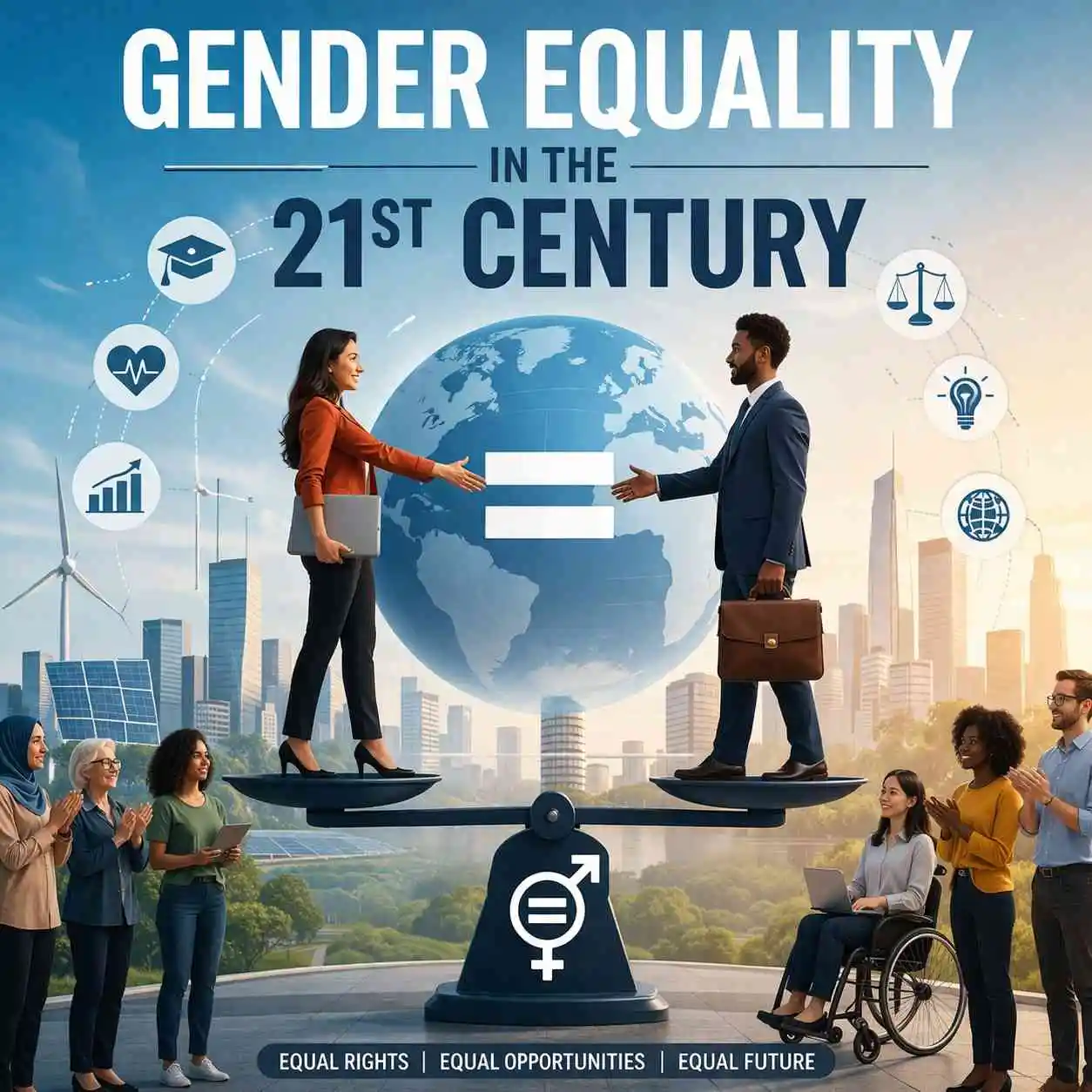
We live in a time of extraordinary contradiction. More women hold university degrees today than at any previous point in recorded history, yet a woman still earns, on average, roughly 80 cents for every dollar a man makes performing the same job. Governments across the world have signed international treaties pledging equal rights for all genders, yet millions of girls are still denied the basic right to choose when — or even whether — they will marry. Gender equality in the 21st century is not a problem that has been solved. It is an evolving, urgent, and deeply personal challenge that shapes the lives of every human being on the planet, regardless of the gender they identify with.
The concept of gender equality refers to the state in which all people — irrespective of the gender they were assigned at birth or identify with — have the same rights, responsibilities, and opportunities across every sphere of public and private life. It does not mean that all genders must become identical. Rather, it affirms that differences in biology, culture, or identity should never become a reason to restrict access to education, economic opportunity, political voice, or personal freedom.
Historical Progress
The road to gender equality is long, winding, and marked by hard-won victories. In the 19th century, women in most countries could not vote, own property, attend university, or sign a legal contract in their own name. The suffragette movements of the late 1800s and early 1900s began to crack these walls, culminating in landmark moments such as New Zealand granting women the right to vote in 1893 — the first country in the world to do so — and the passage of the 19th Amendment to the United States Constitution in 1920, which extended that right to American women after decades of organised campaigning.
The mid-20th century brought a second wave of feminist advocacy focused on reproductive rights, workplace equality, and the active dismantling of legal discrimination. The 1970s and 1980s saw the passage of equal-pay legislation across many democracies, the legalisation of no-fault divorce that freed women from abusive marriages, and the gradual entry of women into previously male-dominated professions such as law, medicine, and engineering.
By the turn of the 21st century, the conversation had expanded considerably. Intersectional feminism brought critical attention to the ways gender inequality overlaps and compounds with race, class, disability, and sexuality. International frameworks such as the United Nations Sustainable Development Goal 5 — dedicated entirely to achieving gender equality and empowering all women and girls — placed the issue firmly at the heart of the global development agenda. Today, while the formal legal architecture of equality is more robust than at any prior point in history, structural and cultural inequalities remain stubbornly embedded in institutions and everyday life.
Key Insights:
- Suffrage movements of the 19th and 20th centuries laid the legal groundwork for modern gender equality.
- Mid-century feminism expanded rights into workplaces, homes, and personal freedoms.
- Intersectional frameworks have broadened the conversation to include race, class, and sexual identity.
- The UN Sustainable Development Goals have embedded gender equality into the global agenda.
Why Gender Equality Matters Today
Gender equality is not simply a moral aspiration — it is an economic imperative and a social necessity. Research by the McKinsey Global Institute has consistently found that closing gender gaps in labour force participation could add trillions of dollars to global GDP within a single decade. When women can work, earn, save, and invest freely, entire households, communities, and nations benefit. Children raised in households with empowered mothers demonstrate better health outcomes, higher educational attainment, and lower rates of poverty. Gender equality is, quite literally, one of the most powerful development tools available to humanity.
Beyond economics, gender equality shapes the health of democracies and social cohesion at large. Societies that marginalise women in law, politics, and culture also tend to be more authoritarian, more corrupt, and less innovative. Conversely, countries that rank highest on gender equality indices — such as those in Scandinavia — also consistently rank highest in overall happiness, productivity, and quality of life for all citizens, men included.
Education
Education is both a driver and a direct outcome of gender equality. Over the past five decades, the gender gap in primary and secondary schooling has narrowed dramatically in most regions of the world. In many high-income countries, women now outnumber men in university enrolment and graduation rates. This represents a genuine triumph of policy, sustained advocacy, and cultural change.
However, access is only one part of the story. What children are taught — through formal curricula and informal social norms — profoundly shapes their sense of what is possible for them. Girls in many educational systems are still subtly and not-so-subtly steered away from science, technology, engineering, and mathematics through a combination of teacher bias, gender-stereotyped textbooks, and peer pressure. Women represent fewer than 30 percent of researchers globally, and this pipeline problem begins in school. Furthermore, in sub-Saharan Africa and parts of South and West Asia, millions of girls still do not complete secondary school due to poverty, early marriage, and safety concerns related to gender-based violence.
Key Insights:
- Women outnumber men in university enrolment in many developed nations — a historic reversal.
- Unconscious bias continues to steer girls away from STEM fields at the school level.
- In low-income regions, poverty and early marriage remain the primary barriers to girls completing school.
- Educated women invest more in their own children, creating powerful intergenerational cycles of progress.
Workplace
The modern workplace is one of the most visible arenas of gender inequality, and also one of the most fiercely contested. Women have made extraordinary inroads into professional life over the past 50 years, entering sectors and roles once entirely closed to them. Yet the glass ceiling remains very real. As of 2024, women account for only around 8 percent of Fortune 500 CEOs, despite comprising nearly half of the global workforce. The gender pay gap — shaped by occupational segregation, part-time work patterns, and career interruptions due to caregiving responsibilities — also reflects direct wage discrimination that persists even in carefully controlled studies that hold education, experience, and job type constant.
Parental leave policies, flexible work arrangements, and affordable childcare are not merely "women's issues." They are structural reforms that allow both men and women to balance career ambitions and family responsibilities without one partner — almost always the woman — bearing the full economic cost. Companies with gender-diverse leadership consistently outperform their peers on measures of innovation, employee retention, and financial returns. Workplace equality, in other words, is simply good business.
Key Insights:
- Women hold fewer than 10 percent of CEO roles in the world's largest companies.
- The gender pay gap reflects both occupational segregation and measurable direct discrimination.
- Flexible work, paid parental leave, and childcare access are structural solutions, not special treatment.
- Gender-diverse leadership teams demonstrably outperform homogeneous ones across key metrics.
Politics
Political representation is the mechanism through which gender equality is translated into law and lasting policy. When women are absent from legislative bodies, their lived experiences, priorities, and needs are systematically under-represented in the rules that govern society. Research shows that women legislators are more likely than their male counterparts to introduce and champion bills related to healthcare, education, childcare reform, and prevention of violence — areas that affect the whole of society, not just women.
Global progress on political representation has been genuinely mixed. Rwanda leads the world, with women holding over 60 percent of parliamentary seats — a transformation rooted in constitutional reforms introduced after the 1994 genocide. Iceland, Finland, and New Zealand have also made impressive strides through a combination of quotas, cultural change, and strong institutional support. However, the global average for women in national parliaments hovers around 26 percent, and in many regions — particularly across the Middle East and North Africa — women remain almost entirely absent from the corridors of political power.
Key Insights:
- Women hold approximately 26 percent of parliamentary seats globally, far below parity.
- Rwanda leads the world in female parliamentary representation at over 60 percent.
- Women legislators demonstrably champion family, health, and education policies.
- Quota systems, mentorship programmes, and anti-harassment measures have all proven effective.
Technology and Digital Inclusion
The digital revolution has generated vast new opportunities for learning, earning, and connecting across borders — but it has also introduced a new and often overlooked frontier of gender inequality. The global digital gender divide means that women are significantly less likely than men to own a smartphone, have reliable internet access, or possess the digital literacy skills required by the modern economy. According to the International Telecommunication Union, women account for fewer than one-third of the global technology workforce. This gap carries serious long-term consequences: as economies become ever more digital, women without meaningful digital access or skills risk being locked out of the most dynamic and rapidly growing sectors of employment.
Online harassment represents an additional and deeply damaging dimension of the digital gender gap. Women — particularly women of colour, investigative journalists, and political activists — face disproportionate levels of targeted abuse, coordinated threats, and non-consensual image sharing in online spaces. This has a demonstrable chilling effect on women's freedom of expression and willingness to participate in digital civic life. Closing the digital gender divide will require sustained investment in physical infrastructure, digital literacy programmes designed specifically around the needs of girls and women, and considerably stronger legal and platform-level protections against online gender-based abuse.
Key Insights:
- Women are significantly less likely than men to have internet access or own a smartphone.
- Fewer than one-third of the global tech workforce is female.
- Online harassment disproportionately silences women in public and political digital spaces.
- Digital literacy investment for girls and women is a critical economic and rights priority.
Cultural Shifts
Laws and policies matter enormously — but culture shapes behaviour in ways that legislation alone cannot fully reach. One of the most significant cultural shifts of the 21st century has been the growing, evidence-backed recognition that rigid gender norms cause measurable harm to everyone. Strict expectations of masculinity — the cultural insistence that men must always be strong, stoic, financially dominant, and emotionally unavailable — contribute directly to mental health crises among men, inhibit help-seeking behaviour, and underpin much of the violence perpetrated against women and girls. Campaigns such as HeForShe, the global MeToo movement, and a broader cultural conversation about redefining modern masculinity have begun to meaningfully shift public understanding of what it means to be a man in contemporary society.
Media representation plays an enormous role in shaping and reinforcing cultural attitudes across generations. The past decade has seen a measurable increase in complex, three-dimensional female characters appearing in mainstream film, television, and literature — a movement away from the passive love interest and the one-dimensional supporting role. At the same time, advertising continues to deploy damaging stereotypes, and social media platforms frequently amplify unrealistic beauty standards and prescriptive gender role expectations to young and impressionable audiences. Cultural change is non-linear and contested, and it requires sustained critical engagement from creators, consumers, platform companies, and policymakers alike.
Key Insights:
- Rigid masculinity norms harm men and women equally and are being actively challenged.
- MeToo has shifted cultural accountability standards in workplaces and public institutions.
- Diverse and authentic media representation changes how girls envision their futures.
- Sustained public discourse about gender norms accelerates cultural change measurably.
Legal Reforms
Legal reform has been among the most powerful and reliable levers for advancing gender equality in the 21st century. Countries that have updated their legal frameworks to guarantee equal inheritance rights, criminalise marital rape, expand paid parental leave entitlements, and strengthen equal-pay legislation have seen measurable, positive improvements in women's wellbeing and economic participation. The United Nations Convention on the Elimination of All Forms of Discrimination Against Women (CEDAW), ratified by 189 countries, has served as the foundational global benchmark for national legislation, offering a comprehensive framework against which domestic laws can be measured and reformed.
However, laws are only as effective as the institutions empowered and resourced to enforce them. In many countries, legislation that appears progressive on paper is routinely ignored in practice, undermined by weak judicial systems, entrenched official corruption, or a fundamental lack of legal literacy among the women these laws were designed to protect. Landmark reforms covering property rights, access to credit, and protection from domestic violence must be paired with accessible and free legal aid, sustained community legal education, and robust enforcement mechanisms if they are to translate written rights into genuine lived realities for ordinary women.
Key Insights:
- CEDAW, ratified by 189 countries, is the foundational global legal framework for gender equality.
- Legal reform on pay, parental leave, and inheritance produces measurable improvements in women's outcomes.
- Enforcement, legal aid, and community education are just as important as the legislation itself.
- Domestic violence laws must be paired with safe reporting systems and comprehensive victim support.
Global Challenges
Despite the genuine progress made in recent decades, formidable barriers to gender equality persist around the world. These barriers take distinctly different shapes depending on geography, national wealth, cultural context, and political stability.
Developing Nations
In many low- and middle-income countries, gender inequality is compounded and deepened by poverty, ongoing armed conflict, and weak or corrupt governance. Child marriage remains prevalent across large parts of sub-Saharan Africa, South Asia, and the Middle East, with devastating and lasting consequences for girls' health, formal education, and personal autonomy. Maternal mortality rates — deaths that are almost entirely preventable with access to adequate healthcare — remain scandalously high in regions where quality maternity services are unavailable or unaffordable. Female genital mutilation, honour-based violence, and restrictive dress codes enforced through law or intense social pressure further curtail women's freedoms and movement. International aid programmes that genuinely prioritise girls' education and reproductive health have proven transformative where sustained — but lasting change requires both political will at the national level and deep engagement with local communities.
Key Insights:
- Child marriage remains a leading barrier to girls' education and health across low-income regions.
- Preventable maternal mortality persists at alarming rates where healthcare access is limited.
- Community-led interventions, not only top-down policy mandates, are critical to creating cultural change.
- Investment in gender equality in developing nations yields some of the highest development returns available.
Developed Nations
Wealthier nations face a different — but no less real or consequential — set of gender equality challenges. Structural gaps in pay and career progression, the deeply unequal distribution of unpaid domestic and care labour, and the persistent under-representation of women in political and corporate leadership all continue in countries with strong formal equality legislation. The significant rollback of reproductive rights in parts of the United States in recent years has powerfully underscored the fact that hard-won progress can be reversed when political circumstances shift and vigilance is relaxed. Sexual harassment and gender-based violence remain pervasive across all income levels, as the MeToo movement so viscerally demonstrated. Perhaps most dangerously, complacency — the comfortable assumption that equality has "already been achieved" in prosperous societies — serves to conceal ongoing and in some cases deepening inequalities.
Key Insights:
- Structural pay gaps and leadership under-representation persist even in the world's wealthiest nations.
- Reproductive rights rollbacks demonstrate that social progress is reversible, not permanent.
- Unpaid domestic and care work falls disproportionately on women regardless of national income level.
- Complacency is among the most significant barriers to continued gender equality progress in developed nations.
Role of Men and Allies
Gender equality cannot be achieved by women advocating for themselves alone. Men play an indispensable and active role — not as saviours arriving to grant permissions, but as genuine partners who are also co-beneficiaries of a more equal world. Research consistently demonstrates that men suffer meaningfully under rigid gender norms as well: they are statistically less likely to seek mental health support when struggling, more likely to die by suicide, and are frequently denied meaningful involvement in the parenting of their own children due to workplace cultures that treat caregiving as an exclusively female responsibility. Dismantling patriarchal structures liberates men alongside women.
In practical, everyday terms, male allyship looks like calling out sexist language and behaviour in social and professional settings, actively advocating for parental leave as a standard workforce norm rather than a "female perk," consciously mentoring and sponsoring women in professional environments, and amplifying women's voices and contributions in meetings and decision-making forums where they are routinely talked over. Organisations like Promundo and the UN's HeForShe campaign have developed evidence-based programmes that engage men and boys as genuine agents of gender justice. The most effective gender equality initiatives consistently recognise that men are not the problem to be overcome — they are essential partners in building the solution.
Key Insights:
- Men also suffer under rigid masculinity norms — gender equality is genuinely beneficial for all genders.
- Practical male allyship in workplaces and homes drives measurable cultural change.
- Programmes that engage boys and men in gender equality conversations deliver lasting community-level results.
- Normalising paternity leave redistributes domestic labour more fairly and benefits whole families.
FAQs
What is gender equality in the 21st century?
Gender equality in the 21st century refers to the ongoing effort to ensure that all people — regardless of gender identity — have equal rights, opportunities, and responsibilities in every area of life. While significant legal and educational progress has been made since the suffrage era, structural gaps in pay, political representation, digital access, and cultural norms continue to require active attention, policy reform, and social change.
Why does the gender pay gap still exist in 2025?
The gender pay gap persists due to a combination of occupational segregation, career interruptions for caregiving, and direct wage discrimination. Even in controlled studies comparing men and women with identical qualifications and job roles, a statistically significant pay difference often remains. This indicates that unconscious or deliberate bias continues to operate in hiring and promotion decisions, not only differences in career choices or working hours.
How does gender equality benefit men specifically?
Gender equality benefits men by dismantling harmful norms tied to traditional masculinity — the expectation that men suppress emotion, avoid help-seeking, and measure their worth solely through income or dominance. More equal societies record lower male suicide rates and stronger father-child relationships. Men in gender-equal households also consistently report higher relationship satisfaction and greater overall personal wellbeing compared to those in traditionally structured households.
Which country currently ranks as the most gender-equal in the world?
According to the World Economic Forum's Global Gender Gap Index, Iceland has held the top position as the most gender-equal country in the world for over a decade. It achieves near-parity across economic participation, educational attainment, health outcomes, and political representation. Other consistently high-performing nations include Finland, Norway, New Zealand, and Sweden, all of which have invested heavily in parental leave, affordable childcare, and political representation targets.
What are the biggest barriers to gender equality in developing nations?
The biggest barriers in developing nations include child marriage, limited access to quality education and reproductive healthcare, cultural and religious norms that restrict women's autonomy, widespread gender-based violence, discriminatory inheritance and property laws, and exclusion from formal financial systems. Poverty amplifies every one of these factors, creating compounding disadvantages that require both structural investment in services and deep, sustained community-level cultural engagement to address meaningfully.
Conclusion
Gender equality in the 21st century is one of humanity's most consequential and genuinely complex endeavours. The progress achieved over the past hundred years is extraordinary by any historical measure — and yet the distance that remains is also significant and should not be minimised. From the classrooms of rural South Asia to the boardrooms of Silicon Valley, from the polling booths of Scandinavia to the parliaments of the Arab world, the work of building a world where every person can live, learn, earn, and lead without gender-based restriction remains unfinished.
What this article makes clear above all else is that gender equality is not a niche concern for activists and academics alone — it is a universal human interest. It is the business leader's competitive advantage, the student's foundational right, the policymaker's economic opportunity, and the parent's gift to the next generation. When any society genuinely commits to equality — in law, in culture, in technology, and in the texture of daily life — every member of that society benefits.
The 21st century possesses the tools, the knowledge, and increasingly the collective will to make this commitment real. What it requires above all is sustained and honest dedication: from governments willing to legislate boldly and enforce consistently, from institutions prepared to lead by example, from men who choose partnership over privilege, and from every individual who understands that justice, at its core, is indivisible.
Click below to generate summary