Click below to generate summary
Ethics is not just a subject studied in philosophy classrooms—it is a living, breathing force that shapes every aspect of human life. From the smallest personal choices to large-scale policy decisions, ethics determines how individuals and societies define what is right, fair, and just.
Think about everyday situations: Should you tell the truth even if it hurts someone? Should companies prioritize profit over environmental safety? Should governments sacrifice individual freedom for national security? These questions are ethical at their core.
In today’s interconnected and rapidly evolving world, ethical understanding is more important than ever. Technology is advancing faster than laws, global inequalities are widening, and environmental crises are intensifying. In such a landscape, ethics provides a framework for responsible decision-making.
What Is Ethics? A Simple Explanation
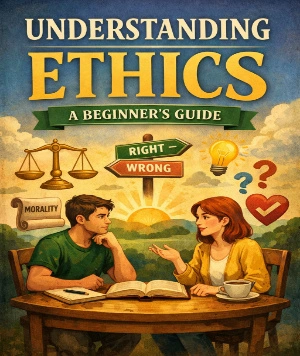
Ethics refers to a system of moral principles that guide human behavior. It helps individuals and institutions decide what actions are right or wrong, just or unjust.
In simple terms:Ethics is the science of moral judgment and responsible action.
Ethics is not limited to strict rules. Instead, it involves reasoning, values, and context. It asks deeper questions like:
- What is the right thing to do?
- Why is it right?
- Who is affected by our decisions?
Ethics applies across different domains—personal life, professional environments, governance, and global relations.
Key Insights:
- Ethics defines moral standards of behavior
- It involves reasoning, not blind rule-following
- Applies to individuals, organizations, and governments
- Guides decision-making in complex situations
Historical Background of Ethics
Ethics has evolved alongside human civilization. In ancient times, moral principles were deeply embedded in religion, mythology, and cultural traditions. Texts like the Epic of Gilgamesh and the Iliad presented early ideas about justice, duty, honor, and morality.
Classical Philosophical Foundations
The foundation of modern ethical thinking was laid by classical philosophers:
- Socrates, Plato, and Aristotle focused on virtue ethics, emphasizing moral character and virtues like courage, wisdom, and honesty
- Immanuel Kant introduced deontological ethics, arguing that actions should be guided by duty and universal moral laws
- Jeremy Bentham and John Stuart Mill developed utilitarianism, which evaluates actions based on their consequences—specifically, maximizing happiness for the greatest number
Modern Expansion of Ethics
In modern times, ethics expanded beyond abstract philosophy into applied fields such as:
- Bioethics (medical decisions)
- Business ethics (corporate responsibility)
- Environmental ethics (sustainability and conservation)
Environmental ethics gained prominence in the 1970s due to rising ecological crises, marking a shift toward global ethical awareness.
Analytical Insight
Ethics has evolved from religious moral codes → philosophical reasoning → interdisciplinary frameworks. This transformation reflects changes in human society, scientific progress, and governance systems.
Key Insights:
- Ethics originated in religion and cultural traditions
- Philosophers shaped key ethical theories
- Modern ethics is applied and interdisciplinary
- Evolution reflects societal and technological change
Social Impact of Ethics
Ethics plays a central role in shaping social structures and human relationships. It defines norms, influences behavior, and promotes justice within communities.
Concepts such as fairness, equality, dignity, and justice are rooted in ethical thinking. These values guide social institutions, legal systems, and everyday interactions.
Ethics and Social Movements
Ethics has been a driving force behind major social movements:
- Human rights movements advocating dignity and freedom
- Gender equality movements challenging discrimination
- Social justice campaigns addressing inequality
However, ethical practices are not always universal. Cultural traditions, social hierarchies, and power dynamics often influence how ethics is interpreted and applied.
Analytical Insight
Ethics is not always practiced uniformly. There is often a gap between ideal ethical principles and real-world social conditions shaped by inequality and power.
Key Insights:
- Ethics shapes social norms and relationships
- Drives movements for equality and justice
- Influenced by culture and power structures
- Gap exists between ideals and practice
Economic Impact of Ethics
Traditionally, economics focused on profit maximization and efficiency. However, modern economies increasingly recognize the importance of ethics in ensuring long-term sustainability and trust.
Ethics in Modern Economic Systems
Ethics influences:
- Corporate governance through CSR (Corporate Social Responsibility) and ESG (Environmental, Social, Governance) frameworks
- Fair trade practices ensuring equitable compensation
- Ethical consumption, where consumers prefer responsible brands
The 2008 financial crisis demonstrated the consequences of unethical behavior in financial institutions, highlighting the need for accountability and transparency.
Shift Toward Value-Based Economics
Modern economic thinking is shifting from:Profit-centric → Value-centric models, integrating environmental and social considerations.
Analytical Insight
Ethics is transforming economic systems by introducing responsibility, sustainability, and long-term thinking.
Key Insights:
- Ethics builds trust in markets
- Encourages sustainable business practices
- Reduces risk of economic crises
- Promotes responsible consumption
Political and Policy Perspective
Ethics is at the heart of governance and public policy. It guides decision-making, law-making, and the exercise of power.
Role of Ethics in Governance
Ethical governance focuses on:
- Transparency
- Accountability
- Fairness
Public policies often reflect ethical priorities, such as protecting citizens’ rights or ensuring equitable resource distribution.
Example: Data Privacy
Modern data protection laws emerged due to ethical concerns about surveillance, misuse of personal information, and digital rights.
Analytical Insight
Ethics acts as a bridge between morality and law. However, political decisions often involve negotiation and compromise rather than pure ethical reasoning.
Key Insights:
- Ethics ensures fairness in governance
- Influences law-making and policies
- Political decisions may balance ethics with practicality
Environmental Impact of Ethics
Environmental ethics expands moral responsibility beyond human beings to include nature, animals, and ecosystems.
Key Environmental Concerns
- Climate change
- Biodiversity loss
- Resource depletion
This field raises important questions:
- Does nature have intrinsic value?
- What responsibilities do we owe future generations?
Analytical Insight
Environmental ethics challenges anthropocentrism (human-centered thinking) and promotes ecological sustainability.
Key Insights:
- Extends ethics beyond humans
- Promotes sustainability
- Focuses on future generations
- Challenges human-centered thinking
Technological Developments and Ethics
Technology has revolutionized society but also introduced new ethical dilemmas.
Emerging Ethical Fields
- AI ethics
- Data ethics
- Bioethics
Key Concerns
- Privacy and surveillance
- Algorithmic bias
- Misuse of data
- Ethics-washing by corporations
A major challenge is that technology evolves faster than ethical regulations, creating a gap between innovation and accountability.
Analytical Insight
Ethical frameworks are struggling to keep pace with rapid technological advancements.
Key Insights:
- Technology creates new ethical challenges
- Regulation often lags behind innovation
- Responsible tech development is critical
Global Perspective on Ethics
Ethics varies across cultures but shares universal principles like justice, dignity, and responsibility.
Global Ethical Challenges
- Climate justice between developed and developing nations
- Global inequality
- Pandemic resource allocation
Environmental justice highlights that marginalized communities often suffer the most from environmental harm.
Analytical Insight
Global ethics emphasizes equity and inclusivity but faces challenges due to cultural and economic differences.
Key Insights:
- Ethics has universal and cultural aspects
- Global cooperation is essential
- Focus on equity and justice
Ethics and the Indian Constitution
The Indian Constitution is deeply rooted in ethical values. The Preamble emphasizes:
- Justice
- Liberty
- Equality
- Fraternity
These values form the ethical foundation of governance in India.
Analytical Insight
The Constitution transforms ethical ideals into enforceable legal principles, making morality actionable.
Key Insights:
- Ethics is embedded in constitutional values
- Guides democratic governance
- Ensures fairness and justice
Ethics and Fundamental Rights
Fundamental Rights ensure ethical treatment of individuals by the State.
Key Principles
- Equality before law → fairness
- Freedom of expression → autonomy
- Right to life → dignity
- Freedom of religion → tolerance
Judicial interpretations have expanded these rights, linking law with ethical principles.
Analytical Insight
The judiciary plays a crucial role in adapting ethical values to changing societal contexts.
Key Insights:
- Protects individual dignity
- Reflects ethical values in law
- Evolves with society
Ethics and Directive Principles of State Policy
Directive Principles guide the State in promoting welfare and justice.
Core Focus Areas
- Social justice
- Economic equality
- Public welfare
- Environmental protection
Analytical Insight
Though not enforceable, DPSPs represent long-term ethical goals of governance.
Key Insights:
- Aspirational ethical framework
- Guides policy-making
- Balances rights and welfare
Ethics and Fundamental Duties
Fundamental Duties emphasize citizens’ ethical responsibilities.
Key Duties
- Respect the Constitution
- Promote harmony
- Protect the environment
- Develop scientific temper
Key Insights:
- Ethics applies to citizens as well
- Encourages civic responsibility
- Strengthens democracy
Constitutional Morality
Constitutional morality means prioritizing constitutional values over personal beliefs or traditions.
Analytical Insight
It ensures ethical progress, even when societal norms resist change.
Key Insights:
- Protects equality and justice
- Promotes progressive values
- Limits majoritarian bias
Ethics in Governance and Public Administration
Ethical governance ensures efficient and fair administration.
Core Principles
- Transparency
- Accountability
- Integrity
Key Insights:
- Reduces corruption
- Builds public trust
- Strengthens institutions
Ethics and Sustainable Development
Ethics is essential for balancing development with environmental protection.
Key Insights:
- Promotes long-term thinking
- Protects future generations
- Encourages responsible resource use
Advantages of Understanding Ethics
Understanding ethics provides several benefits:
Key Insights:
- Promotes fairness and justice
- Protects human rights
- Builds trust in society
- Encourages responsible decisions
- Supports sustainability
- Guides policy-making
- Adapts to societal changes
Disadvantages and Limitations of Ethics
Despite its importance, ethics has limitations.
Key Insights:
- Lack of universal agreement
- Conflicting moral principles
- Difficult implementation
- Slower decision-making
- Risk of misuse
- Influenced by power
- Not always enforceable
Challenges and Issues in Ethics
Modern ethical challenges are complex.
Key Issues
- Relativism vs universalism
- Conflict of interests
- Ethical ambiguity
- Implementation gap
- Technology regulation lag
Analytical Insight
The biggest challenge is applying ethics consistently in real-world situations.
Key Insights:
- Ethical dilemmas are complex
- No universal solutions
- Application is more difficult than theory
Conclusion
Ethics is the backbone of a just and responsible society. It influences how individuals behave, how institutions function, and how nations govern.
While defining ethical principles is important, the real challenge lies in applying them consistently in a complex and ever-changing world. From technology to environment, from governance to global justice, ethics continues to evolve alongside human progress.
Understanding ethics is not just about knowledge—it is about developing the ability to make better decisions, create fair systems, and contribute to a more equitable world.
Frequently Asked Questions (FAQs)
1. What is ethics in simple words?
Ethics is the study of what is right and wrong in human behavior.
2. Why is ethics important today?
Ethics helps address modern challenges like technology, inequality, and environmental issues.
3. What are the main branches of ethics?
The main branches are virtue ethics, deontology, and utilitarianism.
4. How does ethics influence governance?
It ensures transparency, accountability, and fairness in public administration.
5. What is the biggest challenge in ethics?
Applying ethical principles consistently in complex real-world situations.
Studylab24
100 Like · 4K views