Click below to generate summary
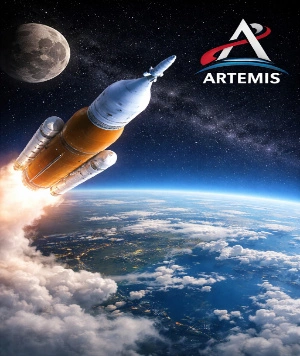
The NASA Artemis Program has entered a transformative phase, moving beyond early testing into active exploration and scientific discovery. After the success of Artemis I in 2022, recent developments from 2024 to 2026 have provided valuable insights into the Moon’s environment, human survival in deep space, and the feasibility of long-term lunar missions. These findings are not only shaping future missions but also redefining humanity’s approach to space exploration.
With a renewed focus on sustainability, international collaboration, and advanced technology, Artemis aims to establish a long-term human presence on the Moon. The program integrates robotic missions, human exploration, and commercial partnerships to unlock the Moon’s secrets. From water ice detection to radiation mapping and thermal extremes, the latest discoveries are helping scientists and engineers prepare for the next era of lunar exploration.
Scientific Breakthroughs from Recent Artemis Data
Recent data collected from Artemis missions and supporting global efforts have significantly expanded our understanding of the Moon. These discoveries are crucial for planning safe and sustainable human missions.
The analysis of Artemis I and associated robotic missions has revealed unexpected environmental conditions, including temperature variations, radiation exposure levels, and potential resources. These findings are helping scientists design better systems for astronaut safety and long-term habitation.
- Detection of water ice beyond polar regions, expanding resource availability
- Detailed radiation measurements confirming spacecraft shielding effectiveness
- Extreme surface temperature variations across small distances
- Heat shield erosion insights improving spacecraft design
- Biological experiments revealing deep-space radiation effects
Water Ice Beyond the Lunar Poles
One of the most significant findings is the possibility of water ice existing beyond the Moon’s polar regions. Data from Chandrayaan-3 suggests that water ice may be present in high-latitude shaded areas, not just in permanently shadowed craters.
This discovery has major implications for future missions, as water is essential for drinking, oxygen production, and fuel generation. Expanding the potential locations for water resources makes it easier to plan landing sites and build sustainable lunar bases.
- Water ice may exist in shaded high-latitude regions
- Reduces dependency on polar-only landing zones
- Supports in-situ resource utilization (ISRU)
- Enables long-term human presence on the Moon
- Enhances mission flexibility and safety
Radiation Mapping and Astronaut Safety
Radiation exposure is one of the biggest challenges in deep space travel. During Artemis I, advanced sensors onboard the Orion spacecraft, including the Moonikin Campos and anthropomorphic phantoms Helga and Zohar, collected detailed radiation data.
These experiments confirmed that the Orion capsule provides sufficient protection while passing through the Van Allen Belts. This is a crucial milestone for ensuring astronaut safety during future crewed missions.
- Orion capsule effectively shields against space radiation
- Data collected using human-like test dummies
- Improved understanding of deep-space radiation exposure
- Helps design safer spacecraft and habitats
- Supports long-duration missions beyond Earth orbit
Extreme Thermal Variations on the Moon
The Moon’s surface experiences dramatic temperature differences, which pose challenges for both equipment and astronauts. The ChaSTE instrument recorded temperatures as high as 82°C on sunlit slopes, while nearby shaded areas dropped significantly.
These findings highlight the need for advanced thermal management systems in spacesuits, habitats, and equipment. Understanding these variations is critical for mission planning and survival strategies.
- Surface temperatures can exceed 80°C in sunlight
- Rapid temperature drops in shaded regions
- Significant variation within short distances
- Requires advanced thermal protection systems
- Influences landing site selection and habitat design
Heat Shield Erosion Insights
Post-mission analysis of Artemis I revealed that the Orion spacecraft’s heat shield experienced greater-than-expected erosion during re-entry at speeds of 25,000 mph.
While the spacecraft safely returned, this finding has prompted engineers to refine heat shield materials and designs. Improving re-entry systems is essential for future missions, especially those involving crewed landings.
- Higher-than-expected heat shield erosion detected
- Provides critical data for material improvements
- Enhances safety for future crewed missions
- Supports development of reusable spacecraft
- Helps optimize re-entry performance
Deep Space Biology Discoveries
The BioExpt-01 experiment onboard Artemis I studied how deep-space radiation affects biological organisms. The results showed that radiation triggers specific gene expressions in yeast, algae, and fungi.
This research provides a foundation for understanding how human DNA might respond to long-term exposure in space. It is a key step toward developing protective measures for astronauts on extended missions.
- Radiation impacts gene expression in microorganisms
- Provides baseline data for human biological studies
- Supports development of radiation protection strategies
- Essential for long-duration missions to Moon and Mars
- Advances space medicine and biotechnology
Updated Artemis Mission Timeline
In February 2026, NASA revised the Artemis mission roadmap to prioritize safety and hardware readiness. This updated timeline reflects a more strategic approach to achieving long-term exploration goals.
The revised schedule ensures that each mission builds upon previous successes, reducing risks and improving mission outcomes. It also highlights NASA’s commitment to sustainable exploration.
- Artemis II: April 2026 – First crewed lunar flyby
- Artemis III: Mid-2027 – Earth-orbit testing of lander systems
- Artemis IV: Early 2028 – First crewed lunar landing since 1972
- Artemis V: Late 2028 – Second landing and delivery of lunar vehicle
- Focus on safety, testing, and infrastructure readiness
Artemis II: First Crewed Lunar Flyby
Artemis II will mark the return of humans to lunar vicinity after decades. This mission will carry four astronauts on a 10-day journey around the Moon.
It will also make history by including the first woman and the first person of color to travel to the Moon’s vicinity. This mission is a major step toward inclusive and global space exploration.
- First crewed Artemis mission
- Approximately 10-day lunar flyby
- Diverse astronaut crew
- Tests life support and navigation systems
- Prepares for future lunar landings
Artemis III and IV: Building Toward Lunar Landing
Artemis III and IV are critical missions designed to test technologies and achieve a successful lunar landing. Artemis III will focus on docking and rendezvous in Earth orbit, while Artemis IV aims for a crewed landing at the lunar South Pole.
These missions will rely on partnerships with commercial providers like SpaceX and Blue Origin to deliver advanced landing systems.
- Artemis III tests docking with commercial landers
- Artemis IV targets South Pole landing
- Collaboration with private space companies
- Focus on precision landing and surface operations
- Establishes foundation for long-term lunar presence
Strategic Lunar Landing Sites
Selecting the right landing sites is essential for mission success. NASA has refined its focus to regions near the lunar South Pole, where conditions are favorable for exploration and resource utilization.
These areas offer a combination of sunlight for power generation and shadowed regions where water ice is likely to exist. Accessibility and safety are also key factors in site selection.
- Presence of persistent sunlight for solar power
- Proximity to permanently shadowed craters
- Potential water ice deposits
- Safe landing conditions for large spacecraft
- Strategic importance for future lunar bases
Supporting Infrastructure Developments
The Artemis Program is not just about missions—it also involves building the infrastructure needed for sustained exploration. From space stations to advanced suits, these developments are critical for long-term success.
The Lunar Gateway, new spacesuits, and commercial delivery systems are all part of this growing ecosystem. Together, they form the backbone of future lunar operations.
- Development of Lunar Gateway space station
- Advanced spacesuits for surface mobility
- Commercial partnerships for cargo delivery
- Focus on sustainability and scalability
- Integration of new technologies
Lunar Gateway Progress
The Lunar Gateway will serve as a staging point for missions to the Moon and beyond. The Power and Propulsion Element (PPE) underwent initial power-on testing in late 2025, marking a significant milestone.
This space station will enable continuous human presence in lunar orbit and support deep-space exploration.
- PPE successfully tested for power systems
- Gateway to support long-term missions
- Acts as a hub for lunar operations
- Enables international collaboration
- Supports missions to Mars and beyond
Next-Generation Spacesuits
Axiom Space has completed testing of the AxEMU lunar suit, designed for improved mobility and safety. These suits are tailored for the harsh conditions of the lunar surface.
The testing included underwater simulations to replicate lunar gravity, ensuring that astronauts can perform complex tasks efficiently.
- Enhanced mobility for surface exploration
- Designed for extreme temperatures and dust
- Improved safety and durability
- Tested in simulated lunar conditions
- Supports long-duration missions
Commercial Lunar Deliveries
Private companies are playing a key role in the Artemis Program. Missions like Intuitive Machines’ IM-2 and Firefly’s Blue Ghost have delivered scientific instruments to the Moon.
These missions are helping scientists study lunar dust behavior and radiation tolerance, contributing valuable data for future exploration.
- Successful delivery of scientific instruments
- Study of lunar dust and radiation effects
- Strengthens public-private partnerships
- Reduces mission costs and increases efficiency
- Accelerates technological innovation
Conclusion
The latest discoveries from the Artemis Program mark a new era in lunar exploration. From identifying water ice beyond the poles to understanding radiation and biological impacts, these findings are shaping the future of human spaceflight.
With an updated mission roadmap, strategic landing sites, and robust infrastructure development, NASA is steadily moving toward its goal of establishing a sustainable human presence on the Moon. The integration of international collaboration and commercial partnerships further strengthens the program’s potential.
As Artemis continues to evolve, it not only brings humanity closer to the Moon but also lays the groundwork for future missions to Mars and beyond. These discoveries are not just scientific milestones—they are stepping stones toward a new chapter in space exploration.
Studylab24
100 Like · 4K views