The Constitution of India is the highest law of the country and the foundation of Indian democracy. It defines the political structure, the powers of government institutions, the rights of citizens, and the duties of the state. Adopted after years of debate, it reflects the values of justice, liberty, equality, and fraternity.
India’s Constitution is not just a legal document; it is a living framework that changes with society's needs. It balances unity and diversity, authority and freedom, and tradition and progress. This article provides a detailed look at the Constitution of India, covering its history, features, structure, amendments, and lasting importance.
What Is the Constitution of India?
The Constitution of India is a written document that sets the fundamental principles, rules, and laws governing the country. It establishes the framework for political institutions and defines the relationship between the state and its citizens.
It serves three key purposes:
- Defines the structure of government
- Protects the rights of individuals
- Limits the powers of authorities
No law in India can go against the Constitution, making it the highest legal authority.
Historical Background of the Indian Constitution
Influence of Colonial Rule
Before independence, India was governed by laws created by the British Parliament. Important acts such as:
- Government of India Act, 1858
- Government of India Act, 1919
- Government of India Act, 1935
played a significant role in shaping constitutional thinking in India.
Demand for a Constituent Assembly
The idea of a Constituent Assembly was first suggested in 1934 by M.N. Roy. The Indian National Congress officially called for it in 1935. The British government agreed to the proposal in 1940.
Formation of the Constituent Assembly
Composition of the Assembly
The Constituent Assembly was formed in 1946 and started with 389 members. After partition, it had 299 members.
Notable members included:
- Jawaharlal Nehru
- Dr. B.R. Ambedkar
- Sardar Vallabhbhai Patel
- Rajendra Prasad
Role of Dr. B.R. Ambedkar
Dr. B.R. Ambedkar is known as the principal architect of the Indian Constitution. As Chairman of the Drafting Committee, he played a vital role in shaping the document, especially in areas of social justice and fundamental rights.
Adoption and Enforcement of the Constitution
Adopted on: 26 November 1949
Enforced on: 26 January 1950
January 26 was chosen to honor the Purna Swaraj declaration of 1930.
Sources of the Indian Constitution
The Constitution of India drew ideas from many global constitutions:
Major Influences
- UK: Parliamentary system, rule of law
- USA: Fundamental rights, judicial review
- Ireland: Directive Principles of State Policy
- Canada: Federal system
- Australia: Concurrent list
These influences were adapted to fit India’s unique social and cultural context.
Structure of the Constitution of India
The Constitution is one of the longest in the world.
Key Components
- Preamble
- 25 Parts
- 12 Schedules
- 470 Articles (as amended)
The Preamble of the Constitution
The Preamble is the introduction and essence of the Constitution. It declares India as:
- Sovereign
- Socialist
- Secular
- Democratic
- Republic
It also guarantees:
- Justice
- Liberty
- Equality
- Fraternity
The Preamble guides the interpretation of constitutional provisions.
Fundamental Rights
Fundamental Rights protect individual freedoms and ensure equality.
Types of Fundamental Rights
- Right to Equality (Articles 14–18):
Ensures equality before the law and prohibits discrimination.
- Right to Freedom (Articles 19–22): Includes freedom of speech, expression, movement, and protection of life.
- Right Against Exploitation (Articles 23–24): Prohibits human trafficking and child labor.
- Right to Freedom of Religion (Articles 25–28): Ensures religious freedom and secularism.
- Cultural and Educational Rights (Articles 29–30): Protects minority interests.
- Right to Constitutional Remedies (Article 32): Allows citizens to approach courts for enforcement of rights.
Directive Principles of State Policy
Directive Principles guide the state in making laws and policies.
Key Objectives
- Social justice
- Economic welfare
- Equal pay for equal work
- Protection of the environment
Though not legally enforceable, they are important for governance.
Fundamental Duties
Introduced by the 42nd Amendment, Fundamental Duties remind citizens of their responsibilities.
Some Key Duties
- Respect the Constitution
- Promote harmony
- Protect public property
- Preserve culture and heritage
Union Government Structure
The President of India
The President is the constitutional head of the country and represents the unity of the nation.
The Prime Minister and Council of Ministers
The Prime Minister is the real executive authority and leads the government.
Parliament of India
Parliament consists of:
- Lok Sabha
- Rajya Sabha
- President
It is responsible for making laws and overseeing governance.
State Government Structure
Each state has:
- Governor
- Chief Minister
- State Legislature
The Constitution ensures a balance between the Union and the states.
Also Read: Dowry related violence in india
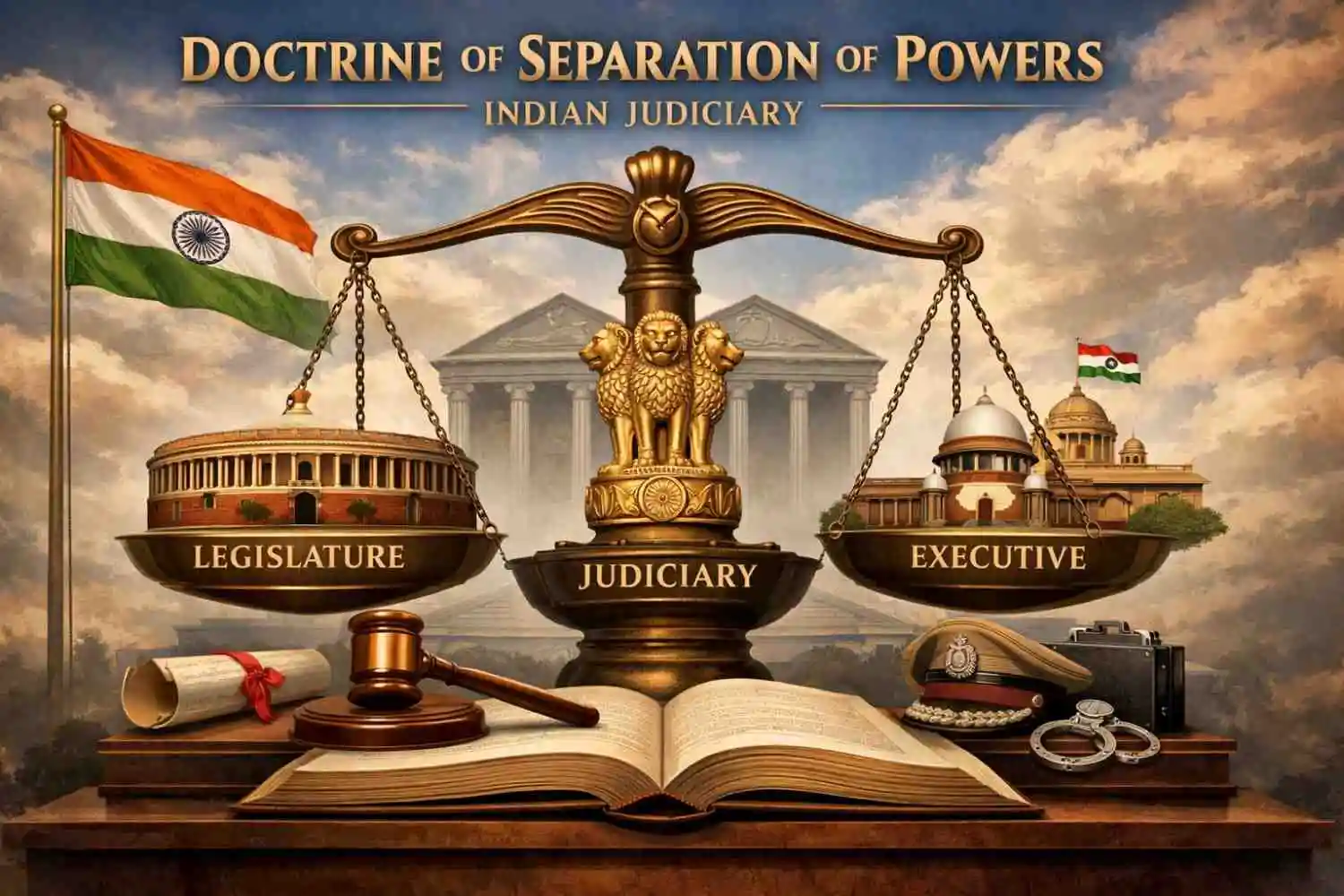
Judiciary Under the Constitution
Supreme Court of India
The Supreme Court is the highest judicial authority.
High Courts and Subordinate Courts
They ensure justice at the state and district levels.
Judicial Review
Courts can review laws to make sure they align with the Constitution.
Federal System in India
India has a quasi-federal structure.
Features
- Division of powers
- Strong central government
- Independent judiciary
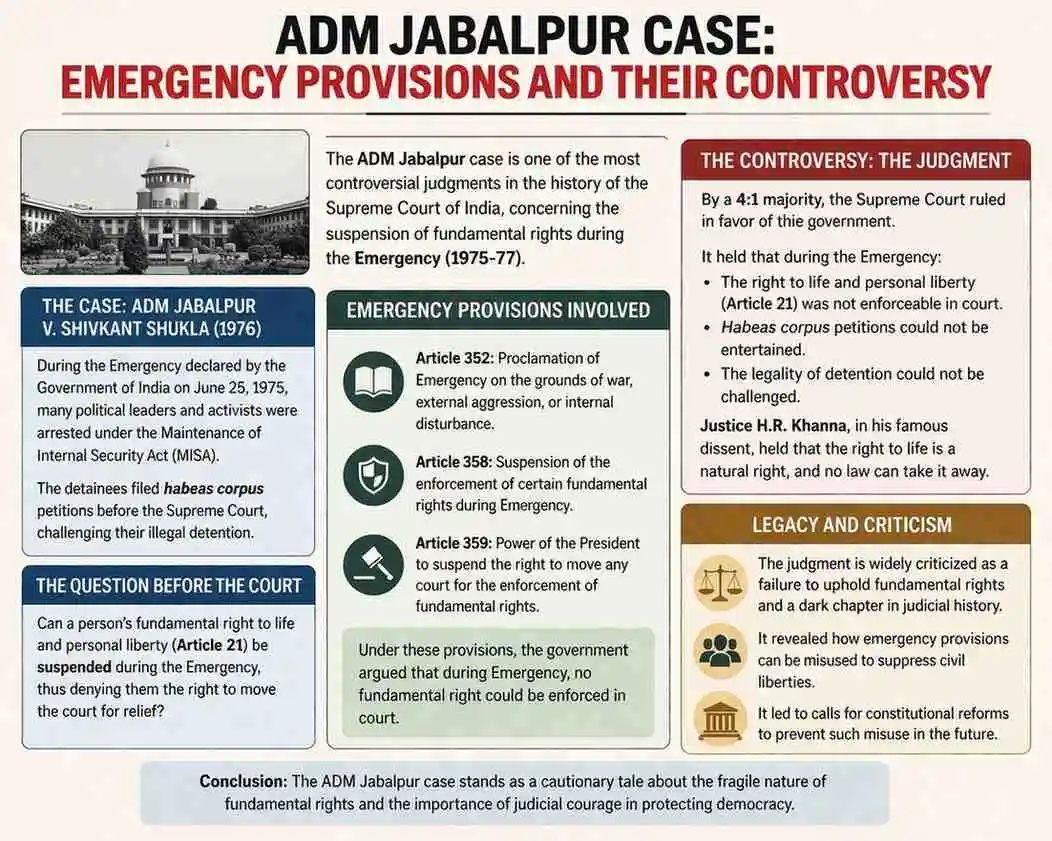
Emergency Provisions
The Constitution allows emergency powers during crises.
Types of Emergencies
- National Emergency
- State Emergency
- Financial Emergency
These provisions ensure stability but are subject to judicial oversight.
Amendments to the Constitution
The Constitution is flexible yet stable.
Article 368
Defines the amendment process.
Important Amendments
- 42nd Amendment
- 44th Amendment
- 73rd and 74th Amendments
Amendments allow adaptation without losing core values.
Importance of the Constitution of India
Protects Democracy
Ensures free elections, rights, and accountability.
Promotes Social Justice
Addresses inequality and discrimination.
Maintains Unity in Diversity
Respects cultural, linguistic, and religious diversity.
Ensures Rule of Law
No one is above the Constitution.
Living Nature of the Constitution
The Constitution evolves through:
- Judicial interpretations
- Amendments
- Social changes
This adaptability keeps it relevant even after decades.
Challenges and Criticism
Despite its strengths, challenges include:
- Length and complexity
- Implementation gaps
- Political misuse of provisions
Continuous reform and awareness are necessary.
Role of Citizens in Upholding the Constitution
Citizens must:
- Know their rights
- Perform duties responsibly
- Participate in democracy
A strong Constitution depends on active citizens.
Conclusion
The Constitution of India is more than a legal framework. It is the backbone of the nation. It protects freedom, promotes equality, and guides governance. Its strength lies in its ability to evolve while maintaining core democratic values.
Understanding the Constitution empowers citizens to engage meaningfully in democracy and uphold justice. As India continues to develop, the Constitution remains a guiding light, ensuring that progress is inclusive, fair, and rooted in constitutional morality.
Click below to generate summary