Studylab24
100 Like · 4K views
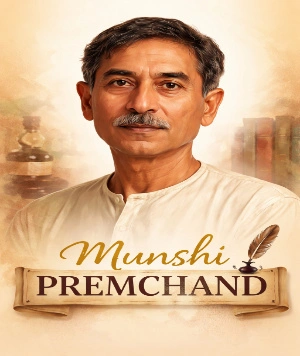
♦ Munshi Premchand ♦
Munshi Premchand stands as one of the greatest literary figures in Indian history, remembered for transforming storytelling into a powerful instrument of social awareness. Writing in both Hindi and Urdu, he brought literature closer to real life, focusing on the struggles, emotions, and dignity of ordinary people. At a time when fiction often revolved around fantasy and escapism, he introduced realism and gave voice to the oppressed sections of society. His stories reflected poverty, caste discrimination, gender inequality, and moral dilemmas in a deeply human way.
His influence extends far beyond his lifetime. He not only shaped modern Indian fiction but also inspired generations of writers, thinkers, and reformers. Known as the "Upanyas Samrat" or Emperor of Novels, he created timeless works that continue to resonate with readers. His contribution to literature, journalism, and social reform made him a symbol of intellectual courage and compassion.
Early Life and Background
Premchand was born as Dhanpat Rai Srivastava on 31 July 1880 in Lamhi, a small village near Varanasi in Uttar Pradesh. His early life was marked by financial hardship and emotional struggles, which deeply influenced his writing. Growing up in a modest family, he experienced poverty firsthand, which later became a recurring theme in his works.
Despite difficulties, he developed a passion for reading and learning at a young age. His exposure to literature and social realities helped shape his perspective. These early experiences built the foundation for his realistic storytelling style.
Important facts about his early life:
-
Born in Lamhi village near Varanasi
-
Original name was Dhanpat Rai Srivastava
-
Faced poverty and hardship during childhood
-
Developed interest in literature early
-
Personal struggles influenced his literary themes
Pen Name and Nationalist Beginnings
He began his writing career using the pen name Nawab Rai. However, his first short story collection, Soz-e-Watan, was banned and burned by the British government in 1909 because of its nationalist message. This incident marked a turning point in his life.
After the ban, he adopted the pen name Premchand, which later became famous across India. This change symbolized not only a new identity but also a stronger commitment to social and national causes.
Key points about his pen name and early writing:
-
Initially wrote under the name Nawab Rai
-
First collection Soz-e-Watan banned by British authorities
-
Adopted new pen name Premchand afterward
-
Continued writing with stronger social focus
-
Became widely recognized under new name
Career as Teacher and Freedom Movement Supporter
Before becoming a full-time writer, he worked as a school teacher and later served as Deputy Sub-Inspector of Schools. His career in education gave him insight into Indian society, especially the lives of ordinary people.
In 1921, inspired by Mahatma Gandhi and his Non-Cooperation Movement, he resigned from his government job. This decision reflected his courage and commitment to national freedom and social change.
Highlights of his professional and political involvement:
-
Worked as a teacher
-
Promoted education and social awareness
-
Served as Deputy Sub-Inspector of Schools
-
Resigned to support Non-Cooperation Movement
-
Dedicated himself fully to writing
Contribution to Modern Indian Literature
Premchand revolutionized Indian literature by introducing realism. Instead of focusing on fantasy, he wrote about real social conditions. His works reflected truth, suffering, and moral conflicts faced by people.
His writing made literature meaningful and socially relevant. He addressed serious issues like caste discrimination, poverty, and gender injustice.
Major literary contributions include:
-
Introduced realism in Hindi and Urdu fiction
-
Focused on common people's lives
-
Addressed social injustice and inequality
-
Made literature socially responsible
-
Influenced modern storytelling
Famous Novels and Their Importance
Premchand wrote more than a dozen novels, each exploring important social themes. His novels remain among the most respected works in Indian literature.
Godaan
His masterpiece, Godaan, published in 1936, tells the story of Hori, a poor farmer whose dream is to own a cow. The novel shows the harsh realities of rural life and social injustice.
Key features of Godaan:
-
Considered his greatest novel
-
Focuses on peasant life
-
Shows poverty and exploitation
-
Realistic and emotional storytelling
-
Reflects social inequality
Sevasadan
Sevasadan was his first major Hindi novel. It focuses on women's struggles and social hypocrisy. It highlighted the limited freedom and challenges faced by women.
Important aspects include:
-
First major Hindi novel
-
Focuses on women's issues
-
Shows social hypocrisy
-
Promotes social reform
-
Highlights gender inequality
Other Major Novels
His other novels also addressed important social issues and moral dilemmas.
Notable works include:
-
Gaban – focuses on greed and morality
-
Nirmala – addresses dowry and child marriage
-
Rangbhoomi – explores social conflict
-
Karmabhoomi – inspired by national movement
Short Stories and Mansarovar Collection
Premchand wrote over 300 short stories, making him one of the most prolific writers of his time. His stories are collected in the eight-volume Mansarovar.
His short stories capture deep emotions and powerful social messages in simple language.
Famous short stories include:
-
Idgah
-
Kafan
-
Panch Parameshwar
-
Poos ki Raat
Importance of his short stories:
-
Focus on everyday life
-
Show human emotions deeply
-
Highlight social injustice
-
Easy to understand language
-
Powerful moral lessons
Role as Editor and Publisher
Premchand was not only a writer but also an editor and publisher. He established Saraswati Press and edited journals like Hans and Jagaran. These journals promoted progressive ideas and social reform.
He provided a platform for new writers and nationalist voices.
Key contributions as editor:
-
Established Saraswati Press
-
Edited Hans magazine
-
Edited Jagaran journal
-
Promoted social reform
-
Supported new writers
Realism and Writing Style
Premchand is known as the pioneer of realism in Indian literature. His writing style was simple, clear, and emotionally powerful.
He focused on truth rather than fantasy. His characters were realistic and relatable.
Features of his writing style:
-
Simple and clear language
-
Realistic characters
-
Emotional depth
-
Focus on social issues
-
Strong moral message
Influence of Gandhian Ideology
His works were deeply influenced by Gandhian philosophy, especially truth, non-violence, and social justice.
He believed literature should serve society and promote positive change.
Key influences include:
-
Gandhian ideals
-
Focus on truth
-
Support for non-violence
-
Promotion of equality
-
Encouragement of reform
Adaptations in Film and Television
His works have been adapted into many films and television shows. One of the most famous adaptations is Shatranj Ke Khilari, directed by Satyajit Ray.
These adaptations introduced his stories to new audiences.
Importance of adaptations:
-
Increased popularity
-
Reached wider audience
-
Preserved his legacy
-
Promoted Indian literature
-
Inspired filmmakers
Awards and Recognition
Premchand received many honours for his contribution to literature. In 1980, India Post issued a commemorative postage stamp in his honour.
His recognition reflects his lasting importance.
Major honours include:
-
Commemorative postage stamp
-
National recognition
-
Literary respect
-
Academic study worldwide
-
Cultural icon status
Death and Final Years
Premchand passed away on 8 October 1936 in Varanasi at the age of 56. Despite financial struggles, he continued writing until his last days.
His death was a great loss to Indian literature, but his works remain immortal.
Important facts about his death:
-
Died in 1936
-
Age 56
-
Passed away in Varanasi
-
Continued writing till end
-
Left lasting literary legacy
Legacy and Lasting Impact
Premchand’s legacy continues to inspire writers and readers. He transformed literature into a tool for social awareness and change.
His works remain relevant even today because social issues still exist.
Key aspects of his legacy include:
-
Father of modern Hindi fiction
-
Pioneer of realism
-
Social reform advocate
-
Inspiration for writers
-
Timeless literary influence
Conclusion
Munshi Premchand was more than just a writer; he was a voice of truth and humanity. Through his novels and short stories, he showed the real face of society and highlighted the struggles of ordinary people. His courage to address social issues and his commitment to realism changed the direction of Indian literature forever.
His works continue to educate, inspire, and move readers across generations. His contribution to literature and society ensures that his name will always remain among the greatest writers in history. His stories remind us of the importance of compassion, justice, and truth.
His legacy lives on not only in books but also in the hearts of readers who continue to learn from his timeless wisdom.