Right to Constitutional Remedies: The Backbone of Fundamental Rights Protection
The Right to Constitutional Remedies is one of the most essential and powerful features of the Indian constitutional system. It ensures that fundamental rights granted to citizens are not merely symbolic but fully enforceable. Without enforcement, even the most well-written rights lose their practical value. This provision guarantees that whenever a person’s fundamental freedoms are violated, they have the authority to seek justice directly from the Supreme Court of India.
This right is provided under Article 32 of the Constitution of India. It allows citizens to move the Supreme Court for protection against violations of their rights. It creates a powerful legal mechanism that holds authorities accountable and protects individuals from injustice.
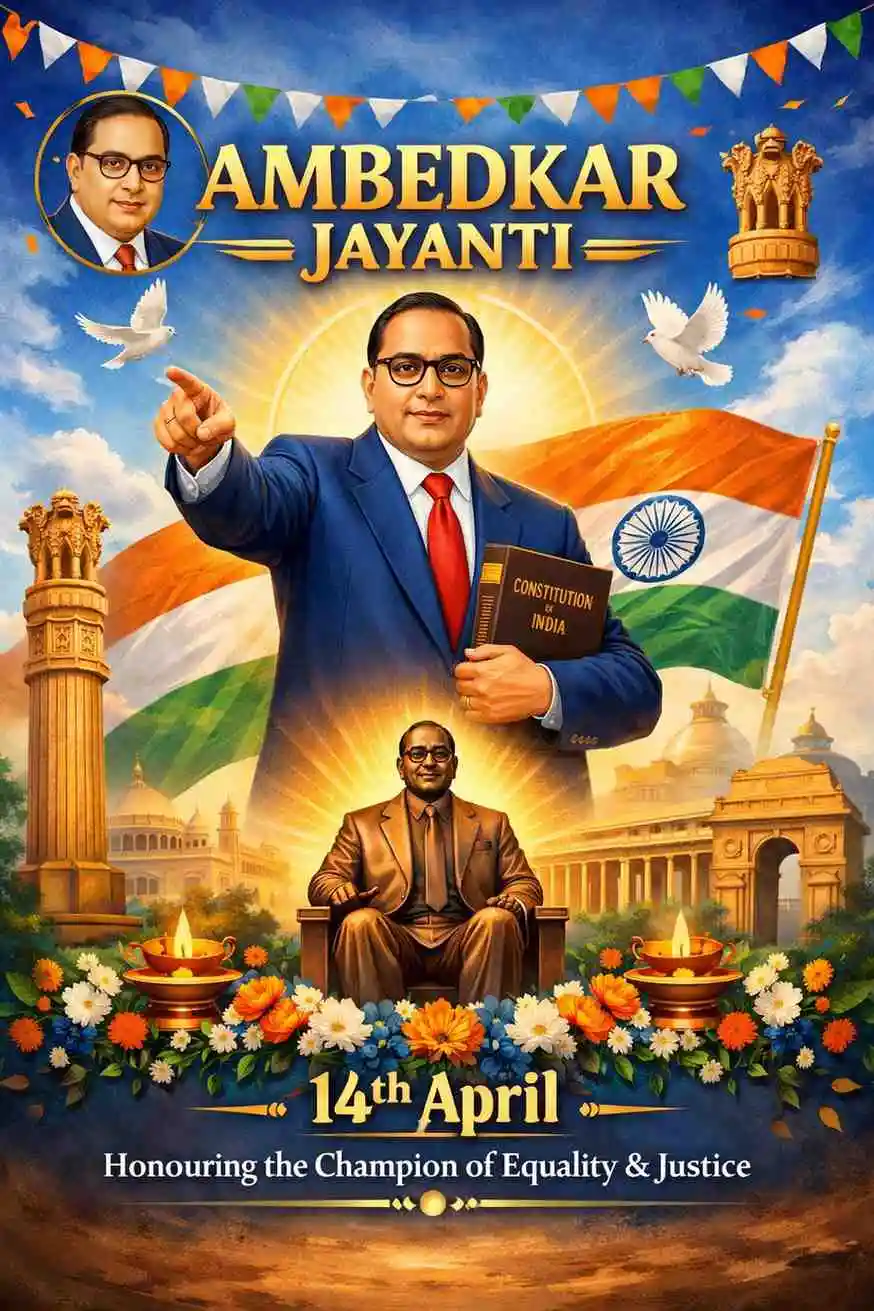
Dr. B. R. Ambedkar called this right the “heart and soul” of the Constitution because it ensures the real protection of liberty. It transforms fundamental rights from theoretical promises into practical guarantees.
Meaning and Purpose of Article 32
Article 32 provides a constitutional mechanism for enforcing fundamental rights. It allows any person whose rights have been violated to approach the Supreme Court directly without going through lower courts.
This provision ensures that citizens have a guaranteed remedy. It recognizes that rights without remedies have no real meaning. Therefore, it makes enforcement itself a fundamental right.
It also places a duty on the Supreme Court to protect rights. The court cannot refuse to hear such cases.
Important features include:
-
It guarantees enforcement of rights
-
Citizens can directly approach the Supreme Court
-
It is itself a fundamental right
-
It provides judicial protection
-
It ensures justice against violations
Why This Right is Called the Heart and Soul of the Constitution
Dr. Ambedkar believed that this right was the most important feature of the Constitution. According to him, without remedies, fundamental rights would become meaningless declarations.
This provision ensures that every citizen has legal protection against injustice. It empowers individuals regardless of their social or economic status.
It also limits the misuse of government power by providing judicial oversight.
Reasons for its importance include:
-
It protects individual freedom
-
It ensures practical enforcement
-
It prevents abuse of power
-
It strengthens democracy
-
It ensures constitutional supremacy
Role of the Supreme Court in Protecting Rights
The Supreme Court serves as the guardian and protector of fundamental rights. It ensures that government authorities act within the limits of the Constitution.
When a violation occurs, citizens can file petitions before the court. The court examines the facts and provides relief if necessary.
The court also interprets constitutional provisions and expands their meaning to meet modern needs.
Functions include:
-
Protecting citizens’ freedoms
-
Providing remedies against violations
-
Interpreting the Constitution
-
Ensuring rule of law
-
Maintaining justice
Writ Jurisdiction: The Power to Issue Constitutional Writs
Writs are special legal orders issued by courts to protect rights. Article 32 empowers the Supreme Court to issue writs to enforce rights.
These writs serve as powerful tools against injustice and illegal actions.
Each writ has a specific purpose and function.
The five writs include:
-
Habeas Corpus
-
Mandamus
-
Prohibition
-
Certiorari
-
Quo Warranto
Habeas Corpus: Protector of Personal Liberty
Habeas Corpus is one of the most important writs. It protects individuals from illegal detention. The phrase means “produce the body.”
If a person is detained unlawfully, the court orders authorities to bring the person before it. The court then checks whether the detention is legal.
This writ protects individual freedom and prevents arbitrary arrest.
Key features include:
-
Protects personal liberty
-
Prevents illegal detention
-
Ensures quick justice
-
Can be filed by anyone
-
Strengthens human rights
Mandamus: Command to Perform Public Duty
Mandamus is issued to public officials who fail to perform their legal duties. It directs them to carry out their responsibilities.
This writ ensures that authorities act according to law and do not neglect their duties.
It strengthens accountability and transparency.
Important points include:
-
Issued against public officials
-
Ensures duty performance
-
Promotes accountability
-
Prevents misuse of authority
-
Protects citizens
Prohibition: Preventing Misuse of Judicial Authority
The writ of prohibition is issued to lower courts or tribunals. It prevents them from exceeding their powers.
This ensures that judicial bodies operate within their limits.
It protects citizens from illegal court actions.
Key features include:
-
Issued to lower courts
-
Prevents excess of jurisdiction
-
Ensures legal procedure
-
Protects justice
-
Maintains order
Certiorari: Reviewing and Quashing Illegal Orders
Certiorari allows higher courts to review decisions of lower courts. If an order is illegal, the higher court cancels it.
This ensures fairness and justice.
It protects citizens from wrongful decisions.
Important points include:
-
Reviews lower court decisions
-
Cancels illegal orders
-
Ensures justice
-
Protects rights
-
Maintains judicial discipline
Quo Warranto: Preventing Illegal Occupation of Public Office
Quo Warranto challenges the legality of a person holding public office.
It ensures that only qualified individuals hold positions.
It protects public interest.
Key features include:
-
Prevents illegal office holding
-
Ensures legal appointment
-
Promotes transparency
-
Protects governance
-
Strengthens democracy
Role of High Courts Under Article 226
Apart from the Supreme Court, High Courts also have power to issue writs.
Article 226 gives wider powers to High Courts. They can protect both fundamental and legal rights.
This makes justice more accessible.
Important points include:
-
High Courts can issue writs
-
Protect fundamental rights
-
Protect legal rights
-
Provide local justice
-
Reduce burden on Supreme Court
Suspension of This Right During Emergency
This right can be suspended during a National Emergency. During this period, citizens may not be able to seek remedies.
This provision exists to protect national security.
However, its misuse has been controversial.
Key features include:
-
Can be suspended temporarily
-
Happens during emergency
-
Protects national interest
-
Limits court access
-
Has historical importance
Landmark Judgment: Kesavananda Bharati Case (1973)
The Kesavananda Bharati v. State of Kerala case is one of the most important judgments.
The Supreme Court ruled that Parliament cannot destroy the basic structure.
This strengthened protection of rights.
Key points include:
-
Introduced basic structure doctrine
-
Protected rights
-
Limited Parliament power
-
Strengthened Constitution
-
Protected democracy
Landmark Judgment: ADM Jabalpur Case (1976)
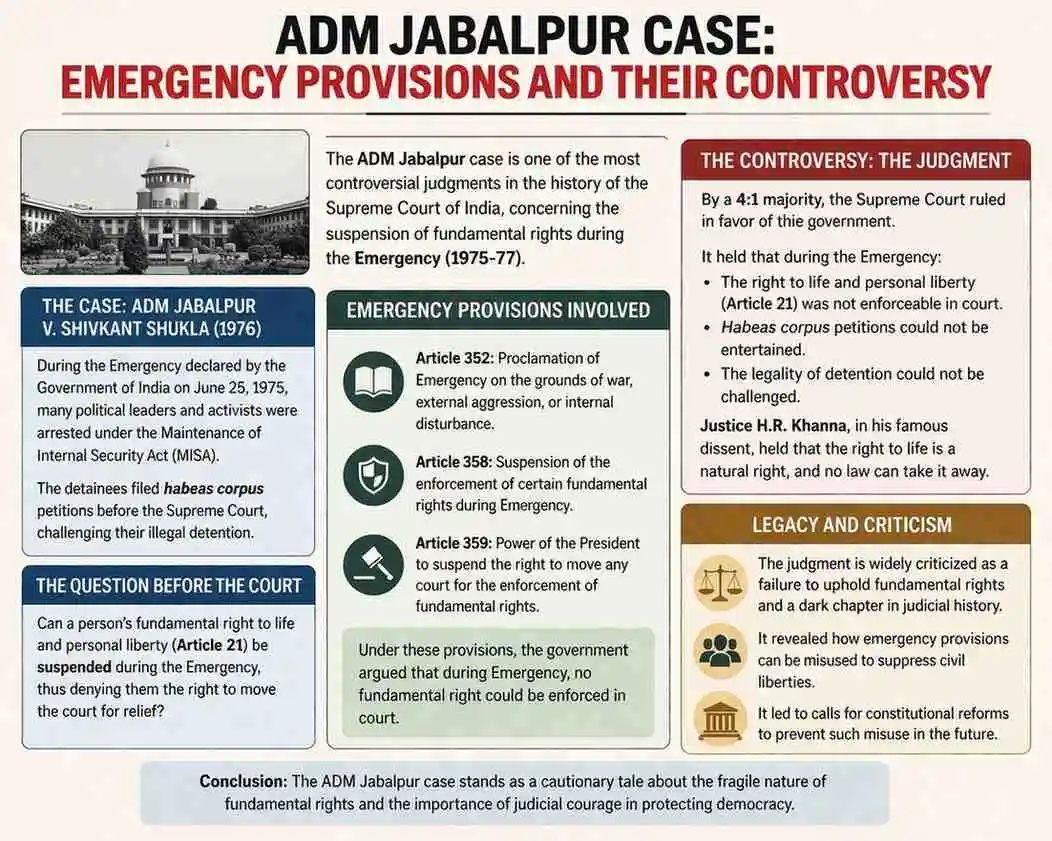
The ADM Jabalpur v. Shivkant Shukla case happened during emergency.
The court ruled citizens could not approach courts.
This judgment was later criticized.
Important features include:
-
Related to emergency
-
Limited rights protection
-
Criticized later
-
Highlighted importance of remedies
-
Led to reforms
Landmark Judgment: Maneka Gandhi Case (1978)
The Maneka Gandhi v. Union of India case expanded personal liberty.
The court ruled procedure must be fair.
This strengthened citizen protection.
Key points include:
-
Expanded liberty
-
Strengthened rights
-
Protected freedom
-
Improved justice
-
Ensured fairness
Importance in Modern Democracy
This right plays a vital role in modern democracy. It protects citizens from injustice.
It ensures government accountability.
It strengthens trust in the legal system.
Its importance includes:
-
Protects freedom
-
Strengthens democracy
-
Ensures justice
-
Limits power
-
Protects citizens
Difference Between Article 32 and Article 226
Both provide remedies but differ in scope.
Article 32 applies to Supreme Court. Article 226 applies to High Courts.
High Courts have wider powers.
Key differences include:
-
Different courts
-
Different scope
-
Different powers
-
Different jurisdiction
-
Different functions
Challenges and Limitations
Despite its importance, challenges exist. Courts face heavy workload.
Legal costs can be high.
Poor citizens may face difficulty.
Importance for Citizens
This right empowers citizens. It protects their freedom.
It ensures justice.
It protects democracy.
Benefits include:
-
Protects liberty
-
Provides justice
-
Ensures protection
-
Strengthens democracy
-
Ensures equality
Conclusion: The Ultimate Protector of Freedom
The Right to Constitutional Remedies is one of the most powerful protections available to Indian citizens. It ensures that fundamental rights are meaningful and enforceable. By allowing citizens to approach the Supreme Court directly, it provides strong protection against injustice.
It reflects the vision of constitutional makers to create a fair society. It protects liberty, equality, and justice.
Landmark judgments have strengthened its importance.
Even today, it remains the guardian of democracy and freedom.
Without this right, fundamental rights would lose their value.
Click below to generate summary