The Union Judiciary is one of the most important pillars of the Indian democratic system. It acts as the final interpreter of the Constitution, the protector of fundamental rights, and the guardian of the rule of law. In a country as diverse and complex as India, the judiciary plays a crucial role in maintaining balance among the legislature, executive, and the people. Without a strong and independent judicial system, constitutional values such as justice, liberty, equality, and fraternity would remain merely ideals rather than lived realities.
The framers of the Indian Constitution gave special importance to the Union Judiciary to ensure that power does not become arbitrary and that citizens have a reliable institution to turn to when their rights are violated. Over the decades, the judiciary has evolved through landmark judgments, judicial reforms, and constitutional interpretations.
Meaning and Concept of the Union Judiciary
The Union Judiciary refers to the judicial system at the national level, headed by the Supreme Court of India. It also includes the High Courts of states and other subordinate courts that function under a unified judicial framework. Unlike some federal systems where courts are completely separate at state and national levels, India follows an integrated judicial system.
This integration ensures uniform interpretation of laws across the country. The Union Judiciary serves as the final authority in legal disputes, constitutional interpretation, and matters involving the Union and states. Its decisions are binding on all other courts, ensuring consistency and stability in the legal system.
Core features of the Union Judiciary concept:
-
Integrated judicial system across the country
-
Supreme Court as the apex authority
-
Uniform interpretation of laws
-
Binding nature of judgments
Constitutional Basis of the Union Judiciary
The Union Judiciary derives its authority from the Constitution of India, which lays down its structure, powers, and jurisdiction. Articles 124 to 147 primarily deal with the Supreme Court, while Articles 214 to 231 relate to High Courts. These provisions ensure the judiciary’s independence and define its relationship with other organs of government.
The Constitution not only establishes courts but also safeguards judicial authority by providing security of tenure, fixed salaries, and protection from arbitrary removal. This constitutional backing allows the Union Judiciary to function without fear or favor, maintaining the supremacy of the Constitution.
Constitutional foundations include:
-
Detailed provisions on court structure
-
Clear definition of judicial powers
-
Safeguards for independence
-
Supremacy of the Constitution
Structure of the Union Judiciary
The structure of the Union Judiciary is hierarchical in nature. At the top stands the Supreme Court of India, followed by High Courts at the state level, and subordinate courts below them. This pyramid-like structure ensures efficient administration of justice and easy access to higher judicial authorities through appeals.
The Supreme Court acts as the final court of appeal, while High Courts supervise and control subordinate courts within their jurisdiction. This structure ensures both centralized authority and decentralized access to justice.
Main elements of the judicial structure:
-
Supreme Court at the apex
-
High Courts at the state level
-
Subordinate courts under High Courts
-
Hierarchical appeal system
The Supreme Court of India: Composition and Role
The Supreme Court is the highest judicial body in India and the cornerstone of the Union Judiciary. It consists of the Chief Justice of India and a fixed number of other judges as determined by Parliament. Judges are appointed by the President through a consultative process that emphasizes judicial independence.
The Supreme Court serves multiple roles, including constitutional interpreter, final appellate authority, and protector of fundamental rights. Its judgments have shaped Indian democracy by expanding civil liberties and strengthening constitutional governance.
Key aspects of the Supreme Court:
-
Apex court of the country
-
Headed by the Chief Justice of India
-
Final interpreter of the Constitution
-
Binding authority on all courts
Jurisdiction of the Supreme Court
The jurisdiction of the Supreme Court is broad and comprehensive. It includes original, appellate, advisory, and special jurisdiction. Through these powers, the court addresses disputes between governments, hears appeals from lower courts, and advises the President on constitutional matters.
This wide jurisdiction allows the Supreme Court to address complex legal and constitutional issues that affect the nation as a whole. It also ensures that justice is not denied due to procedural limitations.
Types of jurisdiction include:
-
Original jurisdiction in federal disputes
-
Appellate jurisdiction in civil and criminal cases
-
Advisory jurisdiction for constitutional questions
-
Special leave jurisdiction
High Courts and Their Importance
High Courts occupy a vital position within the Union Judiciary. Each state or group of states has a High Court that serves as the highest judicial authority within its territorial jurisdiction. High Courts play a crucial role in interpreting laws, protecting rights, and supervising subordinate courts.
They act as a bridge between the Supreme Court and lower courts, ensuring that justice is administered efficiently and fairly at the regional level. Their judgments also contribute significantly to the development of constitutional and legal principles.
Key roles of High Courts:
-
Highest courts at the state level
-
Supervisory control over subordinate courts
-
Protection of fundamental rights
-
Interpretation of state and central laws
Independence of the Union Judiciary
Judicial independence is the cornerstone of the Union Judiciary. Without independence, courts cannot function as impartial arbiters or protectors of rights. The Constitution ensures independence through secure tenure, fixed service conditions, and a rigorous removal process for judges.
This independence allows judges to deliver decisions based solely on law and conscience, even when those decisions are unpopular or challenge powerful authorities. It strengthens public trust in the judicial system.
Safeguards of judicial independence:
-
Security of tenure for judges
-
Fixed salaries and service conditions
-
Difficult removal procedure
-
Separation from executive control
Powers of Judicial Review
Judicial review is one of the most significant powers of the Union Judiciary. It enables courts to examine the constitutionality of laws and executive actions. If a law violates constitutional provisions, the judiciary has the authority to declare it invalid.
This power ensures constitutional supremacy and prevents misuse of legislative or executive authority. Judicial review has played a crucial role in protecting fundamental rights and maintaining the balance of power.
Importance of judicial review:
-
Ensures supremacy of the Constitution
-
Protects fundamental rights
-
Prevents arbitrary governance
-
Maintains balance of power
Public Interest Litigation and Access to Justice
Public Interest Litigation (PIL) has transformed the role of the Union Judiciary by making justice more accessible to marginalized sections of society. Through PIL, courts can take up cases affecting public welfare even when traditional legal requirements are not strictly met.
This innovation has allowed the judiciary to address issues such as environmental protection, human rights, and social justice. It reflects the judiciary’s proactive role in addressing societal challenges.
Key features of PIL:
-
Expanded access to justice
-
Focus on public welfare issues
-
Relaxed procedural requirements
-
Judicial activism for social good
Relationship with Legislature and Executive
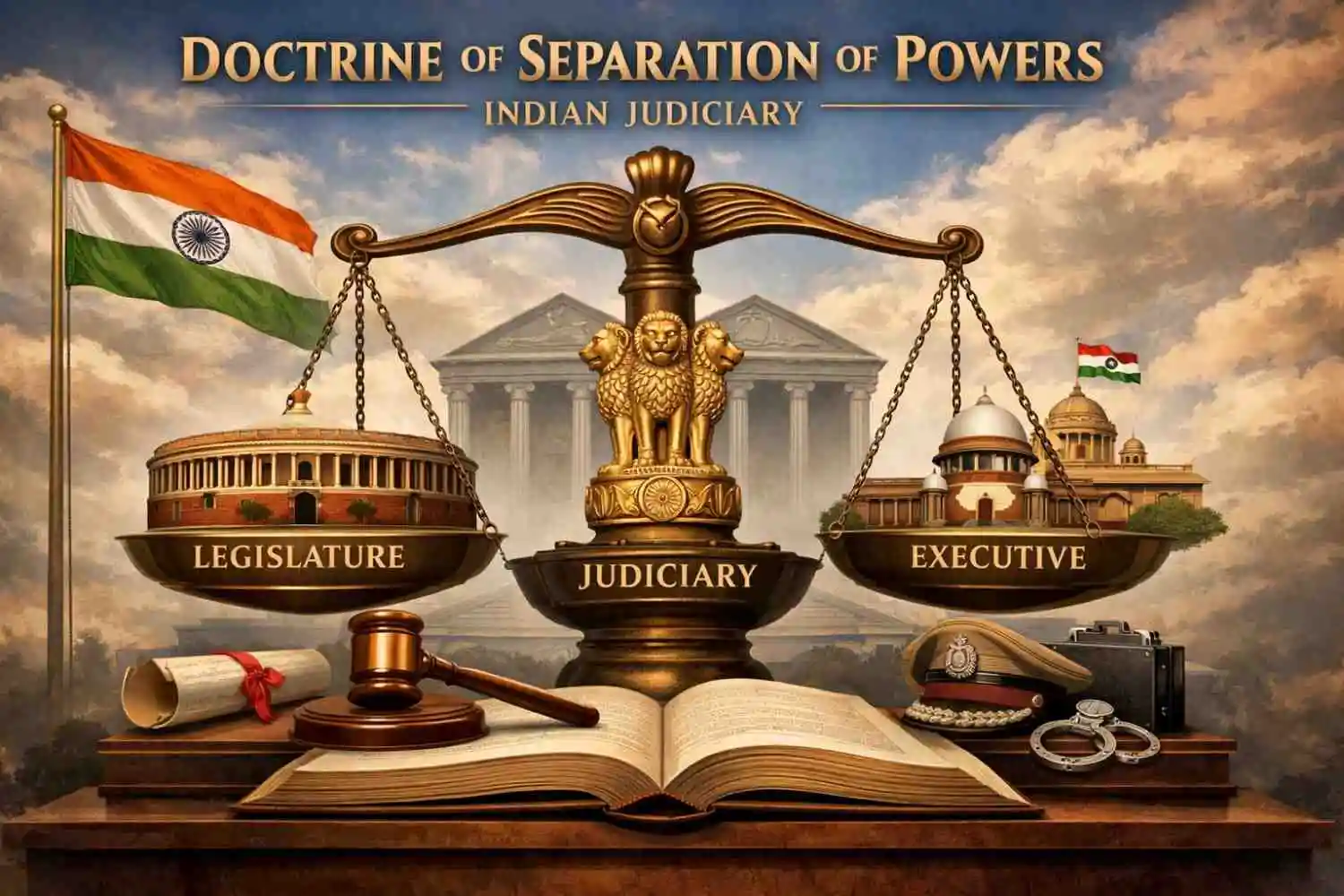
The Union Judiciary maintains a delicate balance with the legislature and executive. While it respects the domain of other organs, it also ensures that they function within constitutional limits. This system of checks and balances prevents concentration of power.
Judicial intervention is guided by constitutional principles rather than political considerations. This balanced relationship is essential for the smooth functioning of democracy.
Nature of inter-institutional relations:
-
Checks and balances system
-
Respect for separation of powers
-
Constitutional accountability
-
Prevention of power misuse
Accountability and Criticism of the Judiciary
While independence is essential, accountability is equally important. The Union Judiciary is subject to criticism regarding delays, pendency of cases, and transparency. Addressing these concerns is vital for maintaining public confidence.
Reforms such as digitization, fast-track courts, and procedural simplification aim to improve efficiency without compromising independence. Constructive criticism helps strengthen the institution.
Common challenges faced:
-
Case backlog and delays
-
Accessibility issues
-
Need for transparency
-
Demand for judicial reforms
Role of the Union Judiciary in Protecting Rights
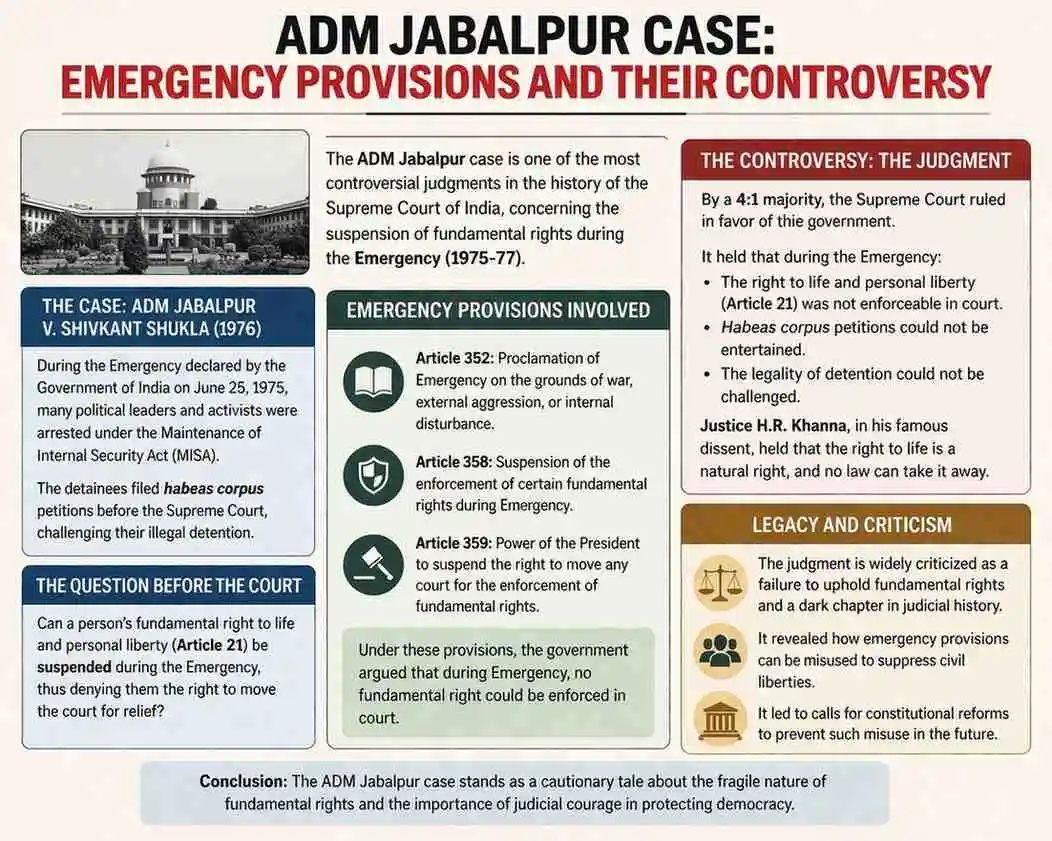
One of the most important contributions of the Union Judiciary has been the protection and expansion of fundamental rights. Through progressive interpretations, courts have recognized new dimensions of rights, including privacy, dignity, and environmental protection.
This evolving role demonstrates the judiciary’s responsiveness to changing social realities. It reinforces the idea that the Constitution is a living document.
Contributions to rights protection:
-
Expansion of fundamental rights
-
Protection of civil liberties
-
Recognition of new rights
-
Adaptation to social change
Challenges in the Modern Era
In the contemporary era, the Union Judiciary faces new challenges such as technological change, complex economic disputes, and increased public expectations. Balancing efficiency with fairness remains a constant concern.
Despite these challenges, the judiciary continues to adapt through reforms and innovation. Its resilience reflects its foundational importance in Indian democracy.
Modern challenges include:
-
Growing case complexity
-
Technological adaptation
-
Rising public expectations
-
Need for systemic reforms
Conclusion
The Union Judiciary stands as a pillar of justice, constitutionalism, and democratic governance in India. Through its structure, powers, and independence, it ensures that the rule of law prevails over arbitrariness. From safeguarding fundamental rights to maintaining federal balance, its role has been both profound and transformative.
While challenges persist, the enduring strength of the Union Judiciary lies in its commitment to constitutional values and public trust. As India continues to evolve, the judiciary will remain central to ensuring that democracy is not just preserved, but strengthened through justice, accountability, and fairness.
Click below to generate summary