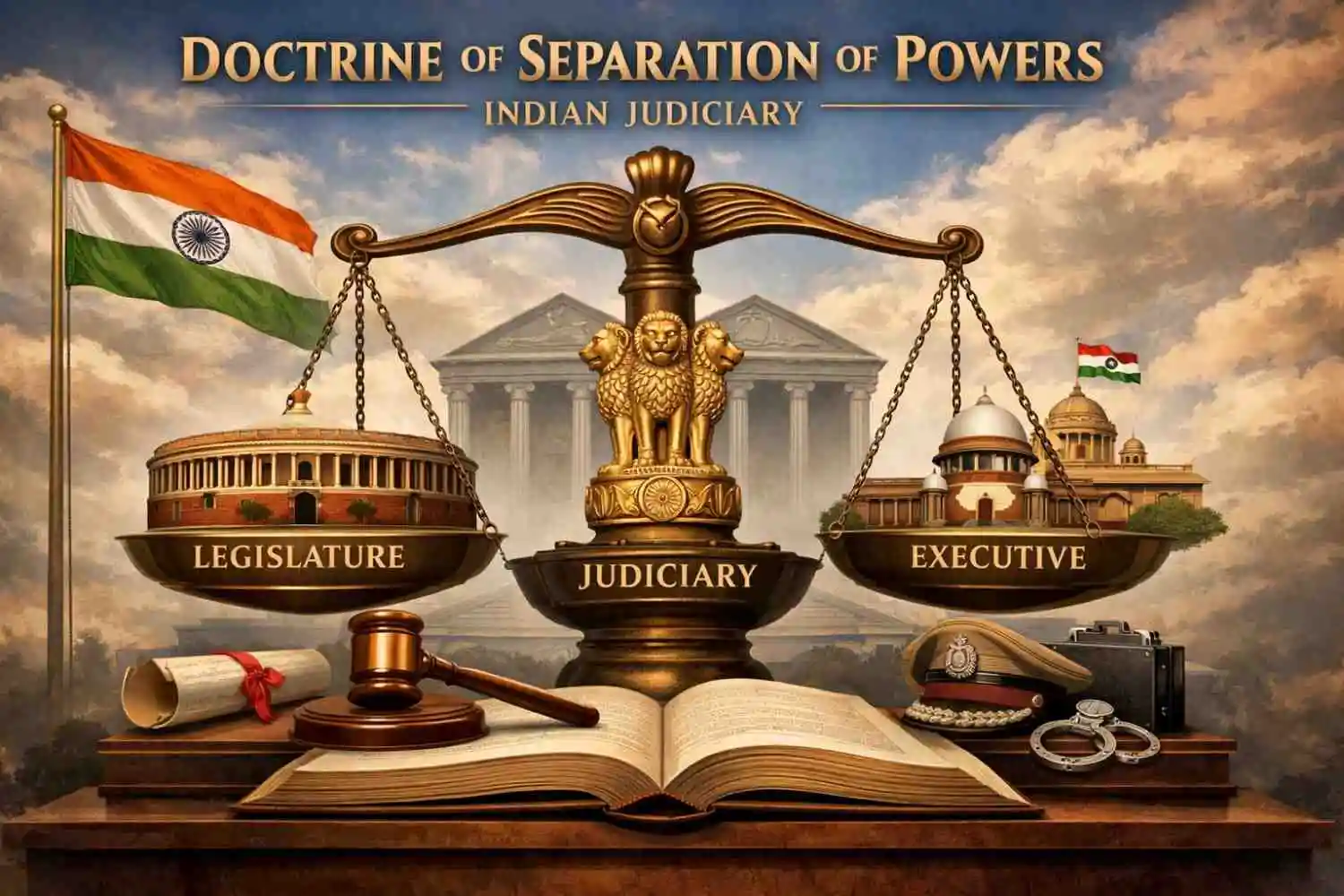
Fundamental Rights form the backbone of any democratic system, ensuring that individuals can live with dignity, freedom, and equality. In India, these rights are enshrined in the Constitution and serve as a shield against arbitrary actions of the state. They reflect the core values of justice, liberty, equality, and fraternity, which are essential for the smooth functioning of a pluralistic society. Rather than being abstract ideals, these rights have a direct and practical impact on the everyday lives of citizens, influencing education, employment, personal liberty, expression, and social equality.
The concept of Fundamental Rights emerged from long historical struggles against oppression, colonial rule, and social inequality. When the Constitution of India came into force in 1950, these rights were included to prevent the abuse of power and to ensure that democracy did not remain limited to elections alone. Over time, judicial interpretation and constitutional amendments have expanded their scope, making them a living and evolving part of Indian constitutional law.
Meaning and Concept of Fundamental Rights
Fundamental Rights are basic human freedoms guaranteed by the Constitution to all citizens, and in some cases to non-citizens as well. They are considered “fundamental” because they are essential for the all-round development of individuals and for maintaining a just social order. These rights protect personal liberty, ensure equality before the law, and safeguard individuals from discrimination and exploitation.
Unlike ordinary legal rights, Fundamental Rights are enforceable by courts. This means that if any of these rights are violated, an individual can directly approach the judiciary for protection. The framers of the Constitution drew inspiration from various democratic constitutions around the world while tailoring these rights to India’s unique social and cultural context. As a result, Fundamental Rights combine universal human values with the specific needs of Indian society.
Key takeaways:
-
Fundamental Rights ensure freedom, dignity, and equality
-
They are guaranteed by the Constitution
-
Courts can enforce these rights
-
Inspired by global democratic principles
Historical Background and Evolution
The idea of guaranteed rights did not emerge suddenly in independent India. During the colonial period, Indians experienced restrictions on freedom, inequality before the law, and denial of civil liberties. National leaders recognized that political independence without individual rights would be incomplete. This realization shaped the constitutional vision of independent India.
Various movements, reports, and debates influenced the final framework of rights. The experiences of colonial repression, along with exposure to international human rights discourse, convinced the Constituent Assembly of the need for strong constitutional safeguards. Over time, amendments and judicial interpretations have refined these rights, adapting them to changing social realities without diluting their core purpose.
Key takeaways:
-
Colonial experience highlighted the need for rights
-
Freedom struggle shaped constitutional thinking
-
Constituent Assembly debates refined the framework
-
Rights evolved through amendments and judgments
Classification of Fundamental Rights
The Constitution groups Fundamental Rights into distinct categories to address different aspects of individual freedom and social justice. This classification helps in understanding their scope and application. Each category focuses on a specific dimension of human life, ranging from equality to religious freedom.
Although categorized separately, these rights are interconnected. The enjoyment of one often depends on the protection of others. Together, they create a balanced framework that promotes both individual liberty and collective harmony.
Key takeaways:
-
Rights are grouped into categories
-
Each category serves a distinct purpose
-
Rights are interconnected
-
Balanced approach to liberty and order
Right to Equality
The Right to Equality ensures that all individuals are treated equally before the law and are entitled to equal protection. It aims to eliminate discrimination based on religion, race, caste, sex, or place of birth. This right reflects the democratic ideal that every person is equal in the eyes of the law.
Beyond formal equality, this right also allows the state to take special measures for disadvantaged groups. Such provisions recognize historical injustices and seek to create a more level playing field. As a result, equality is understood not just as identical treatment, but as fairness in opportunities and outcomes.
Key takeaways:
-
Equality before the law is guaranteed
-
Discrimination is prohibited
-
Special provisions for disadvantaged groups allowed
-
Focus on substantive fairness
Right to Freedom
The Right to Freedom protects essential personal liberties that allow individuals to express themselves and pursue their aspirations. These freedoms include speech and expression, peaceful assembly, association, movement, residence, and profession. Together, they form the foundation of a vibrant democratic society.
However, these freedoms are not absolute. Reasonable restrictions can be imposed in the interests of public order, morality, security, and sovereignty. This balance ensures that individual liberty does not harm collective well-being.
Key takeaways:
-
Protects core personal liberties
-
Essential for democratic participation
-
Subject to reasonable restrictions
-
Balances individual and public interest
Right Against Exploitation
The Right Against Exploitation addresses practices that degrade human dignity, such as human trafficking, forced labor, and child labor. By prohibiting such practices, the Constitution seeks to protect vulnerable sections of society from abuse and economic exploitation.
This right reflects a moral commitment to human dignity and social justice. It recognizes that freedom and equality are meaningless if individuals are subjected to coercion and inhuman treatment. Legal safeguards under this right aim to create a humane and just society.
Key takeaways:
-
Prohibits human trafficking
-
Bans forced labor
-
Protects children from exploitation
-
Upholds human dignity
Right to Freedom of Religion
Freedom of religion ensures that individuals can follow, practice, and propagate their faith without fear. This right supports India’s secular character by allowing diverse religious traditions to coexist peacefully. It applies to individuals as well as religious groups and institutions.
At the same time, religious freedom is subject to public order, morality, and health. This ensures that religious practices do not infringe upon the rights of others or disrupt social harmony.
Key takeaways:
-
Guarantees religious liberty
-
Supports secularism
-
Applies to individuals and groups
-
Subject to social order considerations
Cultural and Educational Rights
Cultural and Educational Rights protect the interests of minorities by allowing them to preserve their language, script, and culture. These rights ensure that diversity is not suppressed in the pursuit of national unity.
Educational autonomy under this category allows minority institutions to manage their affairs, promoting inclusiveness and mutual respect. Such protections strengthen social cohesion by recognizing diversity as a strength rather than a threat.
Key takeaways:
-
Protects minority cultures
-
Preserves linguistic diversity
-
Ensures educational autonomy
-
Promotes inclusive development
Right to Constitutional Remedies
The Right to Constitutional Remedies is often described as the heart of Fundamental Rights. It empowers individuals to approach courts directly when their rights are violated. Without effective remedies, rights would remain symbolic rather than practical.
Courts can issue various orders to enforce rights and correct injustice. This mechanism ensures accountability and reinforces the rule of law in a democratic system.
Key takeaways:
-
Ensures enforceability of rights
-
Allows direct access to courts
-
Strengthens rule of law
-
Makes rights meaningful
Limitations and Reasonable Restrictions
While Fundamental Rights are vital, they are not unlimited. The Constitution permits reasonable restrictions to maintain public order, morality, and national security. These limitations prevent misuse of rights and ensure social stability.
The judiciary plays a key role in determining whether restrictions are reasonable. This judicial oversight ensures that limitations do not undermine the essence of the rights themselves.
Key takeaways:
-
Rights are not absolute
-
Restrictions ensure social order
-
Judiciary evaluates reasonableness
-
Balance between liberty and security
Role of Judiciary in Interpreting Rights
The judiciary has been instrumental in expanding and protecting Fundamental Rights. Through progressive interpretation, courts have adapted constitutional principles to contemporary challenges. Judicial creativity has ensured that rights remain relevant in changing times.
Landmark judgments have clarified ambiguities, introduced new dimensions to existing rights, and reinforced constitutional values. This dynamic role has strengthened public confidence in constitutional governance.
Key takeaways:
-
Judiciary safeguards rights
-
Progressive interpretation expands scope
-
Adapts rights to modern challenges
-
Reinforces constitutional values
Expansion Through Judicial Interpretation
Over the years, courts have interpreted Fundamental Rights broadly to include new dimensions such as privacy, dignity, and environmental protection. This approach reflects the understanding that rights must evolve with society.
Such interpretations have transformed the Constitution into a living document. They demonstrate that constitutional principles are not frozen in time but grow alongside social progress.
Key takeaways:
-
Rights expanded through interpretation
-
New dimensions recognized
-
Constitution seen as living document
-
Reflects social evolution
Relationship Between Fundamental Rights and Duties
While Fundamental Rights empower individuals, Fundamental Duties remind citizens of their responsibilities toward society. Together, they create a balanced framework of rights and obligations.
Rights without duties can lead to disorder, while duties without rights can result in oppression. The coexistence of both strengthens democratic culture and civic responsibility.
Key takeaways:
-
Rights and duties are interconnected
-
Duties promote responsible citizenship
-
Balance prevents misuse of rights
-
Strengthens democracy
Importance in a Democratic Society
Fundamental Rights are essential for sustaining democracy beyond electoral processes. They protect dissent, encourage participation, and prevent concentration of power. By empowering individuals, they contribute to social stability and political accountability.
In diverse societies, these rights also promote inclusion and mutual respect. They ensure that democracy serves all sections of society rather than a privileged few.
Key takeaways:
-
Essential for democratic functioning
-
Protects dissent and participation
-
Promotes inclusion and equality
-
Prevents abuse of power
Contemporary Challenges and Relevance
In the modern era, issues such as digital privacy, freedom of expression online, and social inequality pose new challenges. Fundamental Rights continue to provide a framework for addressing these concerns.
Their adaptability ensures relevance in changing contexts. Ongoing debates and judicial decisions reflect the continuing importance of constitutional safeguards in a rapidly evolving society.
Key takeaways:
-
New challenges require reinterpretation
-
Rights apply to digital and social issues
-
Adaptability ensures relevance
-
Ongoing legal and social debates
Conclusion
Fundamental Rights represent the moral and legal foundation of India’s constitutional democracy. They safeguard individual liberty while promoting equality, justice, and social harmony. From protecting personal freedoms to ensuring access to justice, these rights touch every aspect of civic life.
Their true strength lies not only in constitutional text but also in active enforcement and public awareness. As society evolves, Fundamental Rights continue to guide democratic governance and protect human dignity. Understanding their scope and significance helps citizens appreciate the values that underpin a free and just society.
Click below to generate summary