Udham Singh occupies a unique and powerful place in the history of India’s freedom struggle. Unlike many leaders remembered for speeches or political negotiations, Udham Singh is remembered for an act that symbolized the deep pain, anger, and resistance felt by millions of Indians under colonial rule. His life story reflects the journey of an ordinary man transformed by injustice into a revolutionary icon whose actions echoed across continents.
Born into poverty, shaped by loss, and driven by a sense of collective suffering, Udham Singh dedicated his life to challenging imperial authority. His name is inseparably linked with the Jallianwala Bagh massacre, an event that deeply scarred India’s national consciousness.
Early Life and Childhood Struggles
Udham Singh was born in 1899 in Sunam, a town in present-day Punjab. His early life was marked by hardship and instability. Losing his parents at a very young age, he and his brother were placed in an orphanage. This environment, though disciplined, exposed him early to the harsh realities of colonial India, where poverty and neglect were common among native populations.
The orphanage played a significant role in shaping his worldview. It was here that he first encountered ideas of social inequality and injustice. Despite limited resources, he showed resilience and a keen awareness of his surroundings. These formative years instilled in him a sense of empathy for the oppressed and a growing resentment toward systems that enabled exploitation.
Important aspects of his early life:
-
Born into a poor family in Punjab
-
Lost both parents during childhood
-
Raised in an orphanage with his brother
-
Early exposure to inequality and hardship
The Jallianwala Bagh Massacre and Its Impact
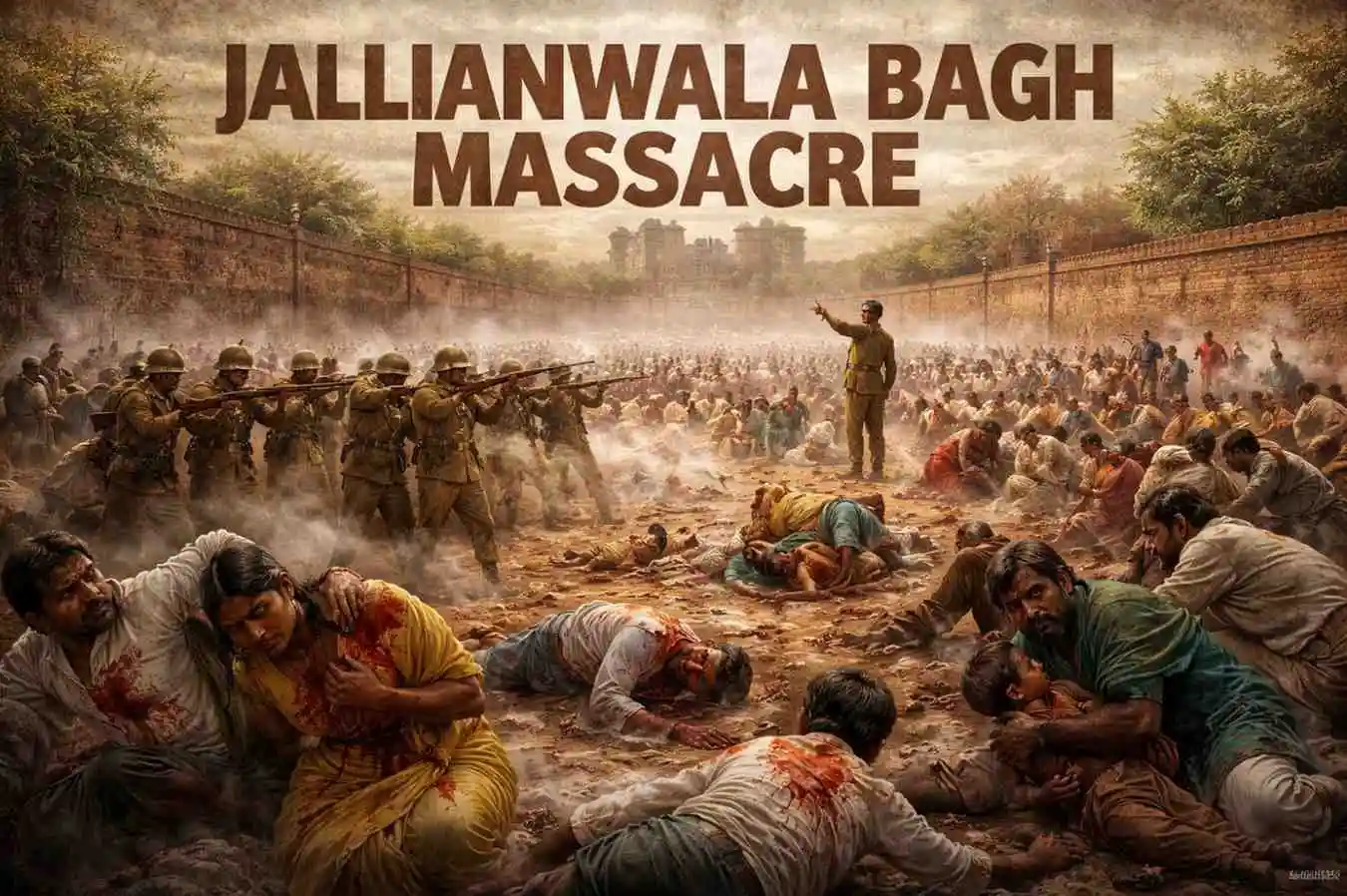
The defining moment in Udham Singh’s life occurred in 1919 during the Jallianwala Bagh massacre in Amritsar. Thousands of unarmed Indians had gathered peacefully when British troops opened fire without warning. The brutality of the incident shocked the nation and left a permanent mark on those who witnessed or survived it.
Udham Singh was present in Amritsar at the time and reportedly helped wounded victims after the firing. The massacre was not just a tragic event for him; it became a lifelong turning point. From that day onward, his life revolved around the memory of injustice and the desire to hold those responsible accountable.
Why Jallianwala Bagh shaped his life:
-
Witnessed the aftermath of colonial violence
-
Developed a deep personal connection to the tragedy
-
Internalized the suffering of innocent civilians
-
Resolved to dedicate his life to justice
Awakening of Revolutionary Consciousness
Following the massacre, Udham Singh’s anger gradually transformed into ideological clarity. He began to see colonialism not just as political domination, but as a system sustained through fear and violence. This realization pushed him toward revolutionary thought rather than conventional political activism.
During this phase, he came into contact with nationalist ideas circulating across India. He admired revolutionaries who believed in direct action and sacrifice. His worldview became increasingly global, recognizing that imperialism was an international structure that needed to be confronted beyond India’s borders.
Key developments in his ideological awakening:
-
Shift from emotional anger to political awareness
-
Influence of revolutionary nationalist thought
-
Rejection of passive resistance as insufficient
-
Embrace of global anti-imperialist ideas
Association with Revolutionary Networks
Udham Singh eventually became associated with revolutionary groups that operated both within and outside India. These networks provided him with ideological support, resources, and a sense of belonging. He traveled extensively, working various jobs to sustain himself while remaining connected to the cause of independence.
His time abroad exposed him to other struggles against colonialism and racism. Living among immigrant communities strengthened his resolve and broadened his understanding of oppression. These experiences reinforced his belief that the fight against imperial rule was a shared global struggle.
Notable aspects of his revolutionary associations:
-
Connections with Indian nationalist groups abroad
-
Exposure to international anti-colonial movements
-
Use of travel as a means of survival and activism
-
Development of a broader political vision
Life in Exile and Years of Preparation
Udham Singh spent several years outside India, particularly in countries such as the United States and the United Kingdom. These years were not marked by dramatic events but by patience and preparation. He lived modestly, working menial jobs while quietly planning his future actions.
This period highlights his discipline and long-term commitment. Rather than acting impulsively, he waited for the moment he believed would deliver symbolic justice. His exile years demonstrate that revolutionary action often involves endurance, isolation, and psychological resilience.
Characteristics of his life in exile:
-
Long periods of anonymity and hardship
-
Steady focus on a singular objective
-
Avoidance of public attention
-
Emotional endurance and patience
The Assassination in London
In 1940, Udham Singh carried out the act that would define his legacy. He assassinated Michael O’Dwyer, the former Lieutenant Governor of Punjab, whom he held responsible for the Jallianwala Bagh massacre. The act took place in London, far from the site of the original tragedy, underscoring the global reach of his mission.
Udham Singh did not attempt to escape after the assassination. Instead, he surrendered calmly, fully aware of the consequences. His action was not driven by personal revenge alone but by a desire to make the world remember a forgotten atrocity.
Key facts about the assassination:
-
Targeted a key colonial official linked to the massacre
-
Act carried out in a public setting
-
Voluntary surrender after the event
-
Intended as a symbolic act of justice
Trial and Defiant Statements
Udham Singh’s trial in Britain became an extension of his revolutionary act. Throughout the proceedings, he remained unapologetic and articulate. He used the courtroom as a platform to explain the suffering of Indians under colonial rule and to justify his actions as morally necessary.
His statements reflected clarity of purpose and deep conviction. Rather than seeking sympathy, he emphasized accountability and historical truth. The trial brought international attention to colonial violence and challenged dominant narratives of imperial benevolence.
Highlights of his trial:
-
Calm and fearless courtroom demeanor
-
Clear articulation of political motives
-
Rejection of colonial moral authority
-
Global attention to his statements
Execution and Martyrdom
Udham Singh was executed in 1940, becoming a martyr for the cause of Indian independence. His death was not the end of his influence; rather, it marked the beginning of his transformation into a symbol of resistance. News of his execution resonated deeply among Indians, particularly those who remembered Jallianwala Bagh.
Martyrdom elevated his actions from an individual event to a collective memory. His sacrifice reminded people that freedom often demands extreme courage and personal loss.
Why his execution mattered:
-
Reinforced the emotional legacy of colonial injustice
-
Inspired nationalist sentiment in India
-
Cemented his place among revolutionary martyrs
-
Highlighted the cost of resistance
Ideology and Philosophy of Resistance
Udham Singh’s ideology was rooted in justice, accountability, and remembrance. He did not see himself as a hero but as a representative of those who could not speak for themselves. His philosophy rejected selective memory and demanded acknowledgment of historical crimes.
Unlike leaders who sought compromise, his approach emphasized moral reckoning. This perspective continues to resonate in discussions about historical responsibility and colonial legacies.
Core elements of his philosophy:
-
Justice over forgiveness without accountability
-
Memory as a form of resistance
-
Representation of collective suffering
-
Moral challenge to imperial narratives
Representation in Indian History and Culture
For many years, Udham Singh’s story remained underrepresented in mainstream historical narratives. Over time, however, literature, films, and academic works have brought renewed attention to his life. He is now recognized not only as a revolutionary but as a symbol of emotional resistance.
Cultural portrayals often emphasize his silence, patience, and resolve. These representations help new generations connect emotionally with the past and understand freedom beyond political milestones.
Cultural significance of his legacy:
-
Inspiration for films and literature
-
Recognition as a national martyr
-
Symbol of uncompromising resistance
-
Emotional connection to historical memory
Udham Singh in Contemporary India
Today, Udham Singh is remembered through memorials, educational curricula, and public discourse. His life invites reflection on how societies remember trauma and justice. In an era of global conversations about historical wrongs, his story remains deeply relevant.
He represents the voice of those who demand acknowledgment rather than silence. His legacy challenges complacency and encourages critical engagement with history.
His relevance in modern times:
-
Continued presence in public memory
-
Educational importance in freedom history
-
Symbol of justice-driven resistance
-
Inspiration for ethical courage
Conclusion
Udham Singh’s life was not defined by privilege, power, or political office. It was defined by memory, conviction, and courage. From an orphaned child in Punjab to a revolutionary who shook the foundations of imperial authority, his journey reflects the human cost of injustice and the enduring power of conscience.
His story reminds us that freedom struggles are not only fought through negotiations and movements, but also through personal sacrifice and moral clarity. Udham Singh did not live to see an independent India, but his actions contributed to the awakening that made independence inevitable. Remembering him is not merely an act of honoring the past; it is a commitment to truth, justice, and historical responsibility.
Click below to generate summary