The Mughal Empire stands as one of the most influential dynasties in Indian history, celebrated for its administrative sophistication, cultural brilliance, and architectural marvels. While early rulers such as Babur, Akbar, Jahangir, Shah Jahan, and Aurangzeb laid the foundations of imperial power, the period that followed Aurangzeb’s death in 1707 marked a slow but decisive transformation. This era, commonly associated with the later Mughal emperors, was defined by internal weaknesses, regional rebellions, foreign invasions, and the growing dominance of European trading companies.
Despite political decline, the Mughal court continued to influence culture, language, art, and social life for more than a century. The later rulers were not merely passive figures; many attempted reforms, negotiated alliances, and struggled to preserve imperial dignity in rapidly changing circumstances. Understanding this phase is essential for grasping how medieval India transitioned toward colonial rule.
Historical Background After Aurangzeb
The death of Aurangzeb Alamgir marked a decisive turning point in Mughal history. His long reign had expanded the empire to its greatest territorial extent, but it also exhausted resources and intensified political and religious tensions. Succession disputes became frequent, weakening central authority and empowering nobles and regional governors.
The administrative system that once ensured efficiency began to crumble. Powerful mansabdars asserted independence, while provinces such as Bengal, Awadh, and Hyderabad gradually emerged as semi-autonomous states. This fragile background shaped the reigns of the later Mughal emperors, who inherited an empire rich in legacy but poor in stability.
Key features of the post-Aurangzeb context:
-
Frequent wars of succession weakened imperial unity
-
Decline in revenue collection and military discipline
-
Rise of powerful regional governors and nobles
-
Increasing influence of foreign powers in Indian politics
Bahadur Shah I: A Brief Attempt at Stability
Bahadur Shah I, also known as Muazzam, ascended the throne in 1707 after defeating his brothers in a war of succession. His reign, though short, represented an effort to bring moderation after decades of strict policies. He attempted reconciliation with the Rajputs and showed a relatively tolerant attitude toward religious differences.
However, Bahadur Shah faced continuous rebellions, particularly from the Sikhs and the Marathas. His inability to decisively control these forces highlighted the limitations of Mughal authority at the time. Although he tried to stabilize the empire, the underlying structural weaknesses remained unresolved.
Important aspects of Bahadur Shah I’s reign:
-
Attempted reconciliation with Rajputs and other groups
-
Faced Sikh and Maratha resistance
-
Short reign with limited administrative reforms
-
Failed to restore strong central control
Jahandar Shah and the Rise of Court Politics
Jahandar Shah’s accession in 1712 symbolized the increasing influence of court factions and kingmakers. His dependence on the powerful noble Zulfiqar Khan illustrated how emperors were losing autonomy to influential courtiers. Administrative efficiency declined further, and corruption became more visible at the highest levels.
Although Jahandar Shah attempted to maintain royal grandeur, his lack of political acumen weakened his position. His reign ended quickly when he was defeated by Farrukhsiyar, backed by the influential Sayyid brothers. This episode marked the beginning of an era where emperors were often controlled or replaced by powerful nobles.
Highlights of Jahandar Shah’s period:
-
Dominance of influential nobles in decision-making
-
Decline in imperial authority and discipline
-
Increased court intrigues and factionalism
-
Short and unstable reign
Farrukhsiyar and the Sayyid Brothers
Farrukhsiyar’s rule (1713–1719) is remembered for the dominance of the Sayyid brothers, who acted as kingmakers. While the emperor nominally held power, real authority rested with these influential nobles. Farrukhsiyar attempted to assert independence, but his efforts ultimately failed.
One of the most significant developments during his reign was the increased involvement of European trading companies. The British East India Company gained important trading privileges, which later played a crucial role in colonial expansion. Farrukhsiyar’s deposition and execution underscored the vulnerability of Mughal emperors during this period.
Key developments under Farrukhsiyar:
-
Political dominance of the Sayyid brothers
-
Growing European commercial influence
-
Weak imperial control over administration
-
Violent end reflecting political instability
Muhammad Shah “Rangeela”: Cultural Flourishing Amid Decline
Muhammad Shah, often called “Rangeela” for his love of art and culture, ruled from 1719 to 1748. His reign witnessed a revival of music, painting, poetry, and courtly life. Delhi once again became a cultural center, attracting artists and scholars.
However, political decline continued alongside cultural brilliance. Regional powers grew stronger, and the empire suffered a devastating blow with Nadir Shah’s invasion in 1739. The sack of Delhi and the looting of immense wealth shattered Mughal prestige and exposed military weaknesses.
Significant aspects of Muhammad Shah’s reign:
-
Revival of arts, music, and literature
-
Weak political leadership and military decline
-
Nadir Shah’s invasion and sack of Delhi
-
Loss of imperial prestige and resources
Later Eighteenth-Century Rulers and Fragmentation
After Muhammad Shah, a series of emperors ruled briefly, often under the influence of powerful nobles or external forces. Ahmad Shah Bahadur, Alamgir II, and Shah Alam II struggled to maintain authority over a rapidly fragmenting empire. Provincial rulers acted independently, while the Marathas emerged as a dominant power in northern India.
Shah Alam II’s reign was particularly symbolic of Mughal decline. Although he attempted to regain control, he spent years under Maratha and later British protection. His dependence on external powers illustrated how the Mughal emperor had become a figurehead rather than a sovereign ruler.
Key characteristics of this phase:
-
Rapid succession of weak emperors
-
Growing Maratha dominance in northern India
-
Increasing reliance on external military support
-
Transformation of the emperor into a symbolic authority
Impact of Foreign Invasions
Foreign invasions played a crucial role in weakening Mughal authority during this period. Nadir Shah’s invasion was followed by Ahmad Shah Abdali’s repeated attacks, which destabilized northern India. These invasions drained resources, disrupted trade, and eroded confidence in the empire’s ability to protect its subjects.
The inability of the later Mughal emperors to effectively respond to these threats further diminished imperial legitimacy. Regional powers increasingly took responsibility for defense, accelerating political decentralization.
Major effects of foreign invasions:
-
Massive economic losses and destruction
-
Decline in military confidence
-
Weakening of central authority
-
Strengthening of regional powers
Cultural and Social Contributions Despite Decline
Even as political power waned, the Mughal court continued to influence Indian culture. Persian literature, Urdu poetry, miniature painting, and refined court etiquette flourished during the later period. The development of Urdu as a literary language is closely associated with this era.
Social life in urban centers retained elements of Mughal sophistication. Festivals, music, and intellectual gatherings remained vibrant, demonstrating that cultural influence often outlasts political authority.
Cultural contributions of the later period:
-
Growth of Urdu literature and poetry
-
Continued patronage of music and painting
-
Preservation of courtly traditions
-
Lasting influence on Indian culture
The Role of the British East India Company
As Mughal authority declined, the British East India Company expanded its political and military role. Initially traders seeking commercial privileges, the British gradually became power brokers in Indian politics. Treaties, alliances, and military interventions reduced the emperor’s authority further.
By the mid-eighteenth century, the Mughal emperor’s approval was often used to legitimize British actions. This symbolic association helped the company establish control while maintaining a facade of continuity with traditional authority.
Key points about British involvement:
-
Transition from trade to political control
-
Use of imperial legitimacy for expansion
-
Increasing military and administrative influence
-
Marginalization of the emperor’s real power
Bahadur Shah Zafar and the End of Mughal Rule
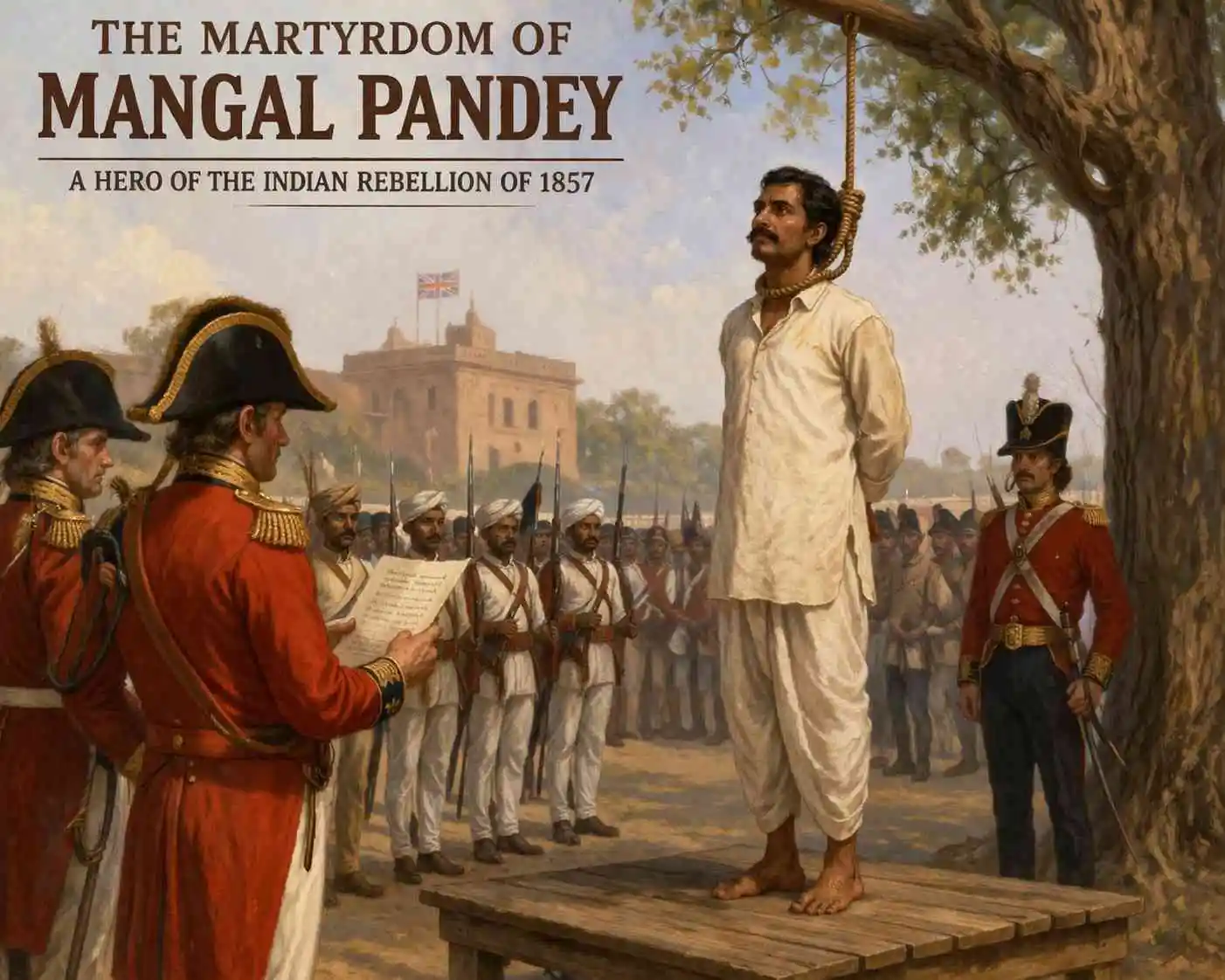
Bahadur Shah Zafar, the last Mughal emperor, ascended the throne in 1837. A poet and cultural patron, he held little real power, as the British controlled Delhi. His reign is most significant for its association with the Revolt of 1857, when rebels proclaimed him the symbolic leader of resistance.
The failure of the revolt marked the formal end of Mughal rule. Bahadur Shah Zafar was exiled to Rangoon, and the British Crown assumed direct control over India. This event closed a chapter that had shaped Indian history for more than three centuries.
Key aspects of Bahadur Shah Zafar’s reign:
-
Cultural and literary contributions
-
Symbolic leadership during the 1857 uprising
-
Loss of imperial authority to the British
-
Formal end of the Mughal dynasty
Conclusion
The era of the later Mughal emperors represents a complex blend of decline and continuity. Politically, the empire fragmented under the pressure of internal conflicts, regional ambitions, and foreign invasions. Administratively, centralized control weakened, paving the way for new powers to emerge. Yet culturally, the Mughal legacy continued to shape art, language, and social life across India.
These rulers, often dismissed as weak or ineffective, governed during extraordinarily challenging times. Their reigns illustrate how historical change is rarely abrupt; instead, it unfolds through gradual transformations. The later Mughal period serves as a bridge between medieval imperial rule and the colonial era, offering valuable insights into resilience, adaptation, and the enduring power of culture even in times of political decline.
Click below to generate summary