The Prime Minister of India occupies the most powerful and influential position within the country’s democratic framework. While India follows a parliamentary system of governance, the Constitution carefully balances authority among various institutions to ensure accountability, stability, and democratic functioning. At the heart of this system stands the Prime Minister, who functions as the real executive authority of the Union government. Although the Constitution of India does not devote a separate chapter exclusively to this office, its powers, responsibilities, and position emerge clearly through various constitutional provisions, conventions, and judicial interpretations.
Understanding the Prime Minister’s role within the Indian Constitution is essential to understanding how India is governed in practice. The office symbolizes collective leadership, political responsibility, and democratic accountability. From policy formulation to administration, from legislative leadership to international diplomacy, the Prime Minister shapes the direction of the nation while remaining answerable to Parliament and the people.
Constitutional Framework of Parliamentary Democracy in India
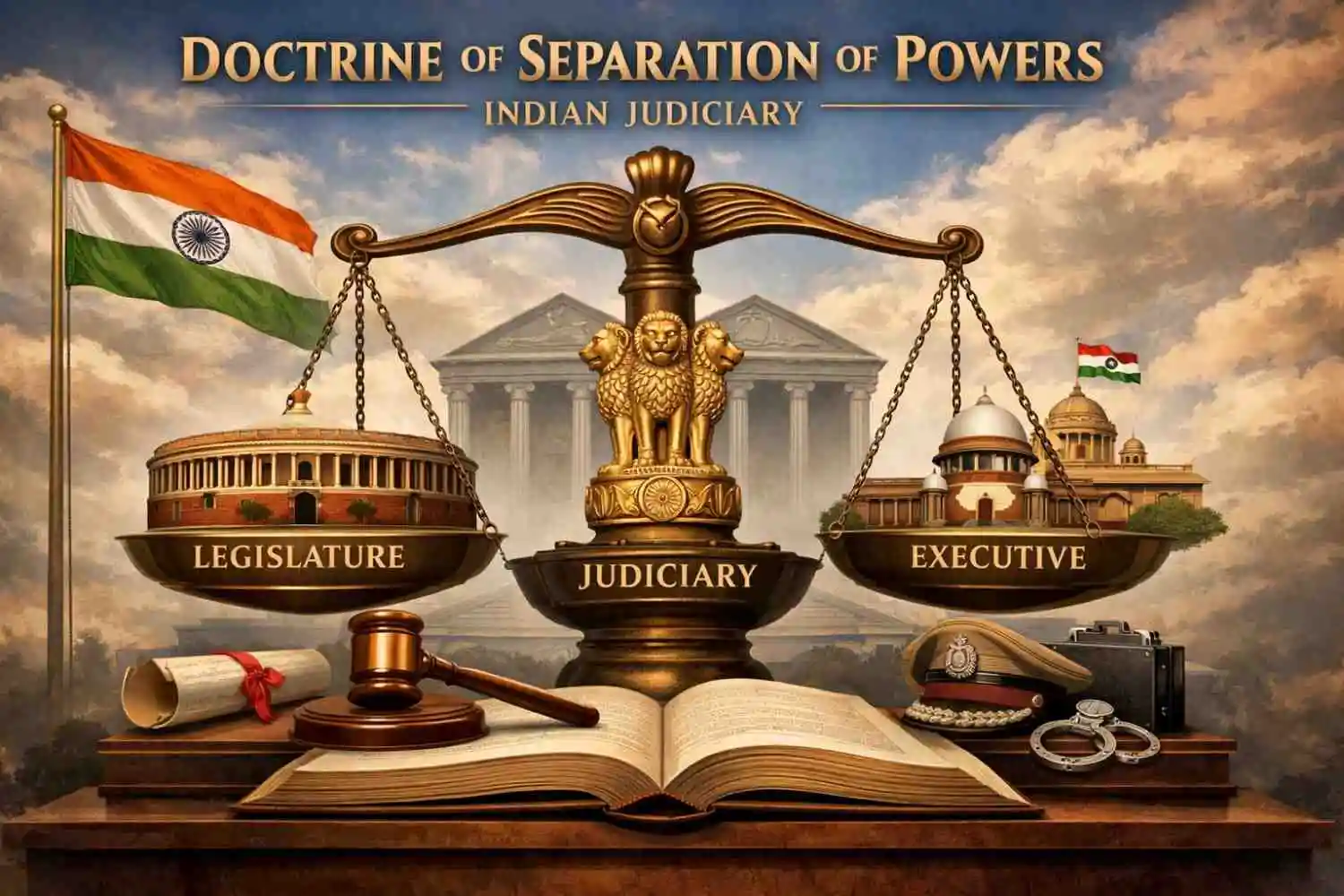
India’s Constitution establishes a parliamentary form of government modeled broadly on the British system. In this structure, executive power is formally vested in the President, but in practice, it is exercised by the Council of Ministers led by the Prime Minister. This arrangement ensures that executive authority flows from the legislature, thereby maintaining democratic accountability.
The Prime Minister’s authority is inseparable from the collective responsibility of the Council of Ministers to the Lok Sabha. This constitutional design ensures that the executive cannot function independently of the elected representatives of the people. It also reinforces the idea that governance is based on cooperation, deliberation, and majority support rather than individual authority.
-
India follows a parliamentary system, not a presidential one
-
Executive power operates through elected representatives
-
Council of Ministers is collectively responsible to Parliament
-
Democratic accountability is constitutionally embedded
Position of the Prime Minister Under the Indian Constitution
The Indian Constitution does not explicitly define the Prime Minister as the head of government in a single article. Instead, the office derives its authority from several provisions, particularly Articles 74 and 75. These articles collectively establish the Prime Minister as the leader of the Council of Ministers and the principal advisor to the President.
Article 74 states that there shall be a Council of Ministers with the Prime Minister at the head to aid and advise the President. Article 75 deals with the appointment of the Prime Minister and other ministers. Together, these provisions place the Prime Minister at the center of executive functioning, even though formal powers rest with the President.
-
Prime Minister is head of the Council of Ministers
-
Authority emerges from multiple constitutional articles
-
Acts as the real executive head
-
Advises the President on governance matters
Appointment of the Prime Minister
The appointment of the Prime Minister is formally made by the President of India. However, constitutional conventions guide this process to ensure democratic legitimacy. Typically, the leader of the political party or coalition that commands a majority in the Lok Sabha is invited to form the government.
In situations where no single party has a clear majority, the President exercises discretion to appoint a leader who is most likely to secure the confidence of the House. Once appointed, the Prime Minister must prove majority support through a vote of confidence if required.
-
Appointed by the President of India
-
Based on majority support in the Lok Sabha
-
Constitutional conventions guide the process
-
Must retain confidence of the lower house
Oath, Tenure, and Removal from Office
Before assuming office, the Prime Minister takes an oath of office and secrecy administered by the President. This oath signifies commitment to uphold the Constitution and serve the nation with integrity. The tenure of the Prime Minister is not fixed and depends on maintaining majority support in the Lok Sabha.
Removal from office does not occur through impeachment. Instead, the Prime Minister resigns if the government loses a vote of confidence or if the Lok Sabha is dissolved. Additionally, the Prime Minister may resign voluntarily, which typically results in the resignation of the entire Council of Ministers.
-
Takes oath of office and secrecy
-
Tenure depends on parliamentary confidence
-
Removed through loss of majority, not impeachment
-
Resignation leads to dissolution of the Council of Ministers
Powers and Functions of the Prime Minister
The Prime Minister exercises extensive powers that influence every aspect of governance. These powers are not explicitly listed in the Constitution but arise from leadership of the Council of Ministers, control over policy direction, and coordination of government departments. The Prime Minister functions as the chief coordinator of the executive branch.
From selecting ministers to shaping national policy, the Prime Minister plays a decisive role. Cabinet meetings, policy initiatives, and administrative decisions all reflect the leadership of the Prime Minister, making the office central to effective governance.
-
Head of the executive government
-
Determines policy direction
-
Coordinates work of ministries
-
Exercises leadership over administration
Role in the Council of Ministers
The Council of Ministers functions under the leadership of the Prime Minister. While ministers hold individual responsibilities, the Prime Minister ensures collective functioning and unity of purpose. The Prime Minister recommends the appointment, reshuffling, or removal of ministers, giving the office substantial influence over the executive team.
The principle of collective responsibility binds all ministers to decisions taken under the Prime Minister’s leadership. This ensures coherence in governance and prevents individual ministers from acting independently of government policy.
-
Leader of the Council of Ministers
-
Influences selection and removal of ministers
-
Ensures collective responsibility
-
Maintains unity within the executive
Relationship with the President of India
The Prime Minister serves as the principal link between the President and the Council of Ministers. While the President is the constitutional head of state, executive actions are carried out on the advice of the Prime Minister and the Council. This relationship ensures that governance remains democratic while respecting constitutional formality.
The Prime Minister keeps the President informed about government decisions, legislative proposals, and administrative matters. Although the President has limited discretionary powers, the Prime Minister’s advice generally guides presidential action.
-
Acts as chief advisor to the President
-
Serves as communication link between President and Cabinet
-
Ensures constitutional functioning of executive
-
Reinforces parliamentary governance
Role in Parliament
The Prime Minister plays a leading role in parliamentary proceedings. As the leader of the majority in the Lok Sabha, the Prime Minister guides legislative priorities, responds to debates, and represents the government’s position on national issues. The effectiveness of parliamentary democracy depends significantly on the Prime Minister’s leadership.
The Prime Minister is accountable to Parliament and must answer questions, participate in debates, and justify government actions. This accountability strengthens democratic governance and ensures transparency.
-
Leader of the House in the Lok Sabha
-
Guides legislative agenda
-
Accountable to Parliament
-
Represents government policies
Role in Policy Formulation and Administration
Policy formulation lies at the core of the Prime Minister’s responsibilities. National policies on economic development, social welfare, defense, and foreign relations are shaped under the Prime Minister’s leadership. Coordination among ministries ensures coherent and effective policy implementation.
The Prime Minister also oversees administrative reforms and governance initiatives. Through strategic planning and monitoring, the office ensures that government programs align with national objectives.
-
Shapes national policies
-
Oversees administrative coordination
-
Ensures effective policy implementation
-
Leads governance reforms
Role in Foreign Affairs and National Security
In modern governance, the Prime Minister plays a central role in foreign policy and national security. International diplomacy, treaties, and global engagements are conducted under the Prime Minister’s leadership. The office represents India on the global stage and negotiates strategic partnerships.
National security decisions, including defense preparedness and crisis management, are coordinated through the Prime Minister. This role reflects the need for centralized leadership in matters affecting sovereignty and global standing.
-
Represents India internationally
-
Leads foreign policy initiatives
-
Oversees national security decisions
-
Coordinates defense and strategic affairs
Prime Minister and Federal Structure of India
India’s federal structure requires constant coordination between the Union and the states. The Prime Minister plays a vital role in maintaining cooperative federalism by engaging with state governments, resolving disputes, and ensuring balanced development.
Through institutions like inter-state councils and national development forums, the Prime Minister facilitates dialogue and collaboration. This role is crucial in a diverse and decentralized political system.
-
Promotes cooperative federalism
-
Coordinates with state governments
-
Addresses inter-state issues
-
Ensures balanced national development
Limitations on the Prime Minister’s Power
Despite significant authority, the Prime Minister’s power is not absolute. Constitutional checks, judicial review, parliamentary scrutiny, and public accountability act as important limitations. The Prime Minister must operate within the framework of the Constitution and democratic norms.
Media scrutiny and public opinion further ensure transparency. These limitations prevent concentration of power and protect democratic values.
-
Subject to constitutional limitations
-
Accountable to Parliament and judiciary
-
Governed by democratic norms
-
Power balanced by institutional checks
Evolution of the Prime Minister’s Role in Practice
Over time, the role of the Prime Minister has evolved due to political dynamics, coalition governments, and changing governance challenges. While some Prime Ministers exercised strong centralized authority, others operated through consensus and negotiation.
This evolution reflects the adaptability of India’s constitutional system. The office has responded to social change, economic reforms, and global integration while remaining rooted in constitutional principles.
-
Role shaped by political context
-
Influenced by coalition politics
-
Adapted to modern governance needs
-
Retained constitutional foundations
Judicial Interpretation and Constitutional Conventions
Judicial decisions have clarified the Prime Minister’s position by reinforcing parliamentary responsibility and constitutional balance. Courts have emphasized that executive power must align with constitutional values and democratic accountability.
Constitutional conventions, though unwritten, play a critical role in defining the Prime Minister’s authority. These conventions ensure continuity, stability, and respect for democratic traditions.
-
Judiciary reinforces constitutional balance
-
Courts uphold democratic accountability
-
Conventions guide executive practice
-
Strengthens constitutional governance
Significance of the Prime Minister in Indian Democracy
The Prime Minister symbolizes democratic leadership in India. The office represents the will of the people as expressed through elections and parliamentary support. It combines authority with responsibility, leadership with accountability.
By coordinating governance, representing national interests, and responding to public needs, the Prime Minister plays a defining role in shaping India’s democratic journey.
-
Symbol of democratic leadership
-
Represents popular mandate
-
Balances authority and accountability
-
Central to national governance
Conclusion
The Prime Minister of India holds a constitutionally significant and practically powerful position within the democratic framework. While the Constitution emphasizes collective leadership and accountability, it also enables effective governance through strong executive coordination. The Prime Minister functions as the real executive authority, guiding policy, administration, and national direction while remaining answerable to Parliament and the people.
Understanding the Prime Minister’s role in the Indian Constitution reveals the careful balance between power and responsibility that defines Indian democracy. It highlights how leadership, constitutional principles, and democratic accountability work together to sustain governance in one of the world’s largest and most diverse democracies.
Click below to generate summary