A Living Constitution for a Changing Nation
The Constitution of India is not a rigid or frozen document; it is a living framework designed to evolve with the nation it governs. Drafted in the aftermath of colonial rule and adopted in 1950, it laid down the foundational principles of democracy, justice, liberty, equality, and fraternity. However, Indian society, economy, and political systems have undergone significant transformation since independence. The amendment to the Indian Constitution serves as the mechanism through which these changes are formally recognised and accommodated within the constitutional structure.
Constitutional amendments allow India to respond to new governance challenges, social aspirations, and economic realities while preserving the core spirit of the Constitution. The process reflects a balance between continuity and change, ensuring that reform is possible without undermining constitutional stability.
Key highlights of the introduction
-
The Constitution is designed to evolve with society
-
Amendments help address new political and social realities
-
The process protects both flexibility and stability
-
Constitutional change strengthens democratic governance
Meaning of Amendment to the Indian Constitution
An amendment to the Indian Constitution refers to a formal change made to its written text using a constitutionally prescribed procedure. Unlike ordinary legislation, an amendment has a higher legal status and directly alters the supreme law of the land. These changes may involve inserting new provisions, modifying existing articles, removing obsolete clauses, or refining constitutional interpretations to suit contemporary needs.
The power to amend is not unlimited or arbitrary. It is structured and guided by constitutional principles to ensure that changes are deliberate, thoughtful, and reflective of democratic consensus. Amendments are intended to strengthen governance, not weaken constitutional values.
Essential aspects of constitutional amendments
-
They modify the text of the Constitution itself
-
They differ from ordinary parliamentary laws
-
They require special procedures and majorities
-
They address structural or long-term national needs
The Need for Constitutional Amendments in India
When the Constitution came into force on 26 January 1950, India was a newly independent nation with unique challenges. Over time, population growth, economic development, technological advancement, and changing social norms created situations not fully anticipated by the framers. Amendments became essential to keep the constitutional framework relevant and effective.
Amendments also help correct practical difficulties, remove ambiguities, and respond to judicial interpretations that reveal gaps in the constitutional text. Without the power of amendment, the Constitution would risk becoming outdated and disconnected from ground realities.
Why amendments are necessary
-
Social values and expectations evolve over time
-
Governance challenges grow more complex
-
Economic reforms require constitutional backing
-
Ambiguities in the original text need correction
Constitutional Basis for Amendments: Article 368
The authority and procedure for amending the Indian Constitution are provided under Article 368. This article outlines who can initiate amendments, how they must be passed, and when state legislatures must be involved. It establishes a structured process that distinguishes constitutional amendments from ordinary lawmaking.
Article 368 reflects the framers’ intent to strike a balance between rigidity and flexibility. While it allows Parliament to make necessary changes, it also imposes safeguards to protect federalism and constitutional integrity.
Core features of Article 368
-
Grants Parliament the power to amend the Constitution
-
Prescribes special majority requirements
-
Mandates state ratification for federal matters
-
Ensures procedural discipline and legitimacy
Step-by-Step Procedure for Amendment
The amendment process follows a clearly defined sequence of steps that must be strictly followed for validity. Any deviation from this procedure can render an amendment unconstitutional. This structured approach ensures transparency, accountability, and democratic participation.
The process varies slightly depending on the nature of the provisions being amended, but the fundamental stages remain consistent.
Main steps in the amendment process
-
Introduction of the amendment bill in Parliament
-
Passage by a special majority in both Houses
-
Ratification by states when required
-
Mandatory assent by the President
Introduction of the Amendment Bill
A constitutional amendment bill can be introduced in either House of Parliament, namely the Lok Sabha or the Rajya Sabha. It may be presented by a minister or by a private member. Unlike ordinary bills, it cannot be introduced in state legislatures or through a joint sitting.
This stage reflects the exclusive authority of Parliament in initiating constitutional change, reinforcing the central role of national representation in shaping the Constitution.
Important points about bill introduction
-
Only Parliament can introduce amendment bills
-
Both Houses have equal authority
-
Private members are also allowed to propose amendments
-
States cannot initiate amendments directly
Special Majority Requirement in Parliament
Once introduced, the amendment bill must be passed in each House of Parliament by a special majority. This means a majority of the total membership of the House and not less than two-thirds of the members present and voting. This stringent requirement ensures broad political consensus before altering the Constitution.
The absence of a joint sitting provision for constitutional amendment bills further emphasises the importance of agreement between both Houses.
Key features of the special majority
-
Two-thirds majority of members present and voting
-
Majority of total House membership required
-
No joint sitting allowed in case of disagreement
-
Ensures wide political acceptance
Role of State Ratification in Federal Amendments
For amendments that affect federal provisions, such as the distribution of powers between the Centre and the states, ratification by at least half of the state legislative assemblies is mandatory. This requirement protects India’s federal structure and prevents unilateral central dominance.
State ratification strengthens cooperative federalism by giving states a voice in changes that directly impact them.
When state ratification is required
-
Changes to Centre-state relations
-
Alterations in legislative powers
-
Modifications affecting state representation
-
Amendments impacting federal balance
Presidential Assent: A Mandatory Step
After parliamentary approval and state ratification where required, the amendment bill is sent to the President of India. Unlike ordinary legislation, the President has no discretionary power in this case. The assent must be given, and the bill becomes part of the Constitution.
This provision ensures that the amendment process is not obstructed once democratic procedures are fulfilled.
Presidential role in amendments
-
Assent is compulsory
-
No power to return the bill
-
No veto authority
-
Formal completion of the amendment process
Number of Constitutional Amendments in India
Since the Constitution came into force, it has been amended over one hundred times. These amendments reflect India’s dynamic political journey and its efforts to address emerging challenges. Not all amendment bills introduced in Parliament become law, as many fail to meet procedural or consensus requirements.
The most recent major change, the 106th Amendment enacted in 2023, demonstrates that constitutional evolution continues even after seven decades.
Key facts about amendment numbers
-
Over 100 amendments since 1950
-
Several bills introduced but not passed
-
Amendments span social, political, and economic areas
-
The Constitution remains an evolving document
Landmark Constitutional Amendments
Certain amendments have played a transformative role in shaping India’s constitutional landscape. These changes often responded to pressing political situations, judicial interpretations, or governance needs. While some strengthened democratic principles, others sparked intense debate and criticism.
These landmark amendments continue to influence constitutional discourse and legal interpretation.
Notable amendments
-
24th Amendment strengthening amendment powers
-
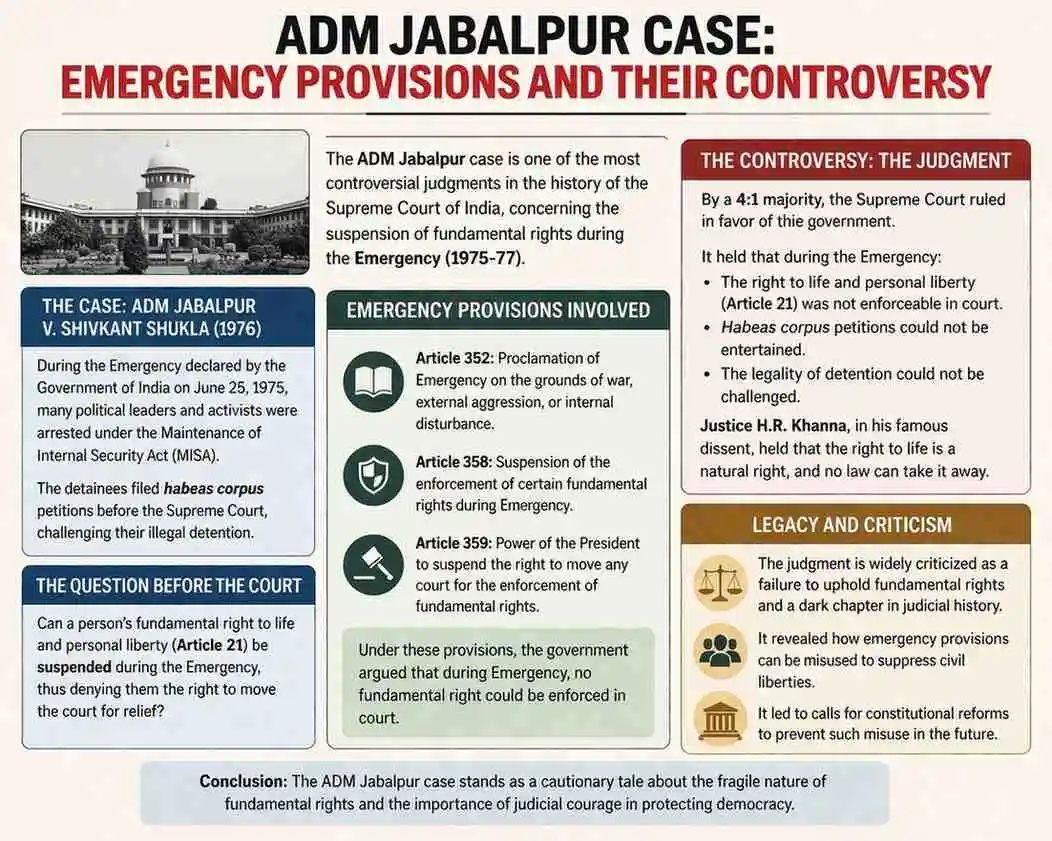
38th Amendment limiting judicial review during Emergency
-
42nd Amendment expanding central authority
-
94th Amendment addressing administrative restructuring
-
106th Amendment marking recent constitutional change
Flexibility and Rigidity in the Amendment Process
One of the defining strengths of the Indian Constitution is its balanced amendment framework. It is neither too rigid to prevent reform nor too flexible to allow frequent arbitrary changes. This balance ensures constitutional continuity while allowing necessary adaptation.
Different levels of amendment procedures reflect the varying importance of constitutional provisions.
Characteristics of this balance
-
Simple changes require only parliamentary approval
-
Federal changes require state participation
-
Core structure is protected from arbitrary alteration
-
Stability and adaptability coexist
Absence of Presidential Veto and Joint Sitting
The amendment process deliberately excludes certain features common in ordinary lawmaking. The President’s lack of veto power and the absence of joint sittings underline the seriousness of constitutional change. These features ensure that amendments are passed only through consensus, not political convenience.
Such safeguards preserve the sanctity of the Constitution.
Procedural safeguards
-
No presidential veto allowed
-
No joint sitting provision
-
Equal authority of both Houses
-
Emphasis on agreement rather than majority dominance
Criticisms of the Amendment Process
Despite its strengths, the amendment system has faced criticism from scholars and commentators. Concerns often relate to central dominance, limited state participation, and procedural complexity. Frequent amendments can also make the Constitution difficult to interpret for ordinary citizens.
These criticisms highlight the need for careful and restrained use of amendment powers.
Major criticisms
-
States cannot initiate amendments
-
No fixed timeline for state ratification
-
Complexity affects accessibility
-
Over-amendment risks dilution of constitutional clarity
Challenges in Constitutional Amendment Practice
Practical challenges also arise during the amendment process. Political disagreement, delays in ratification, and legal challenges can slow or complicate reforms. Balancing reform with constitutional values remains an ongoing challenge for lawmakers.
These challenges underline the importance of consensus-based governance.
Key challenges
-
Political polarisation
-
Delays in state approvals
-
Legal scrutiny and interpretation issues
-
Maintaining constitutional coherence
Role of Amendments in Strengthening Democracy
Despite criticisms, constitutional amendments have played a vital role in strengthening Indian democracy. They have expanded rights, improved governance structures, and addressed administrative inefficiencies. Amendments allow democratic institutions to remain responsive to citizens’ needs.
Through amendments, the Constitution continues to serve as a tool for social progress.
Democratic contributions of amendments
-
Support evolving rights and duties
-
Enable governance reforms
-
Address judicial and administrative gaps
-
Reflect public aspirations
Conclusion
The amendment to the Indian Constitution represents a careful blend of tradition and transformation. It allows the nation to honour the vision of the framers while responding to contemporary challenges. By combining flexibility with procedural safeguards, the amendment process ensures that constitutional change remains democratic, deliberate, and legitimate.
As India continues to evolve, constitutional amendments will remain essential in aligning governance with the aspirations of its people. The strength of the Constitution lies not only in its original text but also in its capacity to adapt without losing its foundational values.
Final takeaways
-
Amendments keep the Constitution relevant
-
Article 368 ensures structured reform
-
Balance between flexibility and rigidity is crucial
-
Constitutional evolution supports democratic growth
Click below to generate summary