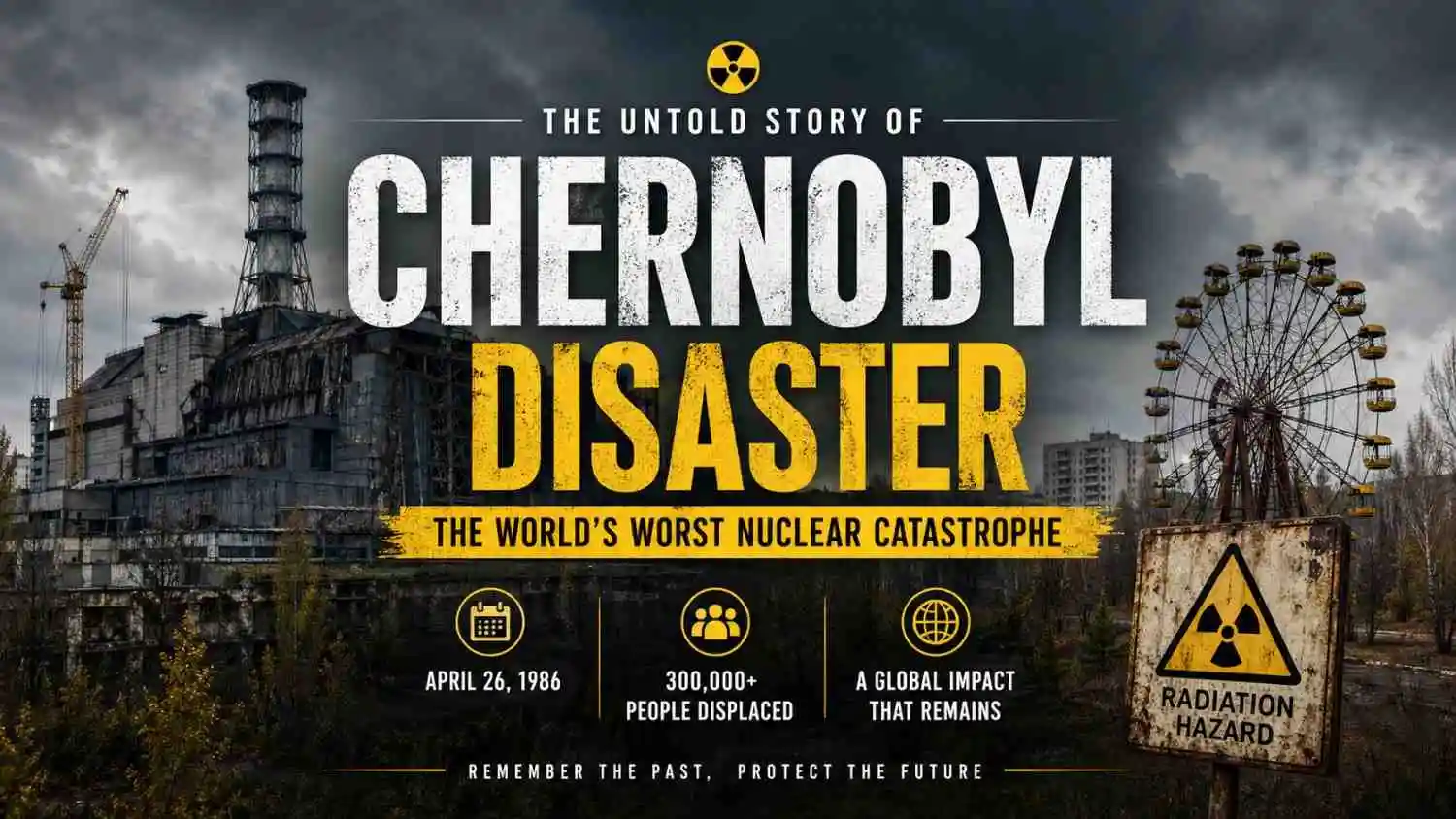
Chernobyl Disaster Causes and Long-Term Effects
On April 26, 1986, at 1:23 a.m., a routine safety test at Reactor No. 4 of the Chernobyl Nuclear Power Plant spiralled into the worst nuclear accident in history. The explosion did not just shatter a Soviet reactor — it contaminated over 200,000 square kilometres of land across Europe, forced the evacuation of more than 350,000 people, and sparked a global reckoning with nuclear energy that continues to this day.
Yet despite nearly four decades of research, the full story of the Chernobyl disaster causes and long-term effects remains misunderstood by the general public. Myths collide with science. Fear distorts fact. And the exclusion zone — now eerily quiet, reclaimed by nature — raises questions we are still learning to answer.
What Actually Caused the Chernobyl Nuclear Accident in 1986?
The Chernobyl nuclear accident 1986 was not one single failure — it was a cascade of engineering flaws compounded by human error, institutional secrecy, and a reactor design that had a dangerous flaw baked into its very physics.
The Reactor's Design Flaw: A Positive Void Coefficient
The RBMK-1000 reactor used at Chernobyl had a property known as a positive void coefficient. In plain terms, this means that as water inside the reactor turned to steam (or 'voids'), the chain reaction accelerated rather than slowing down. Most Western reactors at the time had the opposite property — they self-corrected. The RBMK did not. Soviet engineers knew this flaw existed, but the information was never fully disclosed to plant operators, partly out of bureaucratic pride and partly due to Cold War secrecy pressures.
The Safety Test That Went Wrong
On the night of April 25–26, operators ran a safety test to check whether the reactor's turbines could generate enough electricity to power emergency cooling systems during a shutdown. The test had already been delayed by 10 hours due to power demands from Kyiv, meaning operators were fatigued and under pressure. When the test finally began, operators had lowered power too far — to just 200 megawatts, far below the required 700–1,000 megawatts — and rushed to recover output by withdrawing control rods.
At 1:23 a.m., with cooling water largely absent and control rods at a dangerously low position, a power surge occurred. Within three seconds, the reactor's power shot to 30,000 megawatts — 10 times its operational maximum. When operators hit the AZ-5 emergency shutdown button, the control rods descended — but because of yet another design flaw, the graphite tips of those rods initially caused a further power spike before damping the reaction. The result was two explosions that blew the 1,000-tonne reactor lid clean off.
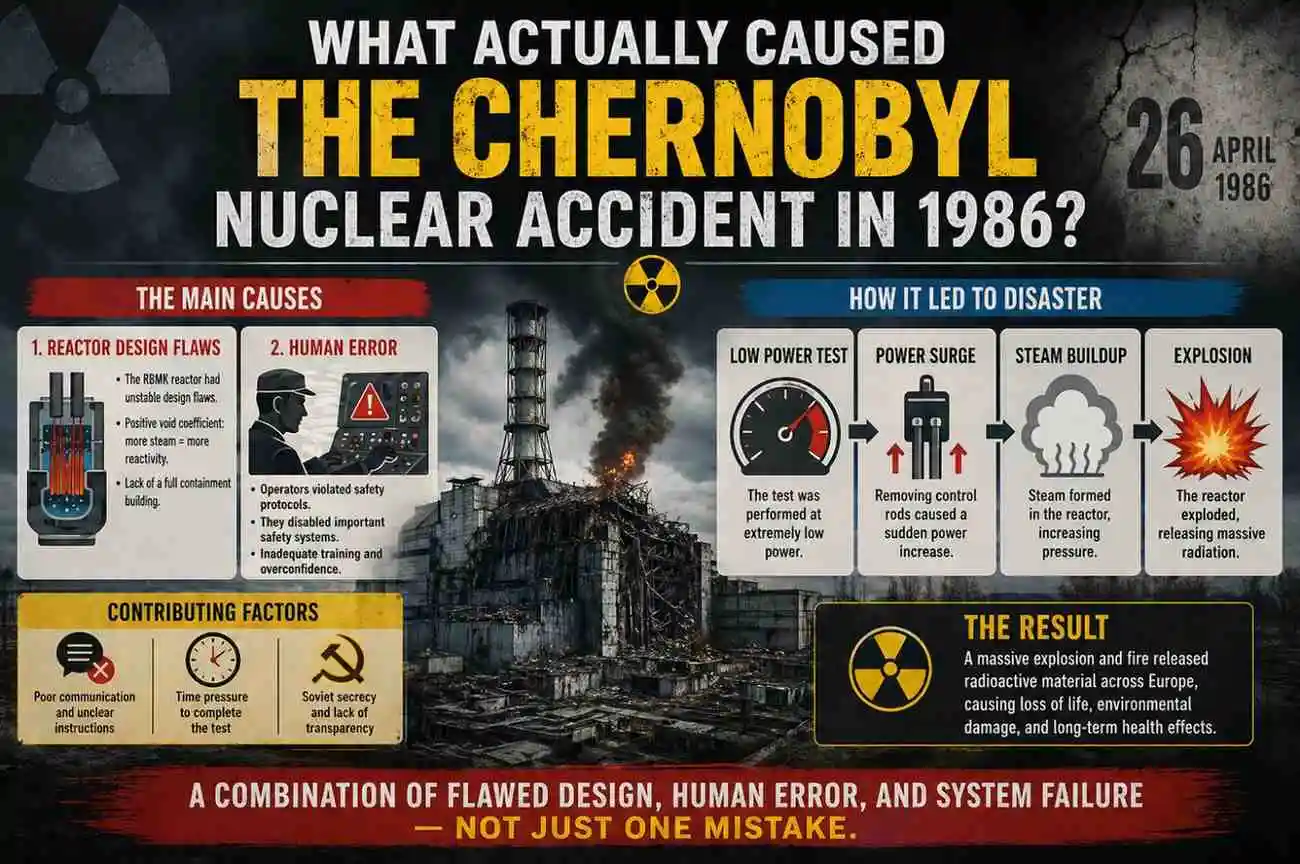
Key contributing factors included:
- Positive void coefficient in the RBMK-1000 reactor design
- Control rods inserted with graphite tips that amplified the surge
- Operators unaware of full safety risks due to classified design documents
- A delayed test run by fatigued staff under institutional pressure
- Insufficient safety culture and poor communication between engineers and night-shift workers
- Bureaucratic secrecy that prevented plant staff from knowing the reactor's real operational limits
Chernobyl Radiation Effects on Humans: From Acute Illness to Cancer
The immediate and long-term Chernobyl radiation effects on humans represent the most studied set of radiation-related health outcomes in history. What the science reveals is both sobering and, in some ways, more nuanced than popular culture suggests.
Acute Radiation Syndrome: The First Victims
In the hours and days following the explosion, 134 plant workers and emergency responders developed Acute Radiation Syndrome (ARS) — a severe and life-threatening condition caused by receiving large doses of radiation in a short time. Of those, 28 died within three months. Many were firefighters who arrived without protective gear, walking onto the graphite debris scattered around the reactor with no knowledge of the lethal dose they were receiving. A Soviet-era report described some firefighters commenting that the reactor core 'looked like a starry sky' — they were seeing the glow of ionised air around fissile material.
The Chernobyl Liquidators: 600,000 Unsung Heroes
Between 1986 and 1990, approximately 600,000 workers — known as liquidators — were dispatched to contain the disaster. They built the concrete sarcophagus over the reactor, cleaned radioactive debris by hand, decontaminated buildings, and buried topsoil. Many received doses well above recommended safety limits. Studies conducted by the United Nations Scientific Committee on the Effects of Atomic Radiation (UNSCEAR) found that Chernobyl liquidators have shown increased rates of cataracts, cardiovascular disease, and psychological distress compared to the general population.
Thyroid Cancer: The Clearest Documented Impact
The most unambiguous Chernobyl radiation health consequence was a massive spike in thyroid cancer, particularly among children who were under 18 at the time of the disaster. By 2005, over 6,000 thyroid cancer cases had been diagnosed in those who were children or adolescents in 1986 in Belarus, Russia, and Ukraine. The primary cause was contamination of milk supplies with radioactive iodine-131 (I-131), which the thyroid gland absorbs readily. Fortunately, the survival rate for this type of thyroid cancer exceeded 98% — but the disease required surgery and lifelong medication.
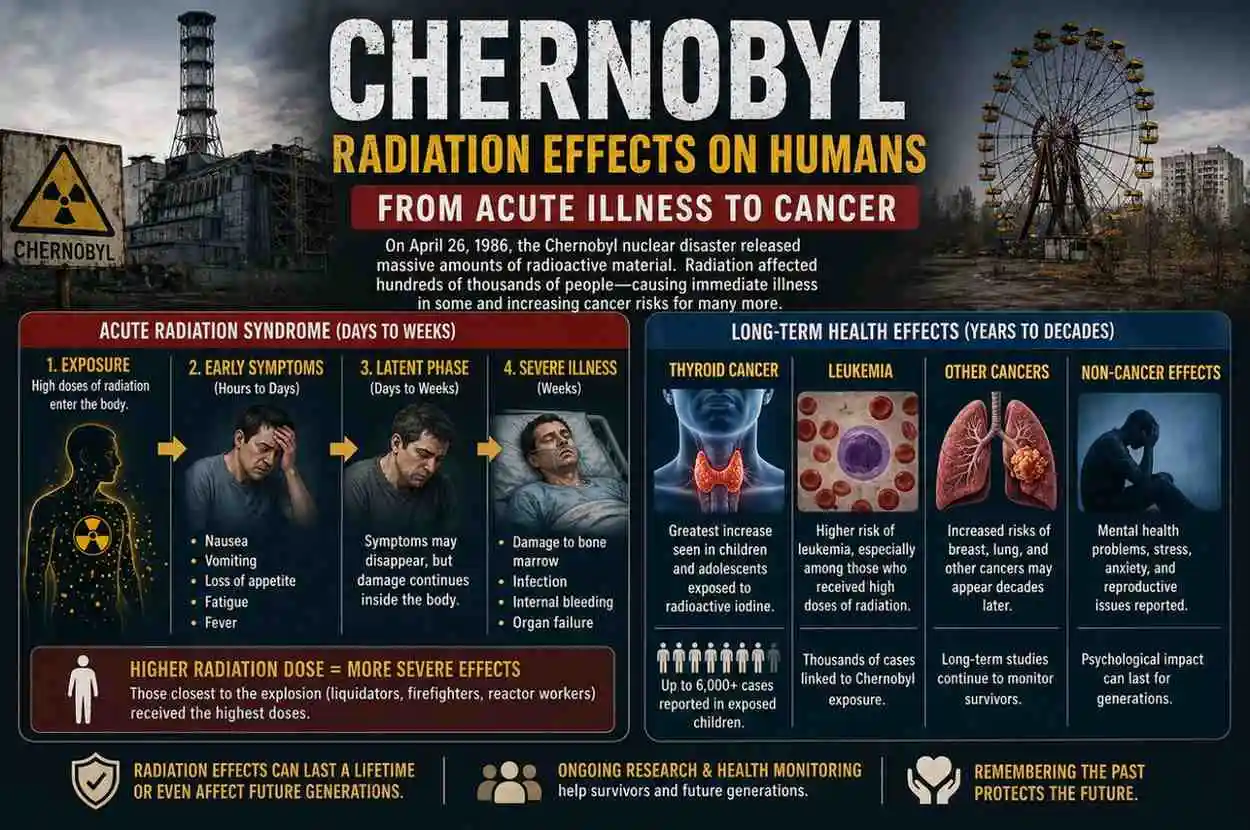
Key health outcomes documented by WHO, UNSCEAR, and the World Nuclear Association include:
- 28 confirmed deaths from ARS in the acute phase (1986)
- 15 deaths from thyroid cancer among the 6,000+ cases diagnosed since the accident
- Elevated risk of leukaemia and cardiovascular disease among liquidators
- Significant psychological effects including depression, anxiety, and PTSD — particularly among evacuees
- No scientific evidence of increased birth defects or hereditary mutations at a population level
- Mental health burden described by the WHO as potentially the biggest public health consequence of the disaster
The Chernobyl Exclusion Zone Today: Nature's Accidental Experiment
The Chernobyl exclusion zone today is a 2,600-square-kilometre restricted area surrounding the plant in northern Ukraine. It is one of the most radioactively contaminated places on Earth — and, paradoxically, one of the most ecologically vibrant.
Pripyat: A City Frozen in Time
The city of Pripyat, built to house 50,000 plant workers and their families, was evacuated on April 27, 1986 — 36 hours after the explosion. Residents were told the evacuation was temporary; most left without packing more than two days' worth of belongings. They never returned. Today, Pripyat is a haunting urban ruin: apartment blocks swallowed by birch trees, a rusting Ferris wheel in an amusement park that never officially opened, and schoolbooks still open on desks. Chernobyl health consequences Pripyat extend beyond the physical — the psychological trauma of displacement and the loss of a community remains a defining element of the disaster's human cost.
Wildlife Thriving in the Absence of Humans
Here is the Chernobyl paradox that most people do not expect: despite elevated radiation levels, wildlife in the exclusion zone has exploded. Wolves, lynx, brown bears, and Przewalski's horses — a species that went extinct in the wild decades ago — now roam the zone freely. A 2015 study published in Current Biology found that large mammal populations inside the exclusion zone were comparable to uncontaminated nature reserves nearby. The conclusion was stark: the removal of human activity is more beneficial to wildlife than the presence of radiation at current levels is harmful.
This does not mean the zone is safe for long-term human habitation. Some animals in heavily contaminated areas do show signs of oxidative stress and reduced lifespans. But the broader ecological experiment reveals how profoundly human presence — farming, industry, roads, noise — suppresses wildlife.
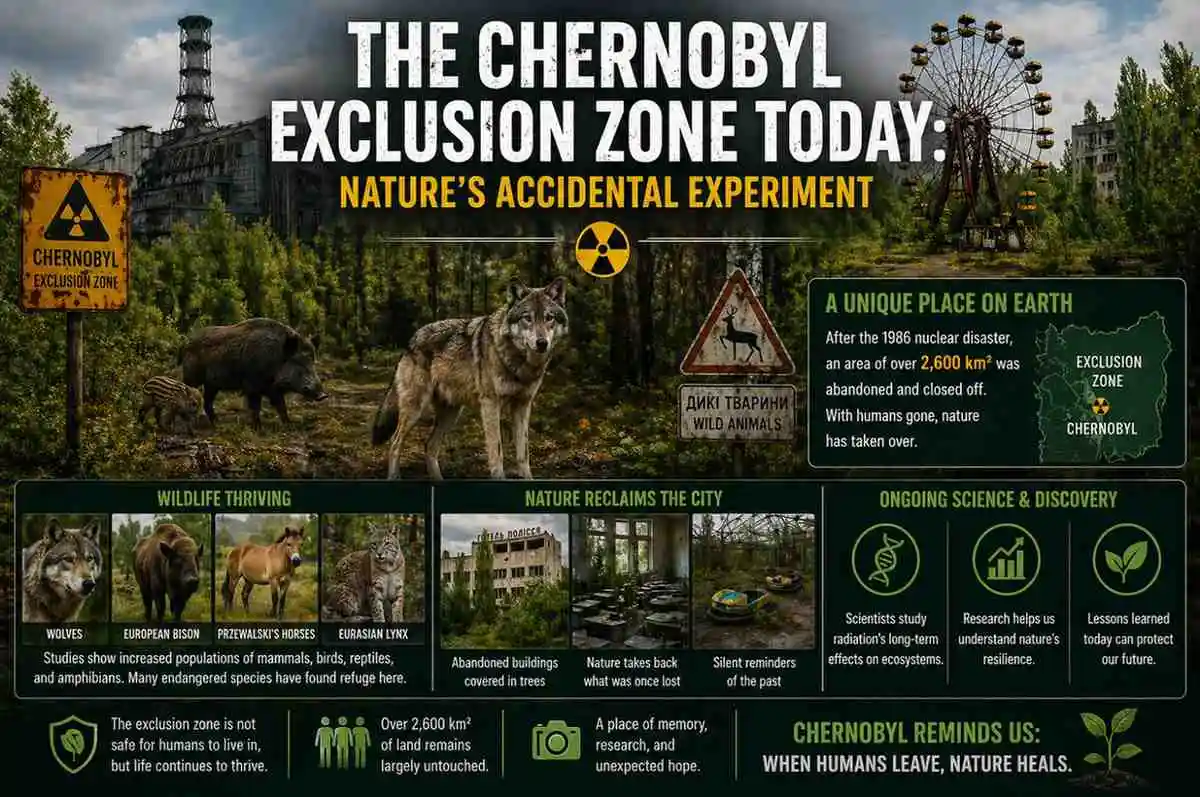
Conditions within the exclusion zone today include:
- Estimated 200+ bird species and 60+ mammal species documented since 1986
- Przewalski's horse population now around 150 individuals in the zone
- Radiation levels vary enormously — some areas are comparable to a transatlantic flight; others remain highly hazardous
- Over 80% of the zone is now forest, up from agricultural land in 1986
- Tourism resumed in 2011 and grew significantly after the HBO series; visitors take Geiger counters
- Ukraine's government is exploring repurposing parts of the zone for solar energy production
Nuclear Reactor Meltdown Aftermath: Lessons That Changed Global Policy
The nuclear reactor meltdown aftermath at Chernobyl reshaped nuclear safety policy worldwide and contributed directly to the collapse of the Soviet Union — or at least accelerated it. Soviet leader Mikhail Gorbachev later wrote that Chernobyl was 'the real cause' of the fall of the USSR, because it shattered the myth of Soviet technological superiority and forced an unprecedented level of openness about state failures.
The New Safe Confinement: A $2.1 Billion Engineering Marvel
The original concrete sarcophagus built in 1986 was never intended to last more than 20–30 years. By the 2000s, it was cracking and at risk of collapse. In response, an international consortium funded through the G7 and European Bank for Reconstruction and Development undertook one of the most ambitious engineering projects in history: the New Safe Confinement (NSC). Completed in 2016 and slid over the old sarcophagus in November of that year, the NSC is a steel arch 108 metres tall and 257 metres wide — large enough to fit the Statue of Liberty inside. It is designed to last 100 years and allow robotic dismantlement of the original reactor from the inside.
Changes to Nuclear Safety Culture Worldwide
The International Atomic Energy Agency (IAEA) used Chernobyl as a pivotal case to reform nuclear safety conventions. The 1986 accident led directly to the Convention on Nuclear Safety in 1994, binding signatory nations to peer reviews of nuclear plant safety. Countries including Germany and Sweden expedited nuclear phase-outs. The accident also created the INSAG (International Nuclear Safety Advisory Group), which published the landmark safety culture concept now adopted globally.
According to the World Nuclear Association, more than 100 RBMK reactors were modified after 1986 to eliminate the positive void coefficient flaw. The positive void coefficient was reduced significantly through a combination of graphite displacer redesign and uranium enrichment increases. Russia has since claimed that post-1986 modifications made the RBMK design 'inherently safe' — a claim that remains contested by some independent nuclear engineers.
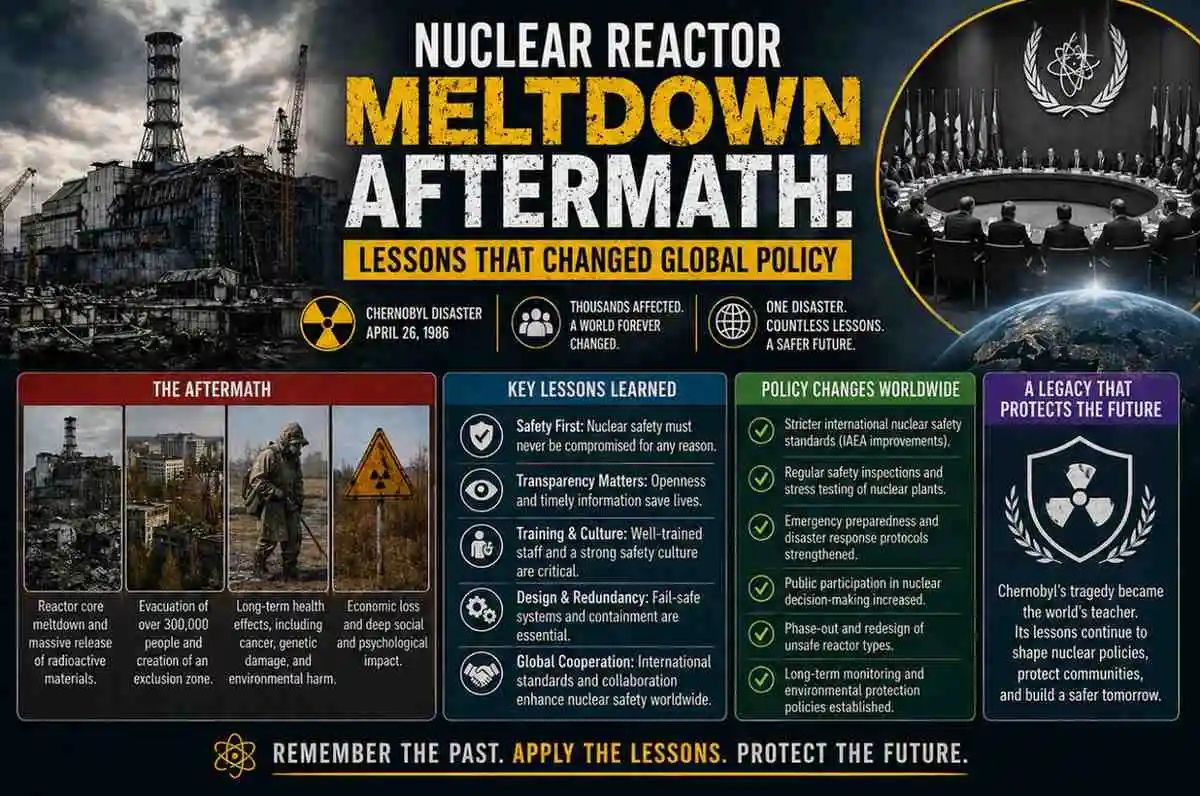
Major policy changes that followed the disaster include:
- International Convention on Nuclear Safety (1994) requiring independent peer reviews
- Redesign of all operating RBMK reactors to remove the positive void coefficient flaw
- Formation of the World Association of Nuclear Operators (WANO) for global information sharing
- Mandatory 'safety culture' assessments now required in all IAEA member state nuclear facilities
- Nuclear liability conventions updated so that affected nations can seek compensation across borders
- Enhanced emergency evacuation protocols now standard in nuclear plant design globally
Conclusion: What Chernobyl Continues to Teach Us
The Chernobyl disaster causes and long-term effects offer some of the most instructive lessons in the intersection of science, policy, human nature, and institutional failure. At its core, Chernobyl was not simply a nuclear accident — it was a systemic failure: a flawed reactor that operators did not fully understand, supervised by a culture that punished transparency and rewarded silence.
Four decades on, the science is clear on the key takeaways. The most documented health consequence remains thyroid cancer among children exposed to iodine-131. The liquidators bore a disproportionate burden of sacrifice that the world is still only beginning to properly acknowledge. The exclusion zone has become one of Earth's most unusual nature reserves. And the engineering response — culminating in the New Safe Confinement — stands as a remarkable feat of international cooperation under extraordinary circumstances.
Whether or not you have visited Pripyat, read the official IAEA reports, or simply want to understand what nuclear safety culture really means, Chernobyl remains the clearest real-world test case we have. If you found this piece useful, share it with someone who deserves the full picture — not just the HBO version.
FAQs
Q1: What was the primary cause of the Chernobyl disaster?
The primary cause was a combination of a flawed reactor design — specifically the RBMK-1000's positive void coefficient — and critical operator errors during a poorly managed safety test. Operators withdrew too many control rods to compensate for low power, triggering an uncontrolled power surge. A design flaw in the control rods caused a further spike when the emergency shutdown was initiated, leading to two consecutive explosions on April 26, 1986.
Q2: How many people died because of the Chernobyl nuclear accident?
Directly confirmed deaths total 31: 2 from the initial explosion and 29 from Acute Radiation Syndrome. However, long-term cancer deaths attributed to radiation exposure are estimated between 4,000 (WHO/IAEA) and 60,000+ (independent epidemiological studies). The wide range reflects genuine scientific disagreement about methodology, not a cover-up. Thyroid cancer caused over 6,000 diagnosed cases, with 15 confirmed deaths from that group.
Q3: Is the Chernobyl exclusion zone safe to visit today?
Short-term visits are generally considered safe. Radiation levels in most accessible parts of the zone are comparable to or only slightly above normal background radiation. Licensed tour operators in Ukraine began offering guided visits in 2011. Visitors carry Geiger counters and are advised to avoid eating local produce, touching surfaces unnecessarily, or spending extended time in highly contaminated 'hot spots.' Long-term habitation or residence in the zone remains prohibited and medically inadvisable.
Q4: What are the Chernobyl radiation effects on humans today?
Today, the most documented ongoing Chernobyl radiation effects on humans include elevated thyroid cancer rates among those exposed as children, higher rates of cataracts and cardiovascular disease among liquidators, and significant psychological and psychosomatic conditions across affected populations. UNSCEAR's 2018 report found no confirmed increase in hereditary diseases or birth defects across generations. Mental health remains the most underaddressed consequence of the disaster.
Q5: What happened to the Chernobyl exclusion zone's wildlife?
Wildlife in the Chernobyl exclusion zone has thrived unexpectedly since human evacuation. Large mammal populations — including wolves, lynx, boar, and elk — have reached levels comparable to nature reserves. Przewalski's horses, introduced in the 1990s, now number around 150. While some animals in heavily contaminated micro-zones show signs of oxidative stress, the overall ecological data suggests that the removal of human activity has benefited biodiversity far more than the remaining radiation levels have harmed it.
External Sources Referenced:
- UNSCEAR (United Nations Scientific Committee on the Effects of Atomic Radiation) — 2018 Report
- World Nuclear Association — RBMK Reactor Design Analysis
- World Health Organization — Chernobyl Health Effects Report
- International Atomic Energy Agency (IAEA) — Convention on Nuclear Safety, 1994
- Current Biology (2015) — Wildlife Population Study, Chernobyl Exclusion Zone