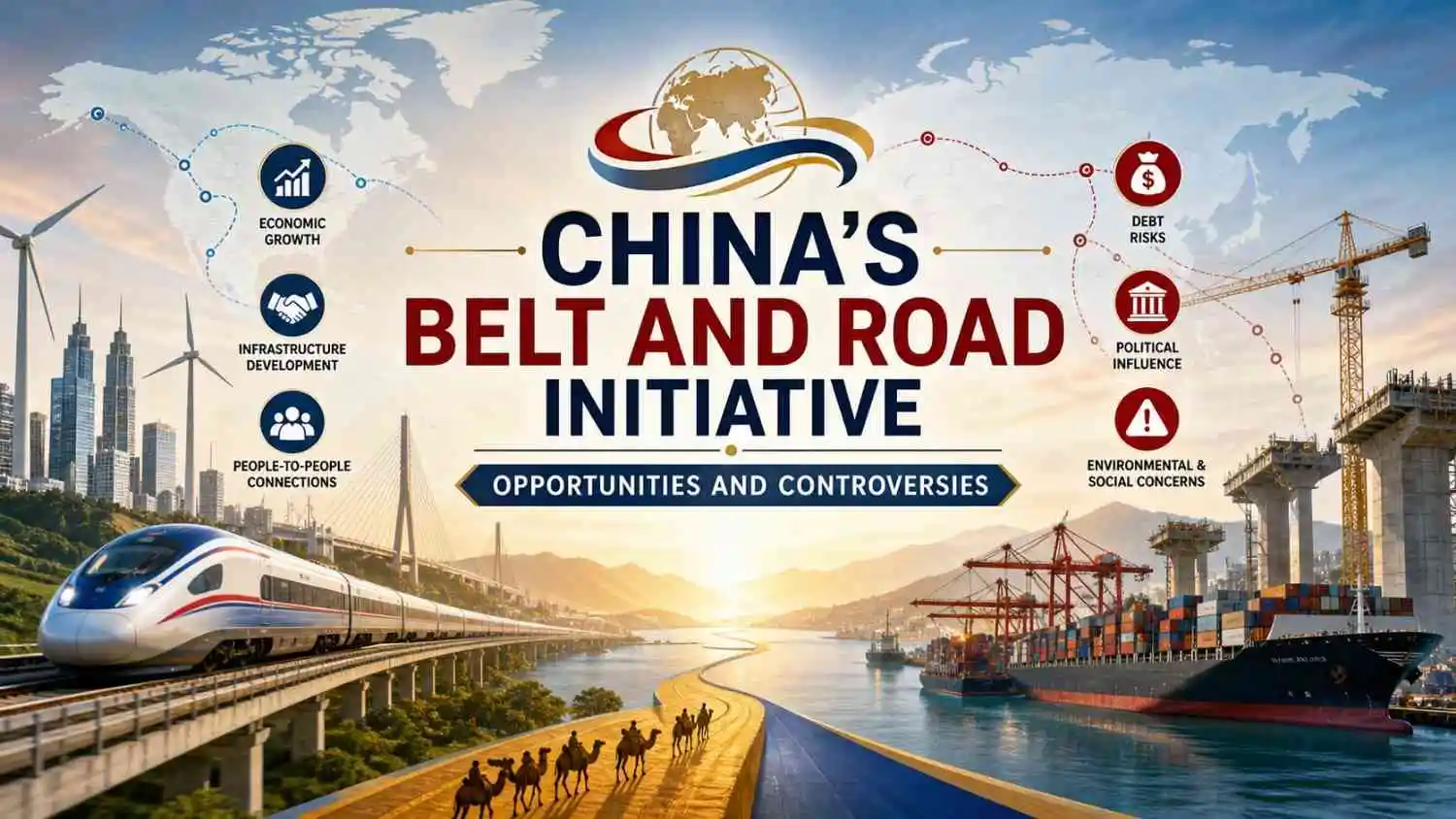
Somewhere in rural Pakistan, a new highway cuts through mountain terrain that took centuries of travelers weeks to cross. In Kenya, a Chinese-built railway ferries goods from Nairobi to the port of Mombasa in hours instead of days. In Sri Lanka, a deep-sea port sits quietly — now partly leased to China after the country couldn't repay its loans. These three scenes, separated by thousands of kilometers, are all chapters in the same story: China's Belt and Road Initiative.
Launched in 2013 by President Xi Jinping, the Belt and Road Initiative — known as BRI — is the single largest infrastructure and investment program in modern history. With an estimated outlay that has crossed $1 trillion in committed financing and projects spanning over 140 countries, BRI is not just an economic plan. It is a geopolitical statement, a development model, a diplomatic tool, and — depending on who you ask — either a lifeline for the developing world or a sophisticated debt-ensnaring machine.
What Is China's Belt and Road Initiative?
The Belt and Road Initiative is a global infrastructure development and investment strategy launched by China in 2013 under President Xi Jinping. It is formally structured around two main arteries: the "Silk Road Economic Belt," a set of overland routes connecting China to Europe through Central Asia and the Middle East, and the "21st Century Maritime Silk Road," a network of sea routes linking China's eastern ports to Southeast Asia, South Asia, Africa, and Europe.
In practical terms, BRI works by financing and constructing infrastructure — roads, railways, ports, pipelines, digital networks, power plants, and industrial zones — across participating countries, primarily in Asia, Africa, and Europe. China provides these projects largely through state-owned banks like the China Development Bank and the Export-Import Bank of China, typically in the form of loans to partner governments.
The initiative operates under the Chinese government's broader concept of "five connectivities": policy coordination, infrastructure connectivity, unimpeded trade, financial integration, and people-to-people bonds. The phrase "Belt and Road" is sometimes shortened to "B&R" or represented by its Chinese name, "Yidai Yilu" (一带一路), which translates literally as "One Belt, One Road" — a phrase still used in older literature.
Key facts at a glance:
- Launched formally in 2013 through two speeches by Xi Jinping — one in Kazakhstan (Silk Road Economic Belt) and one in Indonesia (Maritime Silk Road)
- As of 2024, over 140 countries and 30+ international organizations have signed cooperation agreements with China under BRI
- Cumulative Chinese investments and construction contracts under BRI exceeded $1 trillion between 2013 and 2023
- BRI covers approximately 75% of the world's population and around 50% of global GDP in its geographic footprint
- The initiative has been formally written into China's Constitution since 2017, signaling its permanence as state policy
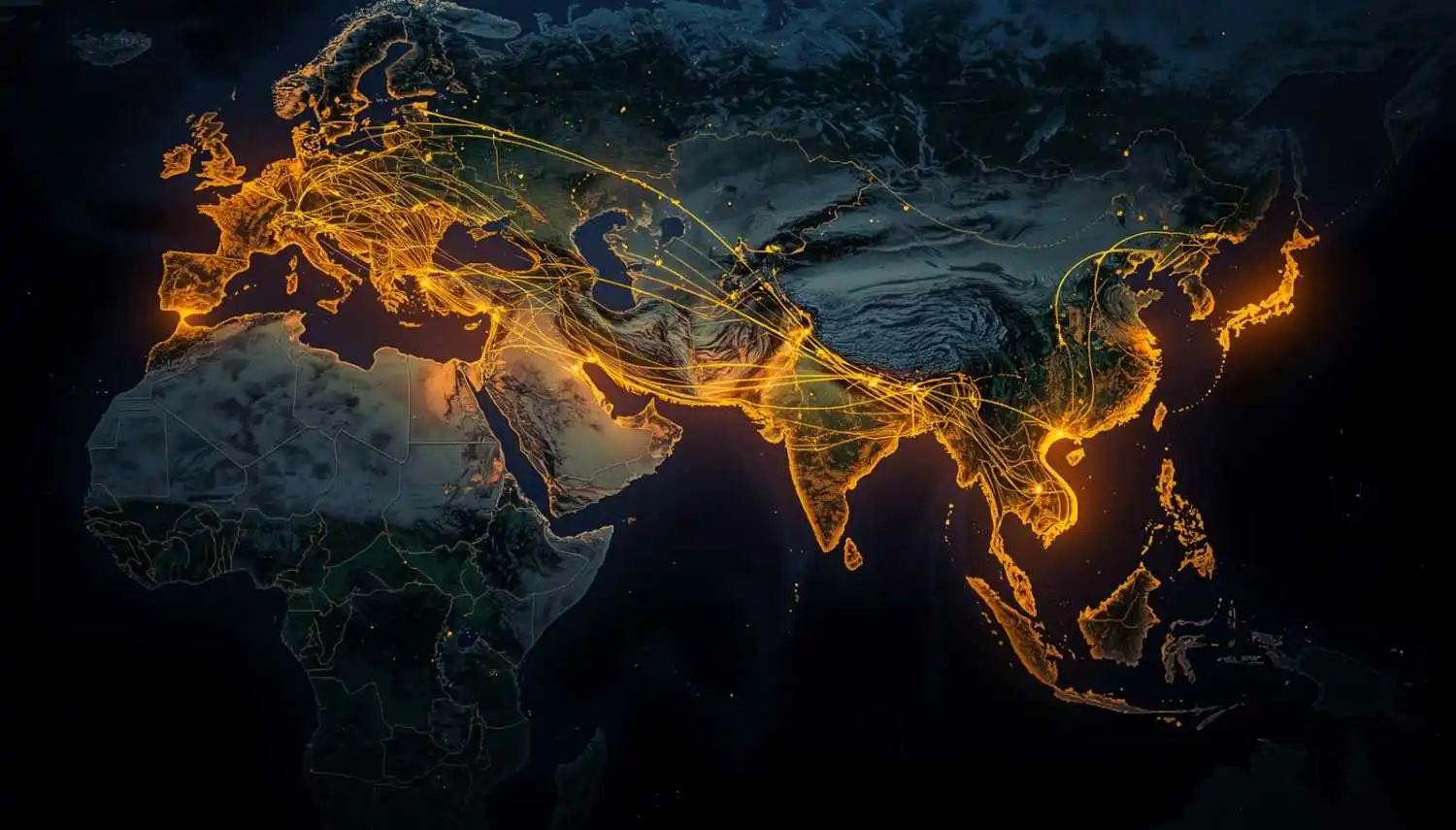
BRI is not a single fund or institution — it is a policy framework under which dozens of bilateral and multilateral deals, loans, and construction contracts are organized. This decentralized nature is both its strength and one of the reasons it is so difficult to audit or evaluate comprehensively.
The Ancient Silk Road: Where the Idea Was Born
To understand why BRI carries such cultural and political weight for China, you need to go back roughly 2,000 years. The original Silk Road was not a single road at all — it was a sprawling network of trade routes that connected the Han Dynasty of China with the Parthian and later Roman empires, passing through Central Asia, Persia, and the Arabian Peninsula. The name itself was coined in the 19th century by German geographer Ferdinand von Richthofen, referring to the lucrative silk trade that made China wealthy and connected East and West.
For nearly 1,500 years, from roughly 200 BCE to 1400 CE, these routes were among the most consequential corridors in human history. They carried not just silk but spices, porcelain, glass, Buddhism, Islam, the Black Plague, papermaking, and the concept of zero across continents. Cities like Samarkand, Kashgar, and Constantinople became global crossroads because of the Silk Road.
China's civilizational dominance during this era — when it was arguably the world's largest and most sophisticated economy for long stretches — is a source of deep national pride. When Xi Jinping invoked the Silk Road in naming his initiative, he was doing something deliberately symbolic: positioning the BRI not as an aggressive new power play but as a restoration of a natural, historically grounded order in which China sits at the center of global exchange.
This is important for several reasons:
- It frames BRI as historically legitimate rather than geopolitically aggressive
- It creates emotional resonance in Central Asian and Middle Eastern countries that were once part of the ancient Silk Road
- It provides China with a narrative counter to Western concerns about expansionism — "we are not building an empire, we are rebuilding connections that already existed"
- It signals to Chinese citizens at home that this is a moment of national renaissance, not just foreign policy
Critics argue that this historical framing is selective and romanticized — the ancient Silk Road was not managed by any single power, and it certainly wasn't a Chinese infrastructure loan program. But narratively, the connection is powerful and has shaped how BRI has been received in many parts of the world.
How BRI Works: Structure, Financing, and Components
BRI is not a single, monolithic institution with a unified budget and board of directors. It is better understood as an umbrella policy framework that organizes a wide range of bilateral economic relationships, infrastructure contracts, and development finance arrangements under one brand.
Financing Mechanisms
The primary financing vehicles for BRI projects are Chinese state-owned policy banks, chiefly:
- The China Development Bank (CDB): Provides long-term development financing
- The Export-Import Bank of China (CHEXIM): Provides concessional loans to developing country governments
- The Silk Road Fund: A $40 billion state fund established specifically for BRI
- The Asian Infrastructure Investment Bank (AIIB): A multilateral development bank co-founded by China in 2016, with 106 member countries, sometimes associated with BRI but technically independent
Loans from these institutions typically carry interest rates of 2–6%, which are higher than those from the World Bank or IMF for similar developing-country projects. They often come with conditions — such as using Chinese contractors, Chinese materials, and sometimes Chinese labor — which significantly limit the economic spillover benefits for host countries.
Project Types Under BRI
BRI projects broadly fall into several categories:
- Hard infrastructure: Roads, railways, bridges, tunnels, ports, airports
- Energy infrastructure: Power plants (coal, hydro, solar), pipelines, LNG terminals
- Digital infrastructure: Fiber optic cables, data centers, surveillance systems — the "Digital Silk Road"
- Special Economic Zones (SEZs): Industrial parks and trade zones built in partner countries
- Financial infrastructure: Local currency swap agreements, RMB internalization efforts
The Digital Silk Road
Often overlooked in media coverage, the Digital Silk Road is a critical component that involves China's technology companies — Huawei, ZTE, Alibaba, and others — laying fiber optic cables, building 5G networks, and deploying smart city surveillance infrastructure across BRI countries. This dimension has attracted significant concern from Western governments about data security and the potential spread of Chinese-style digital governance.
Key structural features to understand:
- Projects are typically structured as government-to-government deals, bypassing open international competitive bidding
- Contracts are often not publicly disclosed, making independent assessment difficult
- Most loans are denominated in US dollars or Chinese yuan (RMB), not local currencies — creating foreign exchange risk for borrowers
- China typically requires collateral (often natural resources or infrastructure assets) for larger loans
Key Corridors and Flagship Projects Under BRI
BRI is organized around six major economic corridors, each a distinct geographic route connecting China to specific regions. Understanding these corridors is essential to grasping the geographic logic of BRI.
The Six Economic Corridors
- China-Pakistan Economic Corridor (CPEC): The most high-profile corridor, running from Kashgar in China's Xinjiang region to Gwadar port in Pakistan. It involves roads, railways, power plants, and the development of Gwadar as a deep-sea port. Total investment: approximately $62 billion. CPEC is strategically significant because it gives China direct access to the Arabian Sea, bypassing the Strait of Malacca.
- Bangladesh-China-India-Myanmar (BCIM) Economic Corridor: Connecting Yunnan province to Kolkata through Myanmar and Bangladesh. India's reluctance has stalled this corridor, given its objections to the overall BRI framework.
- China-Mongolia-Russia Economic Corridor: Running north from China through Mongolia to Russia, designed for energy and commodity trade.
- China-Central Asia-West Asia Economic Corridor: Extending from Xinjiang through Central Asian republics (Kazakhstan, Kyrgyzstan, Uzbekistan, Tajikistan, Turkmenistan) toward Turkey and Iran.
- China-Indochina Peninsula Economic Corridor: Connecting Yunnan to Singapore through Vietnam, Laos, Cambodia, Myanmar, and Thailand. The Laos-China Railway (2021) is a flagship project in this corridor.
- New Eurasian Land Bridge: A rail corridor linking China's eastern coastal cities to Western Europe via Russia and Central Asia — essentially a modern land-based alternative to maritime shipping.
Notable Flagship Projects
- Hambantota Port, Sri Lanka: A deep-sea port built with Chinese loans; Sri Lanka handed over the port on a 99-year lease to a Chinese company in 2017 after defaulting on repayments — the project most frequently cited in debt-trap debates
- Laos-China Railway: A 1,000 km railway connecting Vientiane to the Chinese border; opened in December 2021; has already transformed landlocked Laos's trade connectivity
- Gwadar Port, Pakistan (CPEC): A strategically located deep-sea port on the Arabian Sea, with a Chinese company holding a 40-year operating rights agreement
- Piraeus Port, Greece: China's COSCO Shipping acquired a controlling stake in this major European port, making it BRI's gateway into Europe
- Nairobi-Mombasa Standard Gauge Railway, Kenya: A 472 km Chinese-built railway completed in 2017; Kenya currently carries significant debt related to this project
How Many Countries Are Part of BRI — and Why That Number Is Complicated
Official Chinese government statistics have, at various times, claimed that 150+ countries have signed onto BRI. The more carefully audited figure, as of 2024, is approximately 140+ countries that have signed a Memorandum of Understanding (MoU) with China under the BRI framework.
However, this number demands careful scrutiny:
What Signing an MoU Actually Means
An MoU with China under BRI is a statement of intent, not a binding contract. Countries sign MoUs to signal openness to Chinese investment — it does not mean a single project has been financed, contracted, or completed. Italy signed an MoU in 2019 under considerable political controversy, then withdrew from BRI in December 2023 under Prime Minister Giorgia Meloni — making it the first G7 country to both join and exit the initiative.
Geographic Spread
BRI countries are concentrated in:
- Sub-Saharan Africa: 40+ countries
- Asia-Pacific: 25+ countries
- Europe (mostly Eastern Europe and the Western Balkans): 20+ countries
- Middle East and North Africa: 20+ countries
- Latin America and Caribbean: 20+ countries
Notable holdouts who have not joined BRI include: the United States, India, Japan, Australia, and most of Western Europe (though several had MoUs and some have since distanced themselves).
Key points for understanding BRI's actual reach:
- Signing an MoU ≠ receiving a project
- Country count has been used politically by China to project the initiative's legitimacy
- Many countries have signed MoUs to keep options open without committing to specific projects
- Several early BRI countries have renegotiated or cancelled projects after finding terms unfavorable (e.g., Sierra Leone, Tanzania, Malaysia under Mahathir Mohamad)
Economic Opportunities: What Partner Nations Stand to Gain
Despite the controversies, BRI has delivered real, measurable economic benefits to many partner nations — benefits that are often underemphasized in the Western media narrative that focuses almost exclusively on debt and geopolitics.
Infrastructure Gap: The Real Problem BRI Addresses
The Asian Development Bank estimated in 2017 that developing Asia alone needs $26 trillion in infrastructure investment by 2030 — roughly $1.7 trillion per year. The World Bank, IMF, bilateral Western donors, and multilateral development banks have consistently failed to close this gap. BRI, whatever its flaws, stepped into a genuine vacuum.
For many low-income countries in Africa, Southeast Asia, and Central Asia, Chinese financing was the only realistic option for building a railway, a highway, or a power plant within their lifetimes.
Documented Economic Benefits
- Connectivity gains: A World Bank study published in 2019 analyzed 68 BRI countries and found that BRI transport projects could reduce travel times by up to 12% and increase trade by up to 9.7% for participating countries
- Foreign exchange and employment: During construction phases, BRI projects inject foreign exchange, create local employment (though the proportion of local vs. Chinese workers is contested), and build productive capacity
- Energy access: In countries like Pakistan and Bangladesh, Chinese-built power plants brought electricity to millions of homes that previously had none
- Trade corridor creation: The Laos-China Railway reduced transit time from Laos to China from 3 days by road to under 1 day — a transformational change for a landlocked country
Who Benefits Most
Countries with large infrastructure deficits, limited access to international capital markets, and urgent development needs have derived the most concrete benefits. These include landlocked Central Asian states, sub-Saharan African nations, and smaller Southeast Asian economies.
Key opportunities BRI offers:
- Access to large-scale, fast-disbursing development financing
- Technology transfer in construction, railway, and energy sectors
- Connectivity to global trade networks previously inaccessible
- Development of Special Economic Zones that can attract further investment
- Improvement in regional trade through reduced logistics costs and transit times
China's Strategic Motivations: Beyond the Generosity Narrative
BRI is not a foreign aid program. China's motivations are deeply strategic, and understanding them is essential to evaluating the initiative honestly. Chinese policymakers and academics have been relatively candid about these motivations in domestic discussions, even as official communications abroad emphasize mutual benefit.
Managing Domestic Economic Imbalances
By the early 2010s, China faced a set of interconnected domestic economic problems. Its construction sector — the engine of the post-2008 stimulus boom — was experiencing severe overcapacity. Steel mills, cement plants, and construction companies had far more capacity than domestic demand could absorb. BRI created a foreign market for this surplus industrial capacity, allowing Chinese firms to continue operating at scale while building infrastructure abroad.
Securing Energy and Resource Access
China is the world's largest importer of oil, the largest consumer of copper, iron ore, and several other commodities. Securing reliable supply chains for these resources is a core national security concern. BRI's routes — especially CPEC's access to the Arabian Sea, and projects in resource-rich African and Central Asian countries — give China more diversified and secured access to raw materials.
The Malacca Dilemma
Approximately 80% of China's oil imports pass through the Strait of Malacca — a narrow waterway between Malaysia and Indonesia. In any conflict scenario, this chokepoint could be blocked by a hostile naval power (read: the United States), cutting off China's energy supply. CPEC's Gwadar port, pipelines through Myanmar, and energy corridors through Central Asia are all attempts to create alternative supply routes that bypass the Malacca Strait.
Internationalizing the RMB
BRI also serves China's ambition to reduce global dependence on the US dollar. By denominating BRI loans and contracts in Chinese yuan (RMB), establishing currency swap agreements with BRI partners, and building financial infrastructure through the AIIB and Silk Road Fund, China is slowly expanding the RMB's role in global trade and finance.
Geopolitical Influence and Norm-Setting
Perhaps most significantly, BRI gives China structural influence over the political economies of partner nations. When a country's most important port, railway, or power plant is built and financed by China, its foreign policy tends to align more closely with Beijing's preferences — particularly on issues like Taiwan, Xinjiang, Tibet, and votes in international organizations like the UN Human Rights Council.
China's strategic motivations in summary:
- Export domestic industrial overcapacity
- Diversify and secure energy and resource supply chains
- Solve the Malacca Dilemma through alternative corridors
- Promote RMB internationalization and reduce dollar dependency
- Build structural geopolitical influence in partner countries
- Counter US alliances by deepening economic dependencies with non-aligned states
The Debt-Trap Diplomacy Controversy
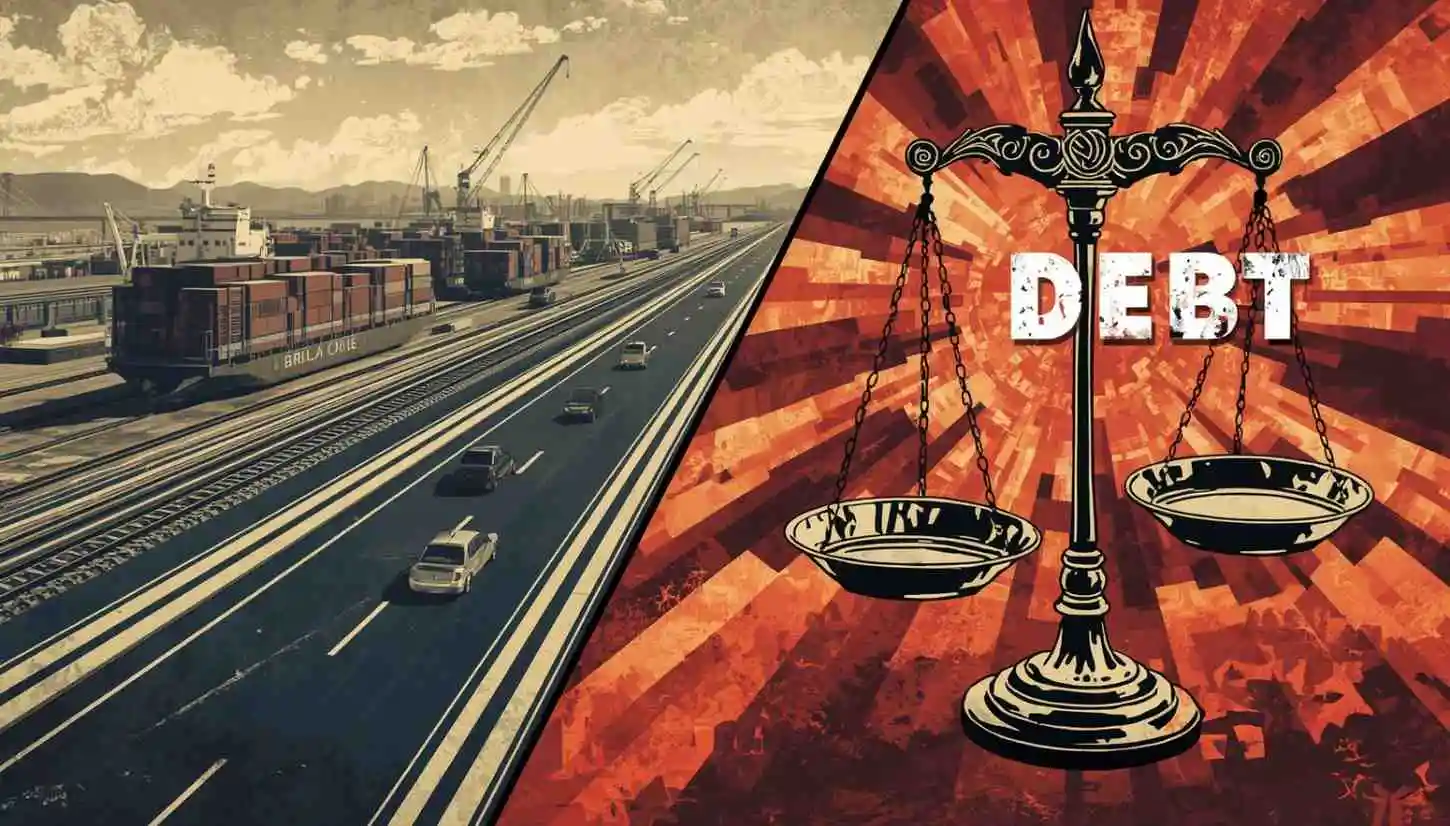
No aspect of BRI has generated more international debate — and more academic disagreement — than the "debt-trap diplomacy" theory. Understanding this controversy requires separating the documented evidence from the political narrative.
The Theory: What Critics Claim
The debt-trap diplomacy hypothesis, popularized by Indian scholar Brahma Chellaney in a 2017 paper, argues that China deliberately extends loans to developing countries that it knows those countries cannot repay, with the intention of seizing strategic assets when borrowers default. The Hambantota Port in Sri Lanka — leased to a Chinese company for 99 years after Sri Lanka defaulted — became the emblematic case.
According to this theory, BRI is not primarily an economic initiative but a strategic trap, designed to convert infrastructure dependency into geopolitical leverage.
The Counterargument: What the Research Shows
Academic researchers have increasingly challenged the debt-trap theory's empirical basis. Key findings include:
- A 2019 study by researchers at Johns Hopkins University's China Africa Research Initiative found no evidence that China was deliberately targeting strategic assets for seizure
- The Hambantota case is more complex than the narrative suggests: the port-for-debt swap was proposed partly by the Sri Lankan government itself as a debt restructuring mechanism; China did not force the handover
- Most BRI loan defaults have resulted in debt renegotiation, grace periods, and loan restructuring — not asset seizures. AidData's 2021 report documented 165 debt renegotiations across BRI, with most resulting in extended repayment terms rather than asset transfers
- Several African governments have actively sought Chinese infrastructure loans and pushed back against the debt-trap narrative as condescending
What Is Documented and Undisputed
Even if the debt-trap theory in its strong form is debated, several less controversial concerns are well-supported:
- Opacity: BRI loan contracts frequently contain confidentiality clauses preventing borrowers from disclosing terms; AidData's 2021 analysis of 100 BRI contracts found clauses requiring repayment prioritization, cross-default provisions, and asset collateralization that are unusually aggressive compared to Western lending norms
- Debt distress: Multiple BRI recipient countries are experiencing significant debt distress where Chinese debt is a contributing factor — Zambia, Pakistan, Sri Lanka, Ethiopia, and Laos among them
- Exclusion of local contractors: The practice of requiring Chinese construction firms, materials, and sometimes workers limits local economic benefit and builds structural dependency
- Political conditionality: While Chinese loans are formally "no-strings-attached" (unlike IMF loans, which require policy reforms), critics argue informal political expectations — around Taiwan, Xinjiang statements at the UN, etc. — represent a form of soft conditionality
Key points in the debt-trap debate:
- The theory is credible as a concern but not fully proven as a deliberate strategy
- Real debt distress in BRI countries is documented and serious, regardless of intent
- Contract terms are often opaque, unfavorable, and non-competitive
- Asset seizure has been rare; debt renegotiation is the more common outcome
- The debate is politically charged — both Western governments and Beijing have used it for narrative advantage
Geopolitical Flashpoints: Great Power Competition and BRI
BRI cannot be understood in isolation from the broader context of US-China strategic competition. Since approximately 2017–2018, the United States and its allies have increasingly framed BRI as a geopolitical challenge requiring a direct strategic response.
The US Response: From Criticism to Counter-Initiative
The Trump administration's initial response was largely critical rhetoric. The Biden administration moved toward constructive counter-initiatives:
- Blue Dot Network (2019): A US-Australia-Japan initiative to certify high-quality, transparent, sustainable infrastructure projects — essentially a quality standards alternative to BRI
- Build Back Better World (B3W, 2021): A G7 initiative pledging $40 trillion in infrastructure investment for developing countries by 2035 — later renamed the Partnership for Global Infrastructure and Investment (PGII) in 2022
- PGII (2022–present): A more concrete iteration of the G7 counter-initiative with specific project commitments, including a $600 billion mobilization target
India-Middle East-Europe Economic Corridor (IMEC)
Announced at the G20 Summit in New Delhi in September 2023, IMEC is arguably the most serious direct alternative to BRI's maritime route. It proposes a rail-and-sea corridor connecting India to Europe via UAE, Saudi Arabia, Jordan, and Israel — effectively offering Gulf states and Europe an alternative to Chinese-built connectivity infrastructure.
The October 2023 Hamas attack on Israel complicated IMEC's timeline, but the framework remains diplomatically alive.
BRI's Impact on Regional Security Dynamics
Several BRI projects have specific military-relevant dimensions:
- Gwadar (Pakistan): While officially commercial, the port's proximity to the Strait of Hormuz and its potential as a naval resupply point concern Indian and US strategists
- Djibouti: China's first overseas military logistics facility (officially a "support base") is located in Djibouti, a BRI partner — setting a potential precedent for dual-use port infrastructure
- Cambodia: China is reportedly funding expansion of the Ream Naval Base — a BRI partner project with evident military implications
- Sri Lanka: The Hambantota lease gives a Chinese company — with possible government access — a strategic location near India's southern coast
NATO and the Western Balkans
BRI's deep penetration of the Western Balkans (Serbia, Montenegro, North Macedonia, Bosnia) has alarmed NATO and EU policymakers, as it extends Chinese economic and political influence into countries with EU accession ambitions.
Geopolitical implications of BRI:
- Accelerates great power competition and forces developing nations to choose sides
- Creates Chinese-aligned voting blocs in multilateral institutions
- Raises military-strategic concerns through dual-use infrastructure
- Prompted formation of credible (if still underfunded) Western alternatives
- Tests whether economic connectivity can be separated from political influence
Environmental and Social Controversies
While the debt-trap narrative dominates media coverage, BRI's environmental and social record raises equally serious concerns that often receive less attention.
Environmental Footprint
A significant portion of BRI energy projects between 2013 and 2021 were coal-fired power plants. A Boston University Global Development Policy Center analysis found that Chinese policy banks financed over $50 billion in coal energy projects in BRI countries during this period. While China announced at the UN General Assembly in September 2021 that it would "stop building new coal power plants abroad," implementation has been uneven, and existing contracted projects have continued.
Other environmental concerns include:
- Large dam projects in ecologically sensitive areas (e.g., Myitsone Dam in Myanmar, though paused)
- Road and railway construction through biodiversity hotspots in Southeast Asia and Africa
- Weak enforcement of environmental impact assessment standards compared to Western lenders
- Plastic waste and industrial pollution from Chinese-built SEZs in some partner countries
Social Controversies
- Labor practices: Multiple reports from Africa and Southeast Asia have documented labor disputes involving Chinese workers brought in for BRI projects instead of hiring locally, plus allegations of substandard working conditions
- Land acquisition: Forced or inadequately compensated land acquisition for BRI infrastructure has been reported in Cambodia, Myanmar, and several African countries
- Community displacement: Large infrastructure projects — particularly dams and industrial zones — have displaced local communities without adequate consultation or compensation
- Cultural and religious insensitivity: In some Muslim-majority partner countries, Chinese companies have brought practices and attitudes that created social friction
China's Green BRI Pivot
Responding to international criticism, China began promoting a "Green BRI" framework from around 2021 onward, committing to:
- Stop financing new coal plants abroad (Xi Jinping, UNGA 2021)
- Develop green development guidelines for BRI projects
- Increase financing for renewable energy projects under BRI branding
Whether this represents genuine policy change or primarily a rebranding exercise remains actively debated. Solar and wind project financing under BRI has increased, but critics note that existing coal projects continue and monitoring mechanisms remain weak.
Key environmental and social concerns:
- Heavy coal financing through 2021 despite climate commitments
- Weak environmental standards compared to multilateral lenders
- Contested labor practices and local employment ratios
- Community displacement without adequate consultation
- Green BRI pivot is encouraging but implementation remains inconsistent
India's Stand: Why the World's Largest Democracy Said No
India is the most significant country to have refused participation in BRI — and its reasons offer one of the clearest windows into the initiative's geopolitical fault lines.
India's Official Objection: Sovereignty
India's primary stated objection to BRI is the China-Pakistan Economic Corridor (CPEC). CPEC passes through Gilgit-Baltistan — a region of Pakistan-administered Kashmir that India claims as its own sovereign territory. Participating in BRI, India argues, would implicitly legitimize Pakistan's administration of this disputed territory. The Indian government has formally stated that "no country can accept a project that ignores its core concerns over sovereignty and territorial integrity."
The Deeper Strategic Calculus
Beyond the formal sovereignty objection, India's refusal reflects a broader strategic assessment:
- String of pearls: India has long been concerned about what analysts call the "String of Pearls" — a pattern of Chinese port and military-adjacent facilities encircling India in the Indian Ocean (Gwadar, Hambantota, Chittagong, Kyaukphyu). BRI deepens this encirclement
- Competitive positioning: India sees itself as a natural alternative development partner for South Asian and Indian Ocean nations; BRI directly competes with that positioning
- Economic competition: Many BRI transport corridors — particularly through Bangladesh and Nepal — bypass India, potentially marginalizing its role as a regional connectivity hub
- Diplomatic autonomy: India's strategic culture values multi-alignment; joining a Chinese-led framework would compromise its independent positioning
India's Alternative Positioning
India has responded to BRI not with isolation but with counter-positioning:
- Supporting and co-initiating PGII-aligned projects
- Actively promoting IMEC as an alternative connectivity corridor
- Developing its own connectivity initiatives — Sagarmala (port-led development), Bharatmala (road network), and the International North-South Transport Corridor (INSTC) through Iran to Russia
- Deepening maritime partnerships through the Quad (US-Japan-Australia-India) framework
India's BRI refusal is significant because:
- It is the only major economy to border China and formally reject BRI
- It signals to smaller South Asian nations that non-participation is viable
- It has pushed India toward deeper strategic alignment with the US and Japan
- It has complicated China's vision of a connected South Asian economic zone
BRI vs Competing Global Frameworks
The rise of BRI has catalyzed a wave of competing infrastructure and connectivity frameworks from Western democracies and other regional powers. Comparing these frameworks reveals their different strengths, weaknesses, and underlying philosophies.
Partnership for Global Infrastructure and Investment (PGII)
Launched at the G7 Summit in 2022, PGII is the flagship Western alternative. It targets $600 billion in infrastructure investment by 2027, mobilizing private capital through risk guarantees and blended finance rather than direct government loans.
Strengths:
- Emphasizes high standards, transparency, and environmental sustainability
- Aims to mobilize private capital at scale
Limitations:
- $600 billion target is ambitious; actual disbursements have been slow
- Private capital is reluctant to invest in low-income, high-risk environments without major guarantees
- Lacks the "one-stop shop" simplicity that makes Chinese BRI deals attractive to developing country governments
- Coordination among G7 members remains a challenge
India-Middle East-Europe Economic Corridor (IMEC)
Announced at the September 2023 G20 Summit in New Delhi, IMEC proposes rail and maritime connectivity from India to Europe via UAE, Saudi Arabia, Jordan, and Israel. If realized, it would offer a faster, more sustainable alternative to existing maritime routes and to BRI's western extensions.
Challenges: The Israel-Gaza conflict that erupted in October 2023 significantly complicated IMEC's diplomatic viability in the short term, particularly given Israeli-Arab normalization as a prerequisite.
Japan's Expanded Partnership for Quality Infrastructure (PQI)
Japan has been a consistent alternative infrastructure lender, particularly in Southeast Asia, with an emphasis on quality, transparency, and sustainability. Japan's overseas development lending is often cited as the "quality alternative" to Chinese BRI loans.
African Union's Programme for Infrastructure Development (PIDA)
An African-owned framework for continental infrastructure development, PIDA represents a vision of African agency in infrastructure — though its financing remains heavily dependent on external partners.
The honest assessment: Western alternatives to BRI are stronger on standards and governance but have consistently struggled to match BRI's speed, scale, and willingness to operate in high-risk environments where private capital is reluctant.
Recent Developments: BRI in 2023–2025
BRI has undergone significant evolution in the period from 2023 to early 2025, shaped by global economic pressures, China's post-COVID economic challenges, and growing recipient-country pushback.
The Third Belt and Road Forum (October 2023)
China hosted the Third Belt and Road Forum in Beijing in October 2023 to mark BRI's 10th anniversary. The forum was attended by representatives from 140+ countries, including Russian President Vladimir Putin. Xi Jinping used the forum to announce a "small but beautiful" phase of BRI — signaling a pivot toward smaller, higher-quality, more targeted projects rather than the mega-infrastructure loans that characterized the 2013–2018 period.
This shift reflects several realities:
- Chinese policy banks are under balance sheet pressure after years of large overseas loans, many of which are underperforming
- Recipient countries are more cautious about large Chinese loans following debt distress in multiple BRI nations
- International criticism has made the reputational calculus of large coal or opaque projects more costly
Debt Restructuring Wave
Multiple BRI countries entered complex debt restructuring negotiations with China between 2022 and 2024:
- Zambia reached a debt restructuring agreement with China (its largest creditor) in June 2023 — after nearly two years of stalled negotiations
- Sri Lanka completed an agreement with Chinese creditors as part of its broader debt restructuring under IMF oversight in 2024
- Pakistan has repeatedly sought Chinese loan deferrals and restructuring for CPEC-related debt, creating periodic friction in the relationship
- Ethiopia and Ghana are also navigating debt situations involving Chinese creditors
China's approach to debt restructuring has been criticized by the G7 and IMF for moving too slowly and for resisting participation in the Common Framework for Debt Treatment — a G20 mechanism designed to coordinate creditor responses to low-income country debt crises.
Italy's Exit
Italy's December 2023 withdrawal from BRI was symbolically significant — it was the first G7 country to have joined and then left. Italy's Meloni government concluded that the trade benefits of BRI membership had not materialized as expected. Italian exports to China actually declined after joining BRI, while Chinese imports into Italy increased.
China's Pivot to "High-Quality" BRI
Xi Jinping has consistently used language since 2021 emphasizing a "high-quality" BRI — focusing on green development, digital connectivity, and smaller targeted projects. Whether this represents genuine policy evolution or rhetorical adjustment to manage reputational pressure remains debated.
Key developments in 2023–2025:
- Third BRI Forum signaled "small but beautiful" strategic pivot
- Multiple debt restructurings highlight the maturation challenges of the initiative
- Italy exited BRI — first G7 nation to withdraw
- Increased emphasis on Digital Silk Road and green energy projects
- BRI financing volumes have declined from peak years (2016 was the peak year for project commitments)
Future Outlook: Where Is BRI Headed?
After more than a decade, BRI is entering what analysts describe as a "maturation phase" — moving from ambitious expansion to consolidation and selective deepening.
Scaling Back Without Stepping Back
China is unlikely to formally wind down BRI — it is constitutionally embedded, politically central to Xi Jinping's legacy, and still operationally active. But the initiative is visibly contracting in certain dimensions: lending volumes from Chinese policy banks to BRI countries fell significantly from their peak in 2016, and several planned mega-projects have been cancelled, renegotiated, or indefinitely postponed.
The trajectory appears to be: fewer but better-structured projects, greater geographic selectivity, more emphasis on digital and green infrastructure, and improved (though still imperfect) attention to debt sustainability.
The Digital Silk Road's Growing Importance
As physical infrastructure BRI moderates, the Digital Silk Road is growing in strategic importance. Chinese technology companies continue to build fiber optic cable networks, 5G infrastructure, smart city systems, and digital payment platforms across BRI countries. This dimension is harder to audit, more strategically sensitive in terms of data and surveillance, and more difficult for Western alternatives to directly counter.
BRI and the Global South
BRI has functioned as a kind of proof-of-concept for a broader "Global South" narrative — the idea that developing nations can find meaningful partners outside the Western-dominated international financial architecture. Whether BRI delivers on its promises or not, it has undeniably shifted the conversation about who gets to finance, build, and shape development in the world's lower-income nations.
This shift is irreversible regardless of BRI's individual project outcomes.
Key Uncertainties Heading Into 2025 and Beyond
- China's domestic economic challenges (real estate crisis, slowing growth, demographic pressure) may constrain the fiscal headroom for large overseas lending
- IMEC, PGII, and other alternatives may reach critical mass in specific regions, creating genuine competition
- BRI recipient-country sophistication has grown — governments are negotiating better terms and more carefully evaluating Chinese loan offers
- The US-China technology war is intensifying the Digital Silk Road's geopolitical stakes
- Climate pressure is forcing more genuine engagement with green project standards
Future outlook in summary:
- BRI will persist but evolve — smaller, greener, more digital
- Physical infrastructure lending will remain below peak 2016 levels
- Digital Silk Road will be the most contested frontier
- Debt restructuring will occupy significant diplomatic bandwidth
- Competition from Western alternatives will intensify but remain structurally limited
FAQ
Q1. What is the main purpose of China's Belt and Road Initiative?
BRI serves multiple purposes simultaneously. Officially, it aims to improve infrastructure connectivity across Asia, Africa, and Europe to boost trade and economic development. Strategically, it helps China export surplus industrial capacity, secure energy supply routes, expand RMB use internationally, and build political relationships in the developing world. Most analysts agree BRI is a blend of genuine development ambition and calculated geopolitical strategy — neither purely altruistic nor purely exploitative.
Q2. Is BRI really a "debt trap" for developing countries?
The debt-trap theory — that China deliberately lends to create defaults and seize assets — is contested among researchers. Large-scale asset seizures have been rare; most BRI debt problems have resulted in renegotiation rather than asset transfers. However, real concerns exist: loan terms are often opaque and unfavorable, several BRI countries are experiencing genuine debt distress, and Chinese contracts have contained unusually aggressive financial clauses. The honest answer is that BRI creates real debt vulnerabilities, even if a coordinated predatory strategy is not fully proven.
Q3. How many countries have joined BRI?
As of 2024, over 140 countries have signed Memoranda of Understanding with China under the BRI framework. However, signing an MoU is a statement of interest, not a binding commitment. The number of countries with active BRI projects and loans is substantially smaller. Italy — the only G7 country to have joined — withdrew from BRI in December 2023.
Q4. Why did India refuse to join BRI?
India's primary objection is that CPEC, BRI's flagship corridor, passes through Pakistan-administered Kashmir — a territory India claims as its own. Participating in BRI would implicitly legitimize Pakistan's control of this disputed region. India also has broader strategic concerns: BRI reinforces Chinese encirclement of India in the Indian Ocean, competes with India's own regional connectivity ambitions, and would compromise India's stance of strategic autonomy. India is actively promoting alternative corridors like IMEC as a counter-narrative.
Q5. What is the Digital Silk Road?
The Digital Silk Road is the technology dimension of BRI, involving Chinese companies like Huawei and ZTE building fiber optic cables, 5G networks, data centers, and surveillance systems across BRI partner countries. It raises significant concerns about data privacy, cybersecurity, and the potential for Chinese-style digital governance to spread to partner nations. Western governments, particularly the US and UK, have actively lobbied against Huawei's inclusion in critical digital infrastructure in BRI countries.
Q6. What alternatives exist to BRI for developing countries?
The main alternatives include: the US-led Partnership for Global Infrastructure and Investment (PGII), which targets $600 billion by 2027; the India-Middle East-Europe Economic Corridor (IMEC), announced in 2023; Japan's Partnership for Quality Infrastructure; and various bilateral development programs from the EU, US, and Japan. These alternatives generally offer better governance, transparency, and environmental standards, but have struggled to match BRI's speed, scale, and willingness to operate in high-risk markets.
Q7. Is BRI relevant for UPSC and competitive exam preparation?
Absolutely. BRI features regularly in UPSC Prelims and Mains (GS Paper 2 — International Relations), as well as in papers on geography, economics, and governance. Key exam angles include: India's objections to CPEC, debt-trap diplomacy debate, comparison with IMEC and PGII, China's strategic motivations, environmental concerns, and the Digital Silk Road. Previous year questions have directly asked about CPEC, India's BRI stance, and the geopolitical implications of Chinese infrastructure investment in South Asia.
Q8. What is a common misconception about BRI?
A major misconception is that BRI is a single, unified fund or institution — like the World Bank or IMF — with a clear budget and governance structure. BRI is actually a policy brand under which hundreds of separate bilateral deals, loans, and contracts are organized. There is no single BRI budget, no BRI board of directors, and no comprehensive public registry of all BRI projects. This makes it simultaneously more flexible and more difficult to evaluate, audit, or hold accountable.
Conclusion
China's Belt and Road Initiative is one of the defining infrastructure stories of the 21st century — and one of the most genuinely complex. It has built real railways, powered real homes, and connected real communities that were previously isolated from global trade. It has also created real debt burdens, raised legitimate concerns about transparency and sovereignty, and functions as a deliberate instrument of Chinese geopolitical influence. Both of these things are true simultaneously.
The biggest takeaways from a decade-plus of BRI are these: the infrastructure gap in developing nations is real and requires financing at a scale that Western institutions have consistently failed to provide; Chinese financing comes with strategic strings, even when those strings are informal; and the global competition over who builds the infrastructure of the developing world is now one of the central contests in international politics.
Watch for three things going forward: whether PGII and IMEC move from announcement to actual construction; whether China's domestic economic pressures force a more substantial BRI retreat; and whether the Digital Silk Road becomes the more consequential — and more contested — front of this initiative.