India’s freedom struggle is filled with stories of courage, immolation, and imperturbable determination. Among these stories, the life of Khudiram Bose stands out as one of the most important exemplifications of immature nationalism. At an age when utmost teenagers are still discovering their identity, he'd formerly committed himself completely to the cause of India’s independence. His short life left a deep and endless mark on the public knowledge, inspiring generations of freedom fighters and common citizens likewise.
Early Life and Background
Khudiram Bose was born on December 3, 1889, in the small vill of Habibpur, located in the Midnapore quarter of Bengal Presidency, which is now part of West Bengal. His family belonged to a modest background, and tragedy struck beforehand in his life when he lost his parents at a youthful age. He was raised by his elder family, who played an important part in shaping his moral values and sense of responsibility.
From nonage, he showed signs of deep nationalism and perceptivity toward injustice. The political terrain of Bengal during this period was largely charged. The region had come a center of nationalist exertion, particularly after the controversial Partition of Bengal in 1905 by the British social government. This decision, seen as a strategy to divide Indians along collaborative lines, deeply affected youthful minds, including Khudiram.
As a pupil, he was known for his intelligence and discipline. still, his education soon took a aft seat as the call of the nation grew louder. told by nationalist literature, public meetings, and revolutionary leaders, he gradationally moved down from conventional paths and toward active resistance.
Political Climate and Revolutionary Influence
To understand the provocations behind Khudiram Bose’s conduct, it's essential to examine the political climate of the time. The early twentieth century was marked by wide dissatisfaction with British rule. Peaceful demurrers and desires had failed to bring meaningful change, leading numerous youthful Indians to believe that more direct action was necessary.
Bengal, in particular, came the motherland of several revolutionary groups. Organizations similar as Anushilan Samiti promoted physical training, discipline, and ideological commitment to erect social authority. These groups believed that fortified resistance was justified against an rough governance.
Khudiram Bose came associated with revolutionary circles at a veritably youthful age. He was deeply told by the jottings of Bankim Chandra Chatterjee, especially the song “ Vande Mataram, ” which came a rallying cry for chauvinists. He also respected elderly revolutionaries who emphasized tone- immolation and fearlessness as essential rates for emancipation.
Unlike numerous others, he did n't view revolution as an act of violence for its own sake. rather, he believed it was a moral duty to defy injustice when peaceful styles had been exhausted. This ideological foundation played a pivotal part in shaping his after conduct.
Entry into the Revolutionary Movement
Khudiram Bose officially joined revolutionary conditioning while still in his teens. He was known for his fidelity, discipline, and amenability to take pitfalls. Due to his youthful age, he frequently went unnoticed by British authorities, which made him useful for tasks similar as carrying dispatches, distributing flyers , and gathering information.
Over time, he came more deeply involved in planning and executing revolutionary operations. He was trained in the use of snares and learned styles of secretiveness and elusion. Despite the peril, he remained calm and focused, earning the trust of his peers and leaders.
One of the most significant aspects of his character was his fearlessness. He accepted the possibility of death as a natural consequence of revolutionary work. This mindset was n't driven by recklessness but by a deep belief in the righteousness of the cause.
The Muzaffarpur Incident
The most defining moment in the life of Khudiram Bose was the Muzaffarpur bombing of 1908. The target of the attack was Kingsford, a British justice known for his harsh treatment of Indian chauvinists. Kingsford had earned wide resentment for his severe corrections and casualness for Indian lives.
Khudiram, along with fellow revolutionary Prafulla Chaki, was assigned the task of assassinating Kingsford. After days of surveillance, they linked what they believed to be the justice’s carriage and threw a lemon at it. Tragically, the attack redounded in the deaths of two British women rather of the intended target.
The incident shocked the social administration and led to an violent manhunt. Prafulla Chaki failed by self-murder to avoid prisoner, while Khudiram Bose was arrested after being restrained by townies while trying to escape.
Arrest, Trial, and Public response
The arrest of Khudiram Bose marked the morning of a largely publicized trial. Despite his youthful age, the British government decided to try him as an grown-up. During the trial, he displayed remarkable countenance and courage, refusing to supplicate for mercy or deny his conduct.
The courtroom came a stage where the moral conflict between social authority and nationalist resistance was easily visible. numerous Indians viewed him not as a felonious but as a idol who had offered his youth for the nation. journals, runes, and songs celebrated his frippery, and public support for him grew fleetly.
The British authorities, still, were determined to make an illustration of him. He was doomed to death by hanging. The verdict sparked demurrers and wide outrage across Bengal and beyond, further enhancinganti-colonial sentiment.
prosecution and Final Moments
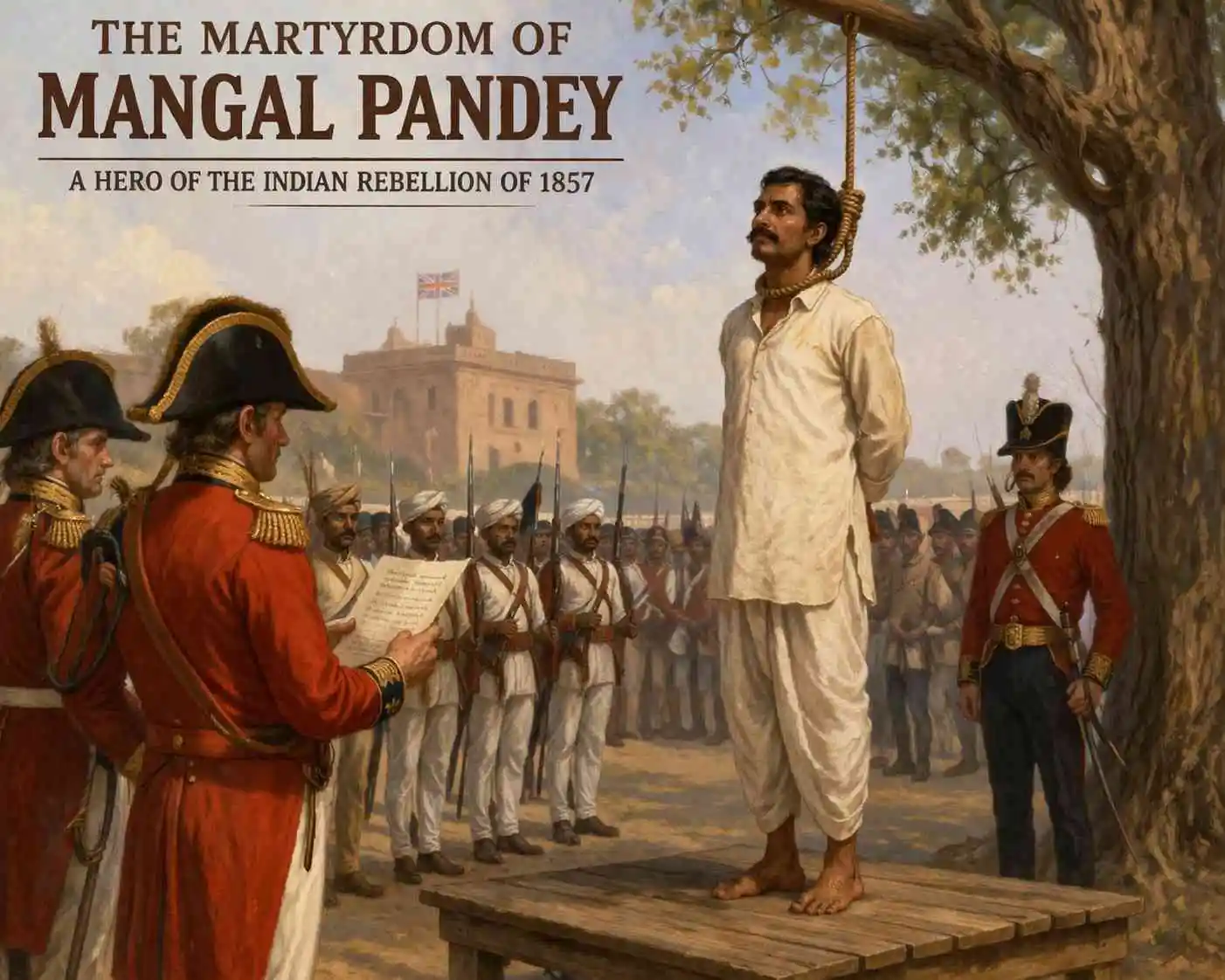
On August 11, 1908, Khudiram Bose was executed at the age of 18. Accounts from jail officers and substantiations describe him as calm and smiling as he walked to the gallows. He reportedly embraced death with a sense of pride, believing that his immolation would contribute to India’s freedom.
His prosecution turned him into a fatality nearly incontinently. The image of a youthful boy willingly giving his life for the country deeply moved the public. Processions, honorary meetings, and publications devoted to his memory spread across India.
The British government had hoped that the prosecution would discourage revolutionary conditioning. rather, it had the contrary effect, inspiring innumerous youthful people to join the freedom movement.
Impact on the Indian Freedom Struggle
The immolation of Khudiram Bose played a significant part in shaping the future of the Indian independence movement. His martyrdom stressed the depth of resistance against social rule and exposed the moral contradictions of the British administration.
Revolutionary groups gained raised support, and the idea of tone- immolation came central to nationalist testament. Indeed leaders who favorednon-violent styles conceded the emotional power of his conduct and the impact they had on marshaling the millions.
His story also told artistic expressions of nationalism. Songs, plays, and literature celebrated his courage, icing that his memory remained alive in public knowledge. seminaries and institutions latterly incorporated his story into educational classes, emphasizing the significance of courage, integrity, and nationalism.
heritage in ultramodern India
further than a century after his death, Khudiram Bose continues to be flashed back as one of the youthful killers of India’s freedom struggle. Statues, premises , and institutions across India bear his name, serving as monuments of his immolation.
In ultramodern India, his heritage is frequently bandied in the environment of youth commission and communal responsibility. He represents the idea that age is n't a hedge to meaningful donation and that courage can come from indeed the youthful members of society.
His life also raises important questions about the nature of resistance, the ethics of revolutionary violence, and the price of freedom. These conversations remain applicable moment, making his story not just a literal account but a source of ongoing reflection.
Assignments from His Life
The life of Khudiram Bose offers several enduring assignments. First, it demonstrates the power of conviction and the impact of individual action. Despite limited coffers and a short lifetime, he managed to leave an unforgettable mark on history.
Alternate, his story highlights the part of youth in social and political change. He reminds us that youthful people have the capability to challenge injustice and shape the future when guided by strong values.
Eventually, his immolation underscores the significance of flashing back history. Understanding the struggles and offerings of freedom fighters helps make a deeper appreciation for the rights and freedoms enjoyed moment.
Conclusion
The story of Khudiram Bose is n't simply a chapter in history; it's a testament to the strength of the mortal spirit when driven by purpose and love for the nation. His courage, discipline, and amenability to immolate everything for freedom continue to inspire millions.
By exploring his life in detail, we gain sapience into the broader struggle for independence and the part played by youthful revolutionaries. Flashing back his heritage is n't just about recognizing the history but about drawing alleviation for the present and unborn. His name remains a symbol of intrepid nationalism, reminding us that freedom frequently comes at a great cost and that indeed the youthful voices can echo through history.
Click below to generate summary