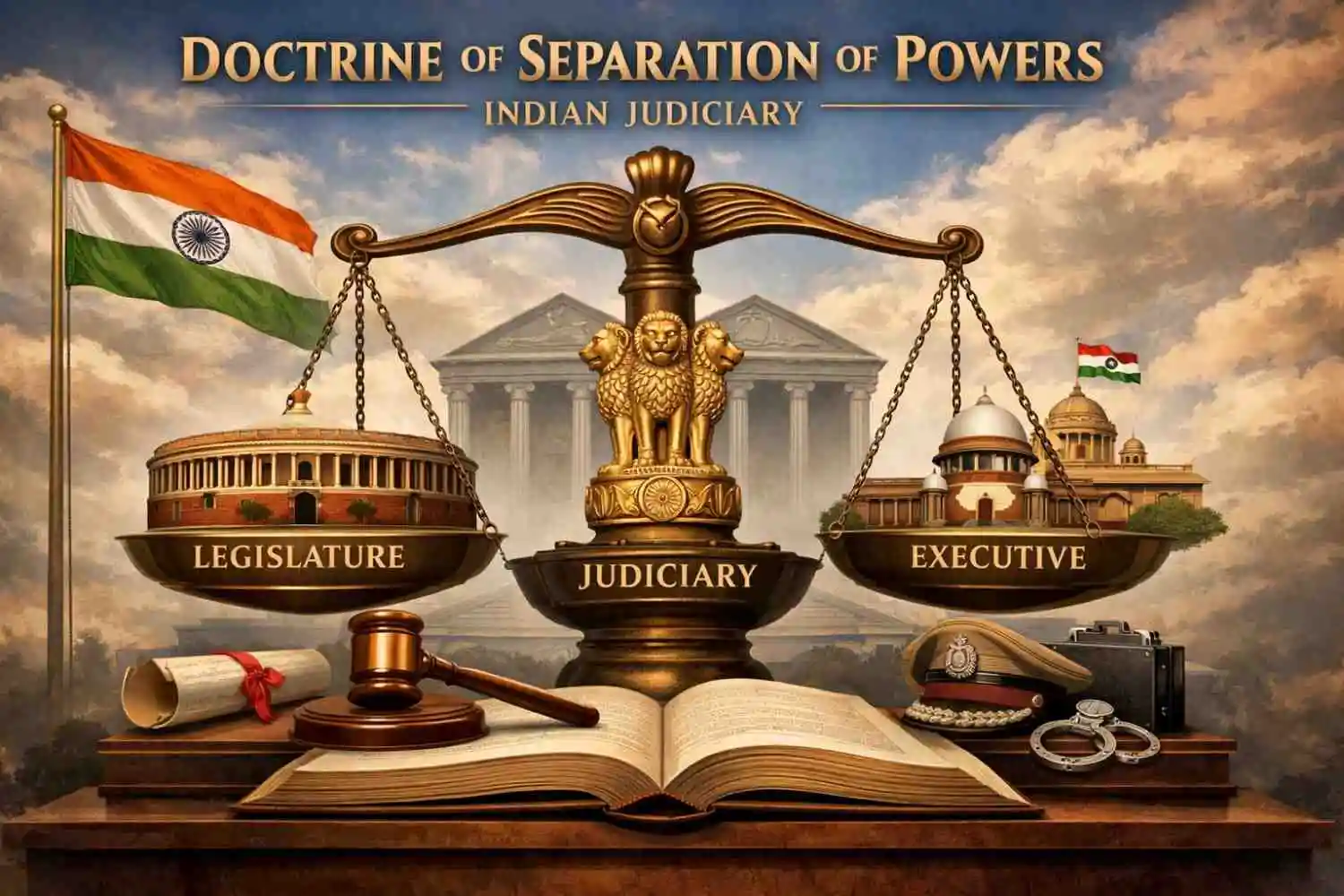
The President of India holds the highest constitutional office in the country and symbolizes the unity, integrity, and democratic spirit of the nation. Often described as the ceremonial head of state, the President’s role goes far beyond symbolism. Rooted deeply in the Constitution of India, this office acts as a vital link between the executive, legislature, and judiciary. The President represents the continuity of the Indian state, ensuring that governance is carried out according to constitutional principles.
Since independence, the office of the President has evolved alongside India’s democratic institutions. While real executive power rests with the elected government, the President plays a crucial role in safeguarding constitutional morality, exercising discretion during political uncertainty, and upholding democratic traditions. Understanding the position of the President of India is essential for appreciating how India’s parliamentary system functions.
Historical Background of the Office of President
The idea of having a head of state in independent India emerged during the framing of the Constitution. Members of the Constituent Assembly debated extensively on whether India should adopt a presidential or parliamentary system. Ultimately, they chose a parliamentary form of democracy with a nominal head of state, inspired partly by the British constitutional model and adapted to Indian conditions.
The office of the President came into existence on 26 January 1950, when the Constitution of India came into force. Dr. Rajendra Prasad became the first President, setting conventions that continue to guide the office. Over time, the position has gained respect and moral authority, shaped by the conduct of those who have occupied it.
Key historical points:
-
Established with the adoption of the Constitution in 1950
-
Inspired by parliamentary democratic traditions
-
Designed as a constitutional, not executive, authority
-
Shaped by early precedents and conventions
Constitutional Position of the President of India
The President of India is described in the Constitution as the head of the Indian State. Article 52 establishes the office, while subsequent articles define its powers, functions, and responsibilities. Constitutionally, executive authority is vested in the President, but this authority is exercised in accordance with the advice of the Council of Ministers.
This arrangement ensures a balance between democratic accountability and constitutional stability. The President acts as a guardian of the Constitution, ensuring that all actions of the state comply with constitutional norms. While largely bound by ministerial advice, the office still holds significant importance in maintaining constitutional order.
Constitutional foundations include:
-
Article 52 establishes the office
-
Executive power vested formally in the President
-
Functions carried out on ministerial advice
-
Role as guardian of the Constitution
Election of the President of India
The election of the President of India is a unique process designed to reflect the federal structure of the country. Unlike direct elections, the President is elected by an electoral college consisting of elected members of both Houses of Parliament and the elected members of the Legislative Assemblies of states and union territories.
The system of proportional representation with a single transferable vote ensures that the President represents the collective will of the nation rather than a single political group. The process emphasizes consensus, dignity, and non-partisan character of the office.
Key features of the election process:
-
Indirect election through an electoral college
-
Participation of Parliament and state legislatures
-
Proportional representation system
-
Emphasis on national consensus
Qualifications and Conditions for Office
The Constitution sets clear qualifications for anyone aspiring to become the President of India. These requirements ensure that the individual possesses maturity, experience, and loyalty to the Constitution. The office demands neutrality, integrity, and a deep understanding of constitutional values.
In addition to qualifications, certain conditions are imposed to preserve the independence of the office. The President must not hold any office of profit and must be eligible to be elected as a member of the Lok Sabha.
Essential qualifications include:
-
Citizen of India
-
Minimum age of 35 years
-
Eligibility for Lok Sabha membership
-
No office of profit under the government
Term of Office and Removal
The President of India holds office for a term of five years from the date of entering office. However, the President is eligible for re-election, and there is no constitutional limit on the number of terms. The continuity of governance is ensured by allowing the President to continue until a successor assumes office.
Removal of the President is possible only through impeachment, a process designed to protect the dignity of the office while ensuring accountability. Impeachment can occur only for violation of the Constitution and requires a rigorous parliamentary procedure.
Key aspects of tenure and removal:
-
Five-year term with eligibility for re-election
-
Continuation until successor assumes office
-
Removal only through impeachment
-
Impeachment requires special parliamentary majority
Executive Powers of the President
The executive powers of the President of India are extensive on paper and cover the entire administration of the country. All executive actions of the Union government are taken in the name of the President. Appointments to key constitutional offices are also made by the President.
In practice, these powers are exercised on the advice of the Council of Ministers headed by the Prime Minister. This ensures democratic accountability while maintaining constitutional formality.
Major executive powers include:
-
Appointment of Prime Minister and ministers
-
Appointments to constitutional offices
-
Supreme command of the armed forces
-
Conduct of Union administration
Legislative Powers of the President
The President of India plays a significant role in the legislative process. No bill passed by Parliament can become law without the President’s assent. The President also has the power to summon, prorogue, and dissolve the Lok Sabha.
Through these powers, the President ensures smooth functioning of the legislative system. While usually acting on ministerial advice, the office retains discretion in specific constitutional situations.
Important legislative functions include:
-
Summoning and proroguing Parliament
-
Dissolution of the Lok Sabha
-
Giving assent to bills
-
Addressing Parliament sessions
Financial Powers of the President
Financial authority of the President of India is central to parliamentary democracy. The annual budget is presented in the name of the President, and no money bill can be introduced without prior presidential recommendation.
These powers underline the constitutional principle that public finance must follow due process and parliamentary approval. The President ensures that financial governance adheres to constitutional norms.
Key financial powers include:
-
Recommendation for money bills
-
Presentation of Union Budget
-
Control over contingency fund
-
Appointment of Finance Commission
Judicial Powers of the President
The President of India exercises important judicial powers, mainly related to appointments and mercy jurisdiction. Judges of the Supreme Court and High Courts are appointed by the President following constitutional procedures.
The power to grant pardons, reprieves, respites, or commutations of sentences is another significant function. This power reflects the humane aspect of the Constitution and provides a final safeguard against judicial error.
Judicial responsibilities include:
-
Appointment of judges
-
Granting pardons and commutations
-
Consultation in judicial matters
-
Upholding judicial independence
Emergency Powers of the President
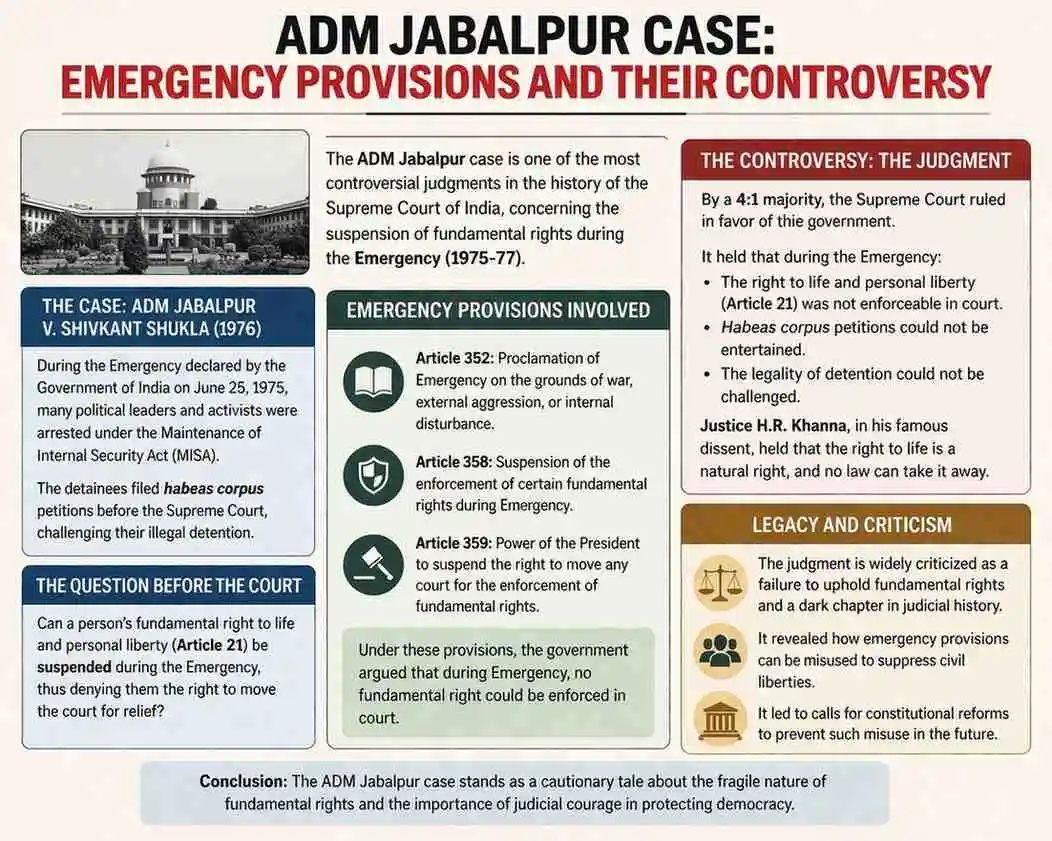
One of the most critical aspects of the President’s role emerges during emergencies. The Constitution provides for national, state, and financial emergencies, all of which are proclaimed by the President under specific circumstances.
These powers are designed to protect the nation during extraordinary situations. However, constitutional safeguards exist to prevent misuse and ensure parliamentary oversight.
Types of emergency powers:
-
National emergency
-
State emergency
-
Financial emergency
-
Parliamentary approval mechanisms
Discretionary Powers and Constitutional Role
Although generally bound by ministerial advice, the President of India possesses limited discretionary powers. These powers become relevant during political uncertainty, such as a hung Parliament or the resignation of a government.
In such moments, the President’s role as a neutral constitutional authority becomes crucial. The exercise of discretion must be guided by constitutional conventions and democratic principles.
Instances of discretionary authority include:
-
Appointment of Prime Minister in hung Parliament
-
Calling for proof of majority
-
Sending advice back for reconsideration
-
Ensuring constitutional stability
Relationship with the Prime Minister and Council of Ministers
The relationship between the President of India and the Prime Minister is central to the functioning of the executive. While the Prime Minister is the real executive authority, the President acts as the formal head and constitutional guide.
This relationship is based on mutual respect, trust, and adherence to constitutional norms. Effective governance depends on clear communication and respect for institutional boundaries.
Key aspects of this relationship:
-
President acts on ministerial advice
-
Prime Minister keeps President informed
-
Cooperation ensures stable governance
-
Constitutional balance of authority
Role in Federal Structure of India
India’s federal structure assigns significant responsibilities to the President of India. The President acts as a link between the Union and the states, especially during constitutional crises at the state level.
Through appointments of governors and emergency provisions, the President helps maintain unity and constitutional governance across the country.
Federal responsibilities include:
-
Appointment of state governors
-
Role during state emergencies
-
Ensuring constitutional governance
-
Maintaining national unity
Symbolic and Moral Authority of the President
Beyond constitutional powers, the President of India holds immense symbolic and moral authority. The office represents the dignity of the nation and embodies democratic values. Presidential addresses often serve as reminders of constitutional ideals and national responsibilities.
This moral authority allows the President to influence public discourse without engaging in active politics. It strengthens democratic culture and public trust.
Symbolic roles include:
-
Representation of national unity
-
Addressing the nation on key occasions
-
Upholding constitutional values
-
Acting as moral guide
Presidents of India: Legacy and Contributions
Each President of India has contributed uniquely to the evolution of the office. Through personal integrity, intellectual depth, and constitutional wisdom, Presidents have strengthened democratic institutions.
Their actions during critical moments have shaped public understanding of constitutional governance and reinforced respect for democratic norms.
Notable contributions include:
-
Establishing constitutional conventions
-
Upholding democratic principles
-
Guiding governance during crises
-
Enhancing dignity of the office
Challenges and Criticism of the Office
The office of the President of India has not been free from challenges and criticism. Debates often arise regarding the extent of discretionary power, role during emergencies, and relationship with the ruling government.
These discussions reflect the dynamic nature of constitutional democracy and the need for constant interpretation and balance.
Common challenges include:
-
Ambiguity in discretionary powers
-
Political pressures during crises
-
Interpretation of constitutional roles
-
Public expectations versus constitutional limits
Relevance of the President in Modern India
In contemporary India, the relevance of the President of India remains strong. As democratic institutions face evolving challenges, the office continues to serve as a stabilizing force rooted in constitutional values.
The President’s role in safeguarding democracy, ensuring constitutional governance, and representing national unity is as vital today as it was at independence.
Modern relevance includes:
-
Constitutional oversight
-
Symbol of democratic continuity
-
Stabilizing authority in political uncertainty
-
Representation of India globally
Conclusion
The President of India occupies a unique and indispensable position within the constitutional framework. While not a political executive, the office embodies the authority, dignity, and continuity of the Indian state. Through a carefully balanced mix of formal powers, moral influence, and constitutional responsibility, the President ensures that democracy functions within its prescribed limits.
From safeguarding the Constitution to guiding the nation during times of uncertainty, the President plays a role that is subtle yet profound. Understanding this office deepens appreciation for India’s democratic structure and highlights the importance of constitutional values in governance. The President of India stands not just as a figurehead, but as a guardian of the republic’s democratic soul.
Click below to generate summary