The Heart of Indian Democracy
The Parliament of India stands at the very core of the country’s democratic system. It is the supreme legislative body that represents the will of the people and acts as the main forum for debate, law-making, and accountability in governance. In a nation as diverse and complex as India, the Parliament plays a crucial role in balancing regional interests, protecting constitutional values, and guiding national development. It is here that policies are discussed, laws are framed, budgets are approved, and the executive is held answerable.
The importance of the Parliament goes far beyond passing laws. It reflects India’s commitment to democratic ideals, pluralism, and constitutional governance. Through its procedures, traditions, and evolving practices, the Parliament has shaped the political, social, and economic direction of the country since independence. Understanding its structure and functions helps citizens appreciate how democracy works in practice.
-
Supreme legislative authority of India
-
Central pillar of representative democracy
-
Platform for debate, law-making, and accountability
-
Reflects India’s diversity and constitutional values
Historical Evolution of the Indian Parliament
The roots of the Parliament of India can be traced back to the colonial period, when limited legislative councils were established under British rule. These early bodies had restricted powers and limited Indian representation, but they laid the groundwork for parliamentary practices such as debates, committees, and question hours. Over time, reforms gradually expanded Indian participation in governance.
After independence in 1947, India adopted a parliamentary system inspired by the British model but adapted to Indian conditions. The Constitution of India, which came into force in 1950, formally established the Parliament as the central legislative institution. Since then, the Parliament has evolved through constitutional amendments, procedural reforms, and changing political dynamics, reflecting the growth and maturity of Indian democracy.
-
Origins in colonial legislative councils
-
Gradual expansion of Indian representation
-
Constitutional establishment in 1950
-
Continuous evolution with democratic growth
Constitutional Basis of the Parliament of India
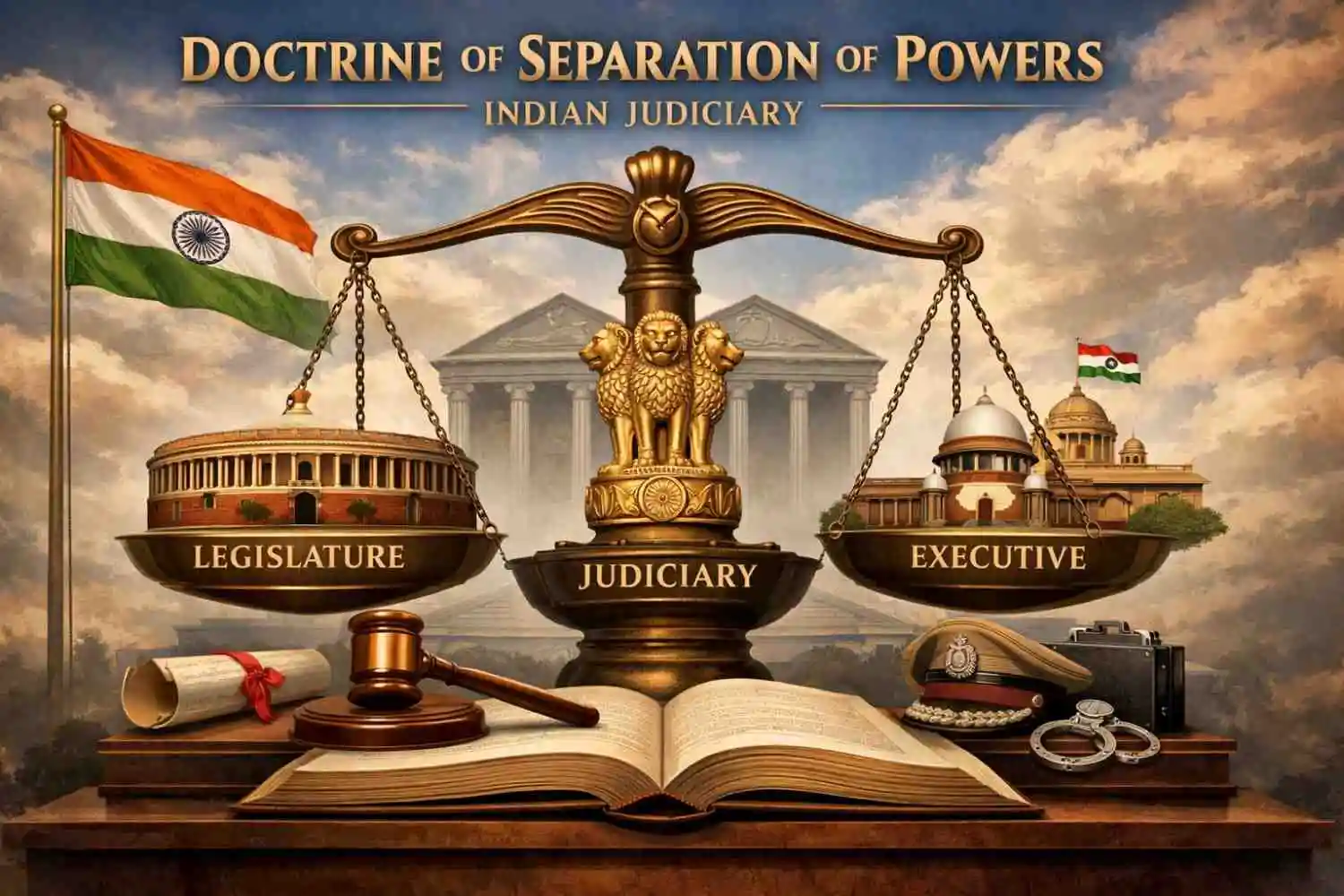
The Parliament of India derives its authority from the Constitution, which clearly defines its composition, powers, and functions. Articles related to the legislature outline how laws are made, how representatives are elected or nominated, and how the Parliament interacts with the executive and judiciary. This constitutional framework ensures a balance of power and prevents the concentration of authority.
The Constitution also establishes the supremacy of the Parliament in legislative matters while subjecting it to judicial review and constitutional limitations. This balance ensures that laws passed by the Parliament align with fundamental rights and constitutional principles.
-
Established under the Constitution of India
-
Defined roles and powers in constitutional articles
-
Balance of authority with judiciary and executive
-
Subject to constitutional limitations and review
Composition of the Parliament of India
The Parliament of India is a bicameral legislature, meaning it consists of two houses along with the President of India as an integral part. This structure ensures broader representation and careful scrutiny of legislation. The two houses are the Lok Sabha and the Rajya Sabha, each serving distinct but complementary roles.
The inclusion of the President emphasizes the constitutional process of law-making, as no bill becomes law without presidential assent. Together, these components form a comprehensive legislative system designed to represent both the population and the states.
-
Bicameral structure
-
Includes Lok Sabha, Rajya Sabha, and the President
-
Ensures wider representation
-
Encourages legislative scrutiny
Lok Sabha: The House of the People
The Lok Sabha, or House of the People, is the lower house of Parliament and represents the citizens of India directly. Members of the Lok Sabha are elected through general elections based on universal adult suffrage. This makes the Lok Sabha the most representative body in the Indian political system.
The Lok Sabha plays a decisive role in law-making, financial matters, and the formation of the government. The Prime Minister and the Council of Ministers are collectively responsible to this house, making it a powerful instrument of democratic control over the executive.
-
Directly elected by citizens
-
Represents the population of India
-
Central role in forming the government
-
Exercises control over the executive
Rajya Sabha: The Council of States
The Rajya Sabha, or Council of States, represents the states and union territories of India. Its members are elected by the elected members of state legislative assemblies, along with a small number nominated by the President for their expertise in fields such as art, literature, science, and social service.
Unlike the Lok Sabha, the Rajya Sabha is a permanent body and is not subject to dissolution. This continuity allows it to provide stability, experience, and long-term perspective in legislative matters. It acts as a revising chamber that reviews and refines legislation passed by the Lok Sabha.
-
Represents states and union territories
-
Indirectly elected and partly nominated
-
Permanent body with staggered terms
-
Revises and reviews legislation
Role of the President in Parliament
The President of India is an integral part of the Parliament, although not a member of either house. The President’s role includes summoning and proroguing sessions, addressing Parliament, and giving assent to bills. This role ensures constitutional oversight in the legislative process.
The President’s address at the beginning of the first session each year outlines the government’s policies and priorities. While largely ceremonial, the President’s functions are essential for the formal enactment of laws and the functioning of parliamentary democracy.
-
Integral part of Parliament
-
Summons and prorogues sessions
-
Addresses Parliament annually
-
Grants assent to legislation
Legislative Powers and Law-Making Process
One of the primary functions of the Parliament of India is law-making. Bills can be introduced in either house, except money bills, which can only be introduced in the Lok Sabha. The legislative process involves multiple stages, including introduction, discussion, committee review, and voting.
This structured process ensures detailed scrutiny and debate, allowing members to express diverse viewpoints. The bicameral system further strengthens the quality of legislation by subjecting bills to examination in both houses.
-
Primary authority for law-making
-
Structured and multi-stage process
-
Encourages debate and scrutiny
-
Bicameral review enhances quality
Financial Powers of the Parliament
The Parliament of India exercises significant control over public finances. It approves the national budget, authorizes taxation, and sanctions government expenditure. This financial authority ensures that public money is spent with legislative approval and accountability.
The Lok Sabha holds a dominant position in financial matters, as money bills can only be introduced and finally decided there. This reflects the principle that financial decisions should rest with the directly elected representatives of the people.
-
Controls national budget and expenditure
-
Authorizes taxation
-
Lok Sabha dominance in financial matters
-
Ensures financial accountability
Control Over the Executive
A key democratic function of the Parliament is to hold the executive accountable. Through mechanisms such as question hour, debates, motions, and parliamentary committees, members scrutinize government actions and policies.
This oversight ensures transparency and responsiveness in governance. Ministers are required to explain their decisions and actions, reinforcing the principle of responsible government.
-
Holds executive accountable
-
Uses questions and debates
-
Ensures transparency
-
Strengthens responsible governance
Parliamentary Committees and Their Importance
Parliamentary committees play a vital role in the detailed examination of legislation and policies. These committees consist of members from both houses and work across party lines to analyze issues in depth.
Committees enhance the effectiveness of Parliament by allowing focused discussion away from the pressures of the full house. Their reports often influence policy decisions and legislative outcomes.
-
Specialized and focused bodies
-
Examine bills and policies in detail
-
Encourage bipartisan cooperation
-
Improve legislative quality
Sessions of Parliament and Their Significance
The Parliament of India meets in sessions, usually three times a year: the Budget Session, the Monsoon Session, and the Winter Session. Each session serves specific legislative and administrative purposes.
Sessions provide structured opportunities for debate, law-making, and oversight. The frequency and duration of sessions influence how effectively Parliament can perform its functions.
-
Budget, Monsoon, and Winter Sessions
-
Structured legislative calendar
-
Enables regular debate and review
-
Essential for democratic functioning
Role of the Speaker and Chairman
The Speaker of the Lok Sabha and the Chairman of the Rajya Sabha preside over their respective houses. They ensure orderly conduct, interpret rules, and maintain discipline during proceedings.
Their impartiality is crucial for the credibility and smooth functioning of Parliament. By protecting the rights of members and ensuring fair debate, they uphold parliamentary traditions.
-
Presiding officers of the houses
-
Maintain order and discipline
-
Interpret parliamentary rules
-
Uphold neutrality and fairness
Opposition and Its Democratic Role
The opposition plays a vital role in the Parliament of India by questioning government policies and presenting alternative viewpoints. A strong opposition strengthens democracy by ensuring debate, criticism, and accountability.
Through discussions, motions, and committee participation, opposition members contribute to improving legislation and governance.
-
Represents alternative viewpoints
-
Questions government actions
-
Enhances accountability
-
Strengthens democratic debate
Parliament and Federal Structure of India
India’s federal system is reflected in the structure of Parliament, particularly through the Rajya Sabha. By representing states, the Parliament balances national interests with regional concerns.
This arrangement helps manage diversity and maintain unity, ensuring that state perspectives are considered in national law-making.
-
Reflects India’s federal character
-
Rajya Sabha represents states
-
Balances national and regional interests
-
Supports unity in diversity
Parliamentary Privileges and Ethics
Members of Parliament enjoy certain privileges to ensure free and fearless expression during debates. These privileges are balanced by ethical standards and rules of conduct.
Maintaining high ethical standards is essential for public trust and the dignity of Parliament. Codes of conduct and disciplinary mechanisms support responsible behavior.
-
Special privileges for members
-
Protect freedom of speech
-
Ethical standards guide conduct
-
Essential for public trust
Challenges Faced by the Parliament of India
Despite its importance, the Parliament of India faces challenges such as disruptions, declining debate time, and increasing political polarization. These issues can affect legislative productivity and public perception.
Addressing these challenges requires reforms, greater cooperation among parties, and renewed commitment to democratic values.
-
Frequent disruptions
-
Reduced legislative debate
-
Political polarization
-
Need for procedural reforms
Parliament in the Digital and Modern Era
With technological advancements, the Parliament of India is adapting to digital tools for transparency and efficiency. Live telecasts, online records, and digital platforms have increased public access to parliamentary proceedings.
Modernization efforts aim to make Parliament more accessible, accountable, and responsive to citizens.
-
Adoption of digital tools
-
Increased transparency
-
Public access to proceedings
-
Modernization of processes
Significance of Parliament for Citizens
For citizens, the Parliament of India is the primary channel through which their voices influence national policy. Elected representatives raise local and national issues, ensuring public participation in governance.
Active citizen engagement and awareness strengthen the effectiveness of Parliament and democracy as a whole.
-
Represents citizen interests
-
Platform for public issues
-
Encourages political participation
-
Strengthens democratic culture
Conclusion
The Parliament of India is more than a legislative institution; it is the living expression of the nation’s democratic spirit. Through its debates, laws, and oversight functions, it shapes the present and future of the country. Despite challenges, the Parliament continues to adapt and evolve, reflecting the aspirations of a dynamic and diverse society.
A strong, effective, and ethical Parliament is essential for good governance and constitutional democracy. By understanding its structure and role, citizens can better appreciate their own place in the democratic process and contribute to strengthening India’s parliamentary system.
Click below to generate summary